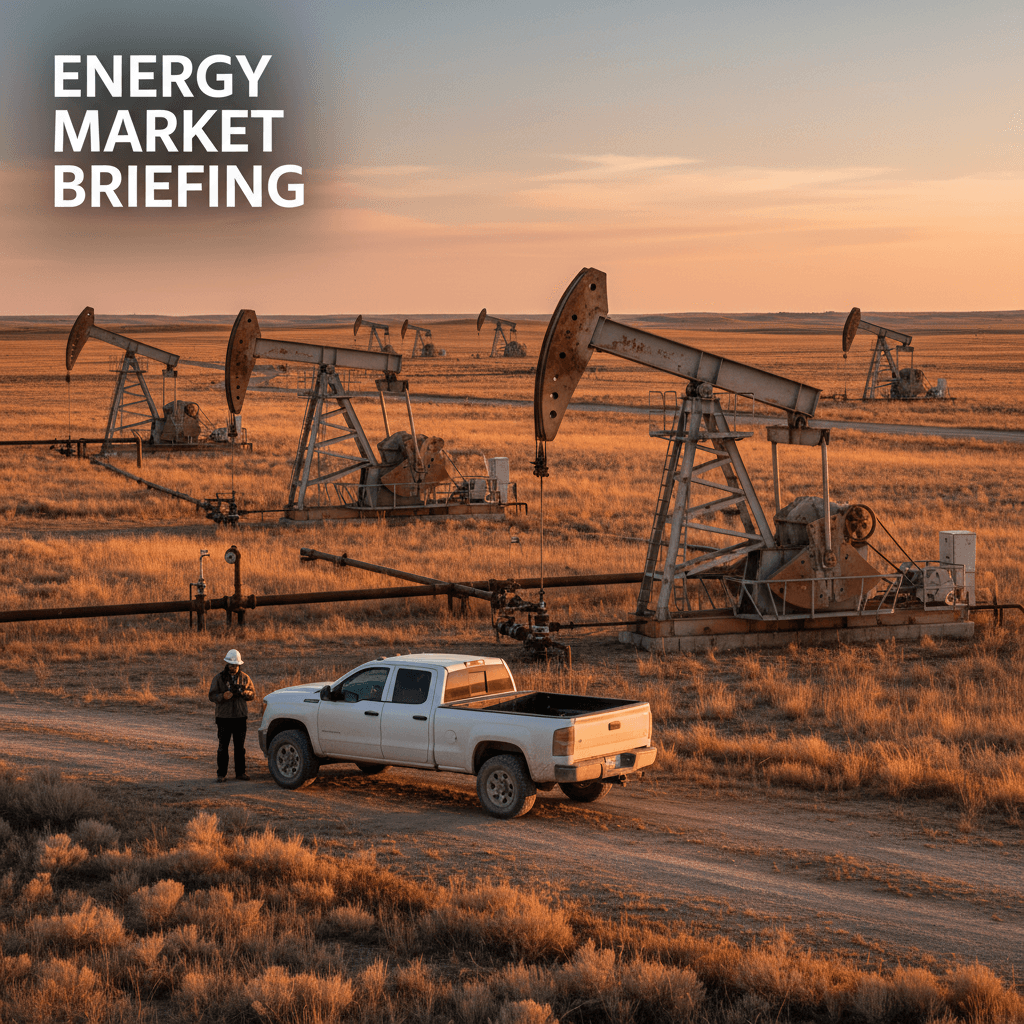
EU LNG Ban, Surging Texas Demand Signal Shifting Global Energy Flows
European restrictions on Russian gas and explosive power demand in Texas highlight potential long-term tailwinds for Bakken natural gas and oil markets.
Europe has begun implementing a ban on spot-market purchases of Russian liquefied natural gas (LNG) as of April 25, a move that could tighten global gas supplies and has implications for U.S. energy exports, according to a report from Rigzone citing Bloomberg. The ban coincides with supply disruptions from the Middle East, pushing Europe's benchmark gas price up about 40%.
The European Union's prohibition cuts off an estimated 2.8 million to 3.5 million tons per year of Russian LNG, roughly 3% of the bloc's total LNG imports last year, based on estimates from Wood Mackenzie Ltd. and Energy Aspects Ltd. While long-term contracts can continue until year-end, the policy introduces new uncertainty as Europe must replenish depleted gas inventories before winter. Analysts note a bigger test comes on January 1, 2027, when long-term contracts with major European firms like TotalEnergies SE and SEFE Securing Energy for Europe GmbH must end.
"For now, Europe has sufficient gas, due in part to a voluntary reduction in global demand," the report stated. However, Tom Marzec-Manser, director of Europe gas and LNG at Wood Mackenzie, cautioned, "We don’t see much of a risk to supply just yet, but there could be a change in a couple of months." This evolving landscape underscores the critical role of reliable, non-Russian suppliers, a category that includes U.S. LNG exports, for which Bakken gas can be a feedstock.
Simultaneously, a seismic shift in U.S. power demand is emerging from Texas, a key market for Bakken crude oil. The Electric Reliability Council of Texas (ERCOT) filed a preliminary long-term load forecast projecting demand to reach approximately 367,790 megawatts (MW) by 2032, according to a separate Rigzone report. This figure is more than quadruple ERCOT's current all-time peak demand of 85,508 MW, recorded in August 2023.
ERCOT President and CEO Pablo Vegas attributed the forecast to "Texas’ continued strong economic growth, with new load being added to the ERCOT System faster and in greater amounts than ever before." The forecast includes load from oil and gas processes, data centers, cryptocurrency mining, and industrial users. While analysts like Eli Rubin of EBW Analytics Group call the extreme projections "all but physically impossible," they highlight a powerful trend of surging industrial and technological energy consumption in a major oil-consuming state.
For North Dakota producers, these parallel developments sketch a complex but potentially supportive global picture. European diversification away from Russian energy reinforces long-term structural demand for Atlantic Basin LNG, supporting gas prices and the economics of associated gas captured in the Bakken. Meanwhile, the projected explosion in Texas electricity demand—driven in part by oil and gas operations themselves—points to sustained high refinery and petrochemical activity along the Gulf Coast, a primary destination for Bakken crude shipped via pipeline.
The combined effect suggests that Bakken hydrocarbons, both oil and gas, remain strategically positioned within tightening global and domestic energy systems, even as near-term market volatility persists due to geopolitical events.
Source
Rigzone (EU Starts Roll Out of Russian LNG Import Ban at Tricky Time, published April 25, 2026); Rigzone (ERCOT Sees Demand More Than Quadrupling Current Peak, published April 24, 2026)