Fragile Hormuz Truce Pressures Oil Prices as Gulf Producers Race to Export
Brent crude has fallen over 20% to near $72 amid a tense ceasefire, creating a volatile price backdrop for Bakken producers.
Global oil prices have slumped as a fragile truce in the Strait of Hormuz allows Gulf producers to rush exports back to market, according to reports from OilPrice.com. Brent crude has fallen more than 20% in the past month, sliding to around $72 a barrel on Monday, June 29, with West Texas Intermediate (WTI) near $70.
The price decline follows the signing of an interim memorandum of understanding between the U.S. and Iran on June 17, meant to reopen the critical chokepoint and wind down a conflict that began with strikes on February 28. However, the peace remains fragile. As recently as June 25-28, the U.S. and Iran traded a fresh round of strikes, targeting commercial shipping, according to OilPrice.com. Shipping is still moving under a daily quota system run by Iran's Revolutionary Guard navy, with war-risk insurance premiums remaining elevated.
Despite the tensions, Gulf producers are racing to load cargoes. Saudi Arabia has started loading tankers again at Ras Tanura, with a fourth supertanker loading crude on Monday. The United Arab Emirates, Kuwait, and Qatar are also pushing more crude onto the water, with Gulf flows reportedly climbing back to roughly 75% of pre-war levels, OilPrice.com reported. Iran is also boosting oil loadings at Kharg Island, taking advantage of a temporary U.S. sanctions waiver.
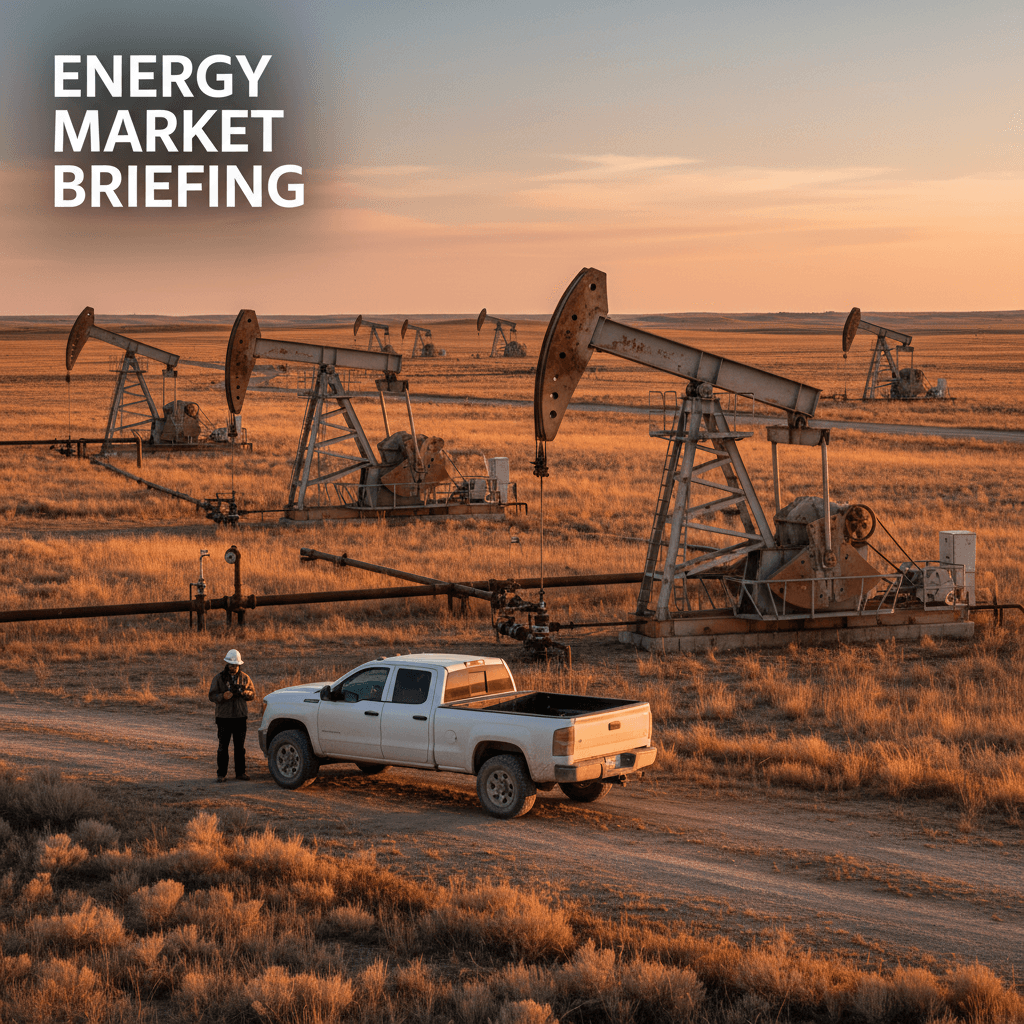
This surge in available supply from the Middle East is a key factor pressuring global benchmark prices, which directly impacts the economics for Bakken shale producers in North Dakota.
Diplomatic efforts continue amid the volatility. President Trump stated on Monday that a meeting on Iran would be held in Doha on Tuesday, June 30, according to a separate OilPrice.com report. However, Iranian officials have denied that any technical talks are scheduled this week, creating uncertainty. A senior U.S. official said late Sunday that parties had agreed to halt hostilities ahead of a potential new round of talks.
The situation leaves the market in a precarious position. The Strait of Hormuz, which carries roughly a fifth of the world's seaborne oil, is formally open but traffic has slowed following recent attacks. The 60-day window for negotiations creates a race for Gulf producers to export while they can, flooding the market and capping any significant price rallies in the near term.
For Bakken operators, the renewed flow of Middle Eastern crude adds a layer of bearish pressure to the oil market, complicating drilling and completion decisions that depend on stable prices above key economic thresholds.
Source
OilPrice.com