Global Biofuel Revival, Market Interventions Signal Shifting Demand Landscape for Bakken
Renewed interest in alternative fuels and foreign subsidies may alter long-term crude demand, while a major LNG deal underscores competitive global gas markets.
Interest in biofuels is reviving globally in 2026, driven by significant fossil fuel price volatility stemming from Middle East conflict, according to an analysis from OilPrice.com. The report states that the U.S.-Israeli war on Iran and the resulting closure of the Strait of Hormuz have led to energy shortages and sharply higher oil prices, prompting governments and energy companies to reconsider alternative fuels. This renewed focus on biofuels, including sustainable aviation fuel (SAF), represents a potential long-term shift in demand dynamics that could impact crude oil exporters like North Dakota's Bakken formation.
The biofuels sector has seen fluctuating interest in recent years. In 2024, following the pandemic and a global push for a green transition, interest grew, with the International Energy Agency (IEA) expecting use to increase significantly by 2030, according to OilPrice.com. Major oil firms including ExxonMobil, Chevron, BP, Shell, and TotalEnergies had committed to biofuel production. However, this interest waned in 2025 before the current revival. For Bakken producers, these cycles of investment in fuel alternatives underscore the evolving competitive pressures on traditional crude oil.
Separate global market interventions are also affecting the energy landscape. Russia's subsidy payouts to oil refiners that supply domestic markets jumped more than six-fold in June from a year earlier, Rigzone reported. Such substantial state support for refining can alter global product balances and potentially affect the competitive position of refined products derived from Bakken crude.
In natural gas, Santos secured a 10-year deal to supply gas to South Australia, Rigzone reported. The agreement supports a government gas reserve aimed at ensuring the state's industrial future and energy security. While this is a liquefied natural gas (LNG) deal in the Asia-Pacific region, it highlights the global competition for long-term gas contracts and the strategic value placed on secure supply. North Dakota's associated gas production from the Bakken remains subject to these broader global gas market fundamentals and pricing.
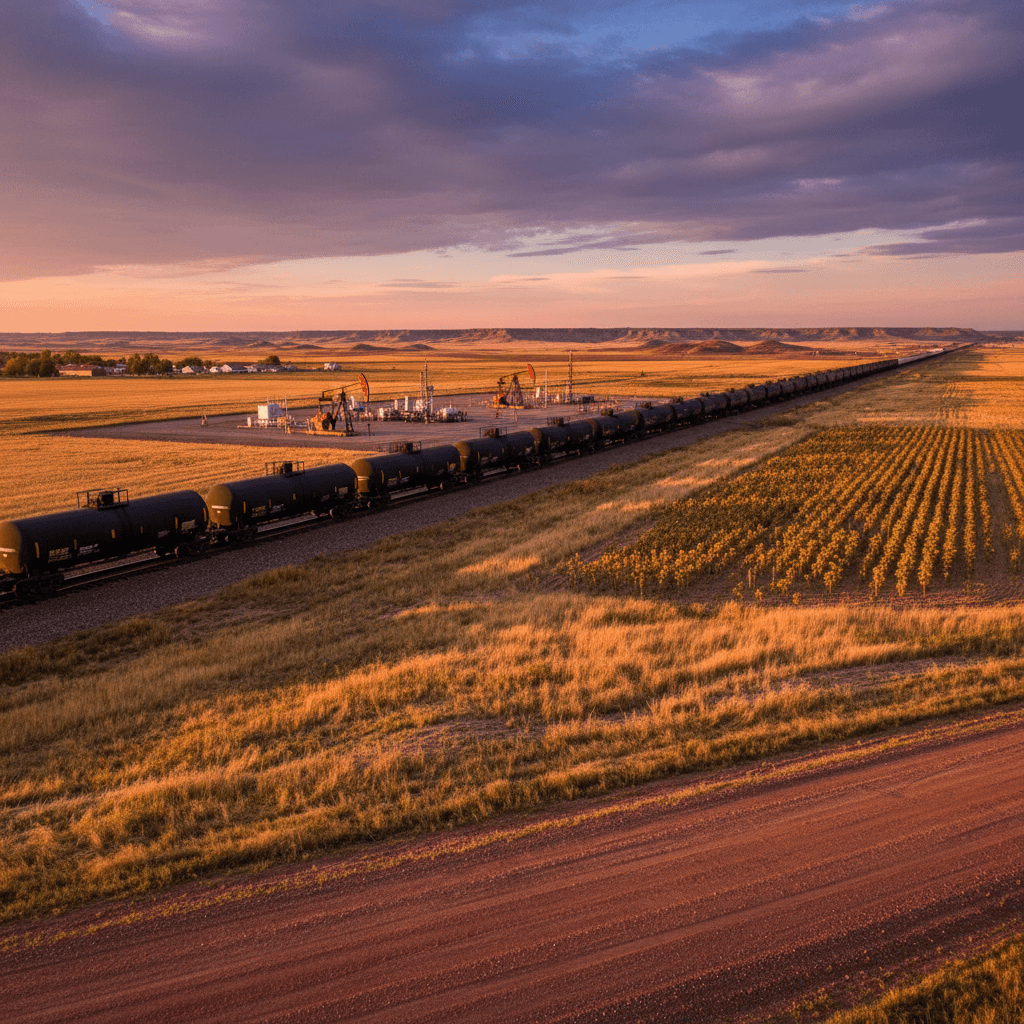
The biofuels report notes that typical feedstocks include sugar cane, corn, and soybeans, producing low-carbon fuels for existing engines. North Dakota's significant agricultural sector positions it as a potential feedstock supplier, suggesting the state could participate in the bioeconomy shift alongside its core hydrocarbon production. The IEA had previously suggested that to meet net-zero targets by 2050, global biofuel production would need to increase sharply by 2030, a goal that now sees renewed geopolitical impetus.
For Bakken operators and royalty owners, these global developments collectively signal a complex future. Near-term price spikes from supply disruptions may benefit crude revenues, but concurrent investments in alternative fuels and foreign market subsidies point to a sustained focus on energy diversification and security that will shape long-term demand for Bakken hydrocarbons.
Source
According to OilPrice.com and Rigzone.