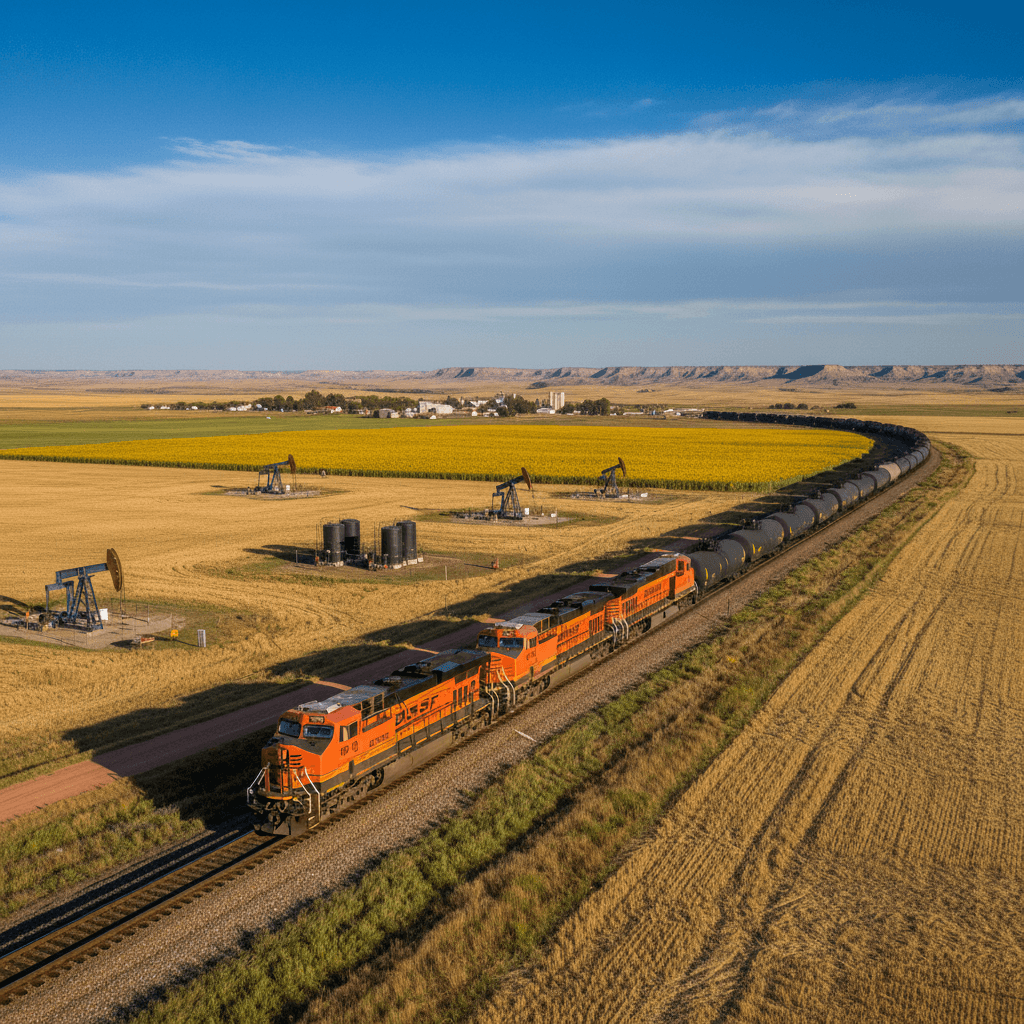
Global Demand Concerns Weigh on Oil Prices, Impacting Bakken Operators
Market retreats as traders assess weakening consumption and stalled geopolitical talks, affecting the price-sensitive Bakken formation.
Oil prices fell in recent trading as global demand concerns resurfaced, according to industry news reports. The retreat introduces fresh headwinds for North Dakota's Bakken operators, whose economics are directly tied to crude benchmarks.
The price decline was attributed to traders weighing weakening global demand signals, Rigzone reported on June 5. Concurrently, stalled negotiations between the United States and Iran contributed to the market's downward pressure.
For Bakken producers, lower oil prices immediately pressure cash flow and can influence decisions on drilling and completion activity. The Bakken formation is a major oil-producing region where breakeven costs vary by operator and acreage quality. When prices retreat, margins tighten, particularly for operators with higher production costs.
While the report did not specify a price level, the direction is a key indicator for the basin. Bakken crude typically trades at a differential to the U.S. benchmark West Texas Intermediate (WTI). A weaker overall market compresses the value of Bakken barrels.
The mention of stalled U.S.-Iran negotiations removes a potential bullish factor for prices in the near term. Progress in talks could eventually lead to increased Iranian oil exports, adding to global supply. The lack of progress, however, was not enough to counterbalance the prevailing demand fears cited by Rigzone.
Market sentiment driven by global demand outlooks is a constant factor for Bakken operators. The formation's output contributes significantly to U.S. domestic supply, but its operators remain exposed to international price swings. The recent pullback underscores the volatile and interconnected nature of the oil market that defines planning in the Williston Basin.
Source
Rigzone

