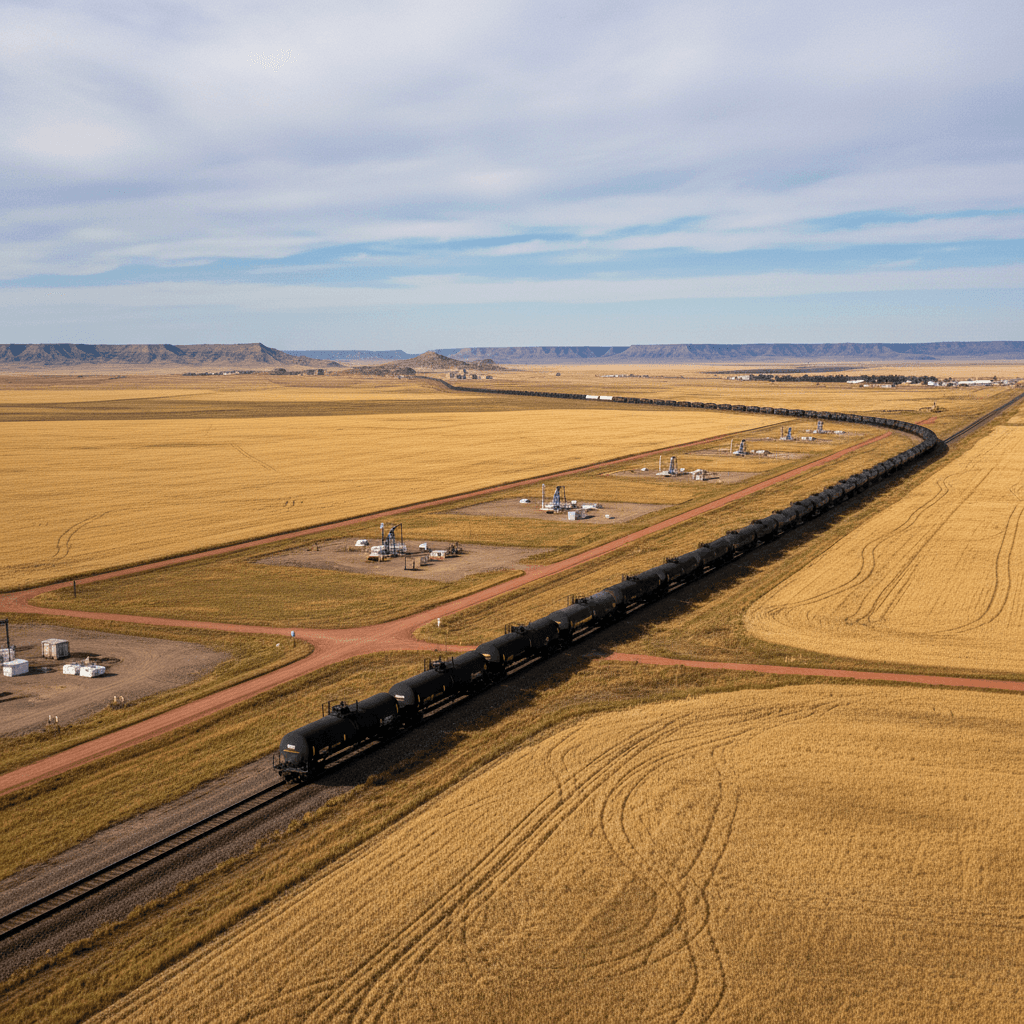
Global Demand Fears Pressure Oil Prices
Falling crude benchmarks signal potential revenue pressure for Bakken operators amidst weakening global consumption.
Oil prices retreated in trading on Friday, June 5, according to a report from Rigzone, as market participants weighed concerns over weakening global demand. The price drop was also linked to stalled negotiations between the United States and Iran.
For operators in North Dakota's Bakken formation, the primary oil-producing region in the Williston Basin, lower crude benchmarks directly impact wellhead revenues and can influence drilling and completion budgets. A sustained downturn in prices often leads to a re-evaluation of capital expenditure plans, with a focus on preserving cash flow and operational efficiency.
The reported driver of the price move—global demand fears—highlights the Bakken's exposure to worldwide economic conditions. Bakken crude, priced relative to global benchmarks like West Texas Intermediate (WTI) and Brent, is susceptible to shifts in international consumption forecasts. Stalled geopolitical developments, such as the U.S.-Iran talks noted by Rigzone, add another layer of uncertainty that can contribute to market volatility.
While the report did not specify the magnitude of the price decline, the direction of the move is a key signal for local producers. In a lower-price environment, operators with higher breakeven costs may face margin compression, while larger, more efficient companies with strong balance sheets are typically better positioned to weather the volatility. The focus for many will shift to managing operational costs and optimizing production from existing wells.
The broader concern for the North Dakota oil industry will be the duration and depth of any price weakness stemming from perceived demand softness. Extended periods of lower prices can ultimately impact the state's rig count, production levels, and tax revenues.
Source
Information from Rigzone report published June 5, 2026.

