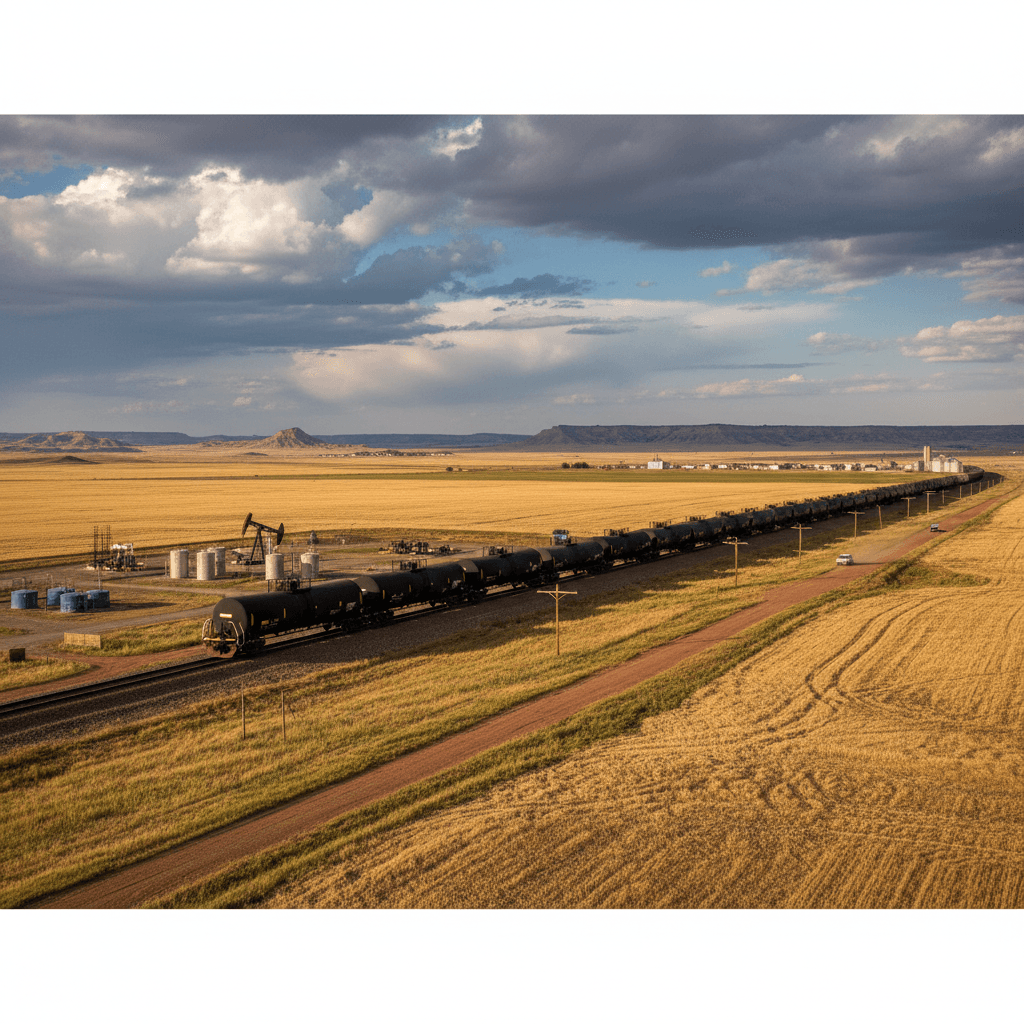
Global Demand Weakness, Nuclear Shift Challenge Bakken's Price Outlook
Despite geopolitical tensions and Aramco's supply constraints, tepid energy consumption and China's nuclear surge signal headwinds for oil markets.
A muted global oil price response to the closure of the Strait of Hormuz signals a deeper economic problem of weak energy demand, according to an analysis from OilPrice.com. This environment of low affordability poses a challenge for Bakken producers who rely on robust crude prices to justify drilling in the formation's cost-sensitive plays.
The report notes that the recent price spike following the Strait's closure was a "mini spike," and that inflation-adjusted spikes in the past would appear higher. It points to declining indicators of energy consumption, such as worldwide car sales peaking in 2017 and U.S. new home sales falling to 678,000 in 2025 from a record 1,283,000 in 2005, as signs that "people are getting poorer" and demand for oil is softening. For North Dakota operators, this suggests that even supply disruptions may not provide the sustained price lifts seen in previous eras.
Concurrently, a major shift in the global energy mix is underway. According to a separate OilPrice.com report, global nuclear power generation hit an all-time high in 2025 at 2,845 terawatt-hours, with China supplying all of the net growth. China increased its output by more than 34 terawatt-hours; without China, global nuclear generation would have declined. Over the past decade, China has nearly tripled its nuclear output, adding more nuclear power than the rest of the world combined. This large-scale displacement of fossil-fueled power generation, particularly in the world's largest energy growth market, represents a long-term structural headwind for global oil demand growth.
The demand concerns exist alongside what Saudi Aramco, in a report cited by Rigzone, called "historical supply constraints." The company reported achieving total hydrocarbon production of 9.5 million barrels of oil equivalent per day in the second quarter despite those constraints. This tension between constrained supply and potentially weaker demand creates an uncertain price landscape for Bakken drillers, who must navigate capital discipline in a market where the traditional drivers of oil prices may be losing potency.
The combined analysis suggests Bakken operators face a market where geopolitical risk premiums are diminished by underlying economic weakness, and where the long-term energy transition, led by China's nuclear build-out, continues to accelerate. This places a premium on operational efficiency and low-breakeven costs for North Dakota's shale producers.
Source
According to OilPrice.com and Rigzone.

