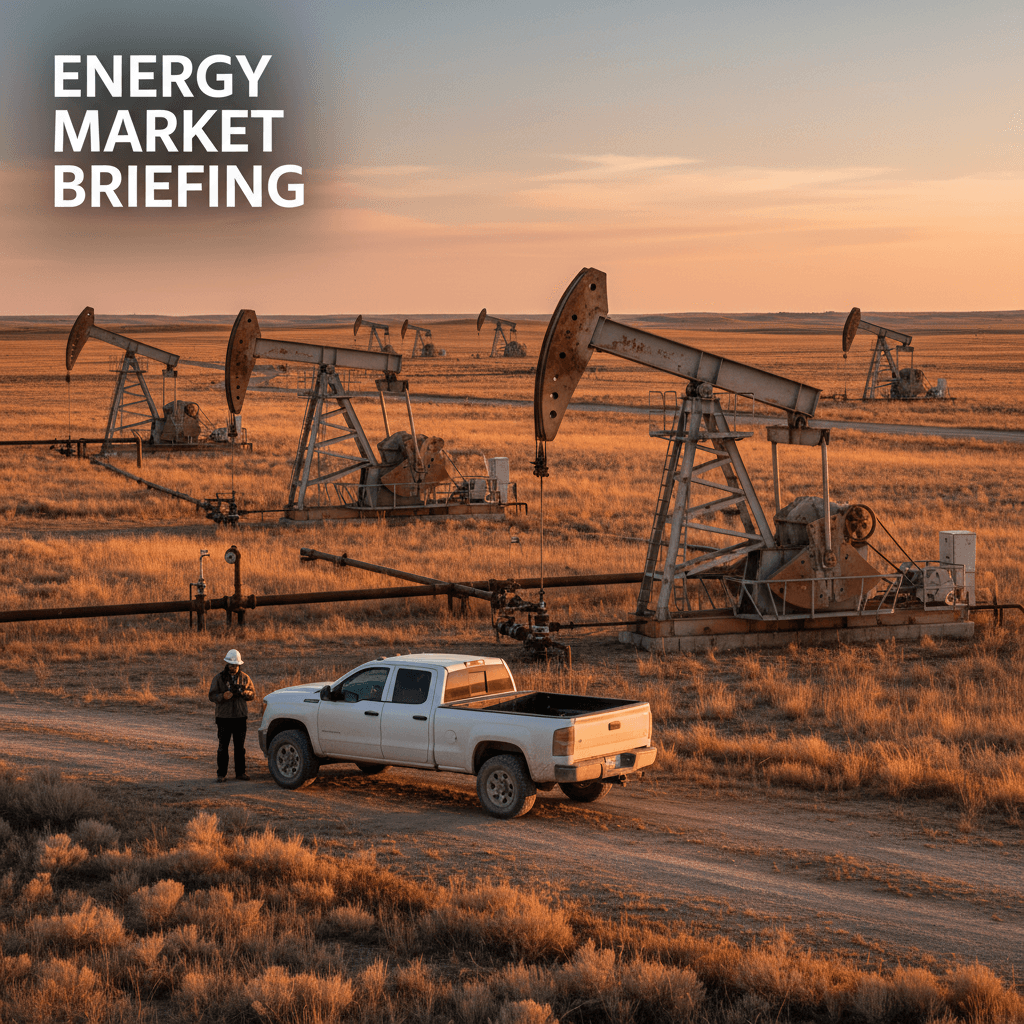
Global Energy Demand, OPEC+ Move, and Geopolitics Shape Bakken Outlook
New data shows rising fossil fuel use and emissions as market faces increased OPEC+ supply and refinery attacks.
Global energy demand continued to outpace the growth of renewables in 2025, leading to increased consumption of oil and gas, according to a major industry report released Monday. The data underscores the persistent global reliance on fossil fuels that underpins demand for Bakken crude.
The Energy Institute's 2026 Statistical Review of World Energy, published in partnership with Ember and in collaboration with KPMG and Kearney, found that total global energy supply rose from 592.2 to 600.3 exajoules last year, an increase of about 1.4%. While renewable energy rose nearly 10%, fossil fuel supply rose by about 4.6 exajoules, accounting for more than half of the total increase. Combined, oil, natural gas, and coal supplied about 518 exajoules, or roughly 86% of global total energy supply in 2025.
"This arithmetic explains much of the global emissions picture," OilPrice.com reported in its analysis of the review. "Renewables grew quickly, but not quickly enough to cover all new demand and reduce fossil fuel use at the same time." The report also highlighted that North America was a significant driver of global emissions growth in 2025, a trend linked to continued hydrocarbon production.
This demand backdrop unfolds amid shifting supply dynamics. OPEC+ decided to boost production further in August, according to Rigzone. "Seven OPEC+ countries ... met virtually on 5 July 2026, to review global market conditions and outlook," a statement posted on OPEC's site highlighted. The cartel's move to increase output could apply downward pressure on global crude benchmarks, directly impacting the price Bakken producers receive.
Geopolitical risk also injected volatility into refining markets Monday. Ukraine struck three Russian refineries, including the country's biggest, Rigzone reported. Attacks on global refining capacity can tighten fuel supplies and influence crack spreads, which affect the relative value of crude oil like that produced in the Williston Basin.
For Bakken operators, the confluence of reports paints a complex picture. Strong underlying fossil fuel demand supports long-term market fundamentals for North Dakota crude. However, near-term prices face headwinds from increased OPEC+ supply and are susceptible to volatility from geopolitical events affecting global refining networks. The data emphasizing North America's role in emissions growth also reinforces the regulatory and environmental scrutiny facing the basin's oil and gas industry.
Source
Energy Institute 2026 Statistical Review of World Energy via OilPrice.com; Rigzone