Global Energy Disruption Fuels Fertilizer Shock, Food Crisis Fears
Strait of Hormuz blockade and China's clean energy dominance create a volatile global backdrop for Bakken producers and North Dakota agriculture.
The ongoing global energy crisis, triggered by the United States-Israeli attack on Iran and the subsequent blockade of the Strait of Hormuz, is creating severe fertilizer shortages that threaten a global food crisis, according to a report from OilPrice.com. The International Energy Agency (IEA) has called this the worst oil disruption in history, with the Strait—normally transporting 20% of the world's oil—seeing only a fraction of its usual traffic for the last two months. This has led to widespread fuel rationing and is severely restricting the transport of fuels needed to produce fertilizer and the fertilizer itself.
For North Dakota, a major agricultural producer, the timing is critical as it coincides with the prime planting season in the northern hemisphere. The deputy executive director of the World Food Programme, Carl Skau, stated that the shortage means "lower yields and crop failures next season" or, at best, higher food prices. Two major fertilizer nutrients, Nitrogen and phosphate, are under immediate threat. Svein Tore Holsether, CEO of fertilizer giant Yara, warned in early May that trade delays could cost up to 10 billion meals a week globally and that "up to half a million tons of nitrogen fertiliser [are] not being produced in the world right now." This could spur a bidding war for food, impacting both local farmers and global markets connected to the Bakken economy.
Simultaneously, new investment data reveals China's overwhelming dominance in clean energy, a geopolitical shift with long-term implications for fossil fuel demand. According to OilPrice.com, analysis from Atlas Public Policy shows China invested more than $500 billion in clean energy from 2019 to 2025—more than the rest of the world combined. The United States saw only $236 billion in investment. This positions China to better withstand the current energy supply crisis and could accelerate the global shift to renewables as high oil and gas prices persist.
Further adding to the complex energy landscape, nuclear power is gaining momentum. Goldman Sachs, in a recent analysis cited by OilPrice.com, has added small modular reactors (SMRs) to its model, forecasting nearly 46 GW of SMR deployments by 2045. This would boost uranium demand by 17% and highlights a growing commitment to non-intermittent, low-carbon power. The analyst, Brian Lee, warns of a cumulative uranium supply deficit of 2.3 billion pounds between 2025 and 2045.
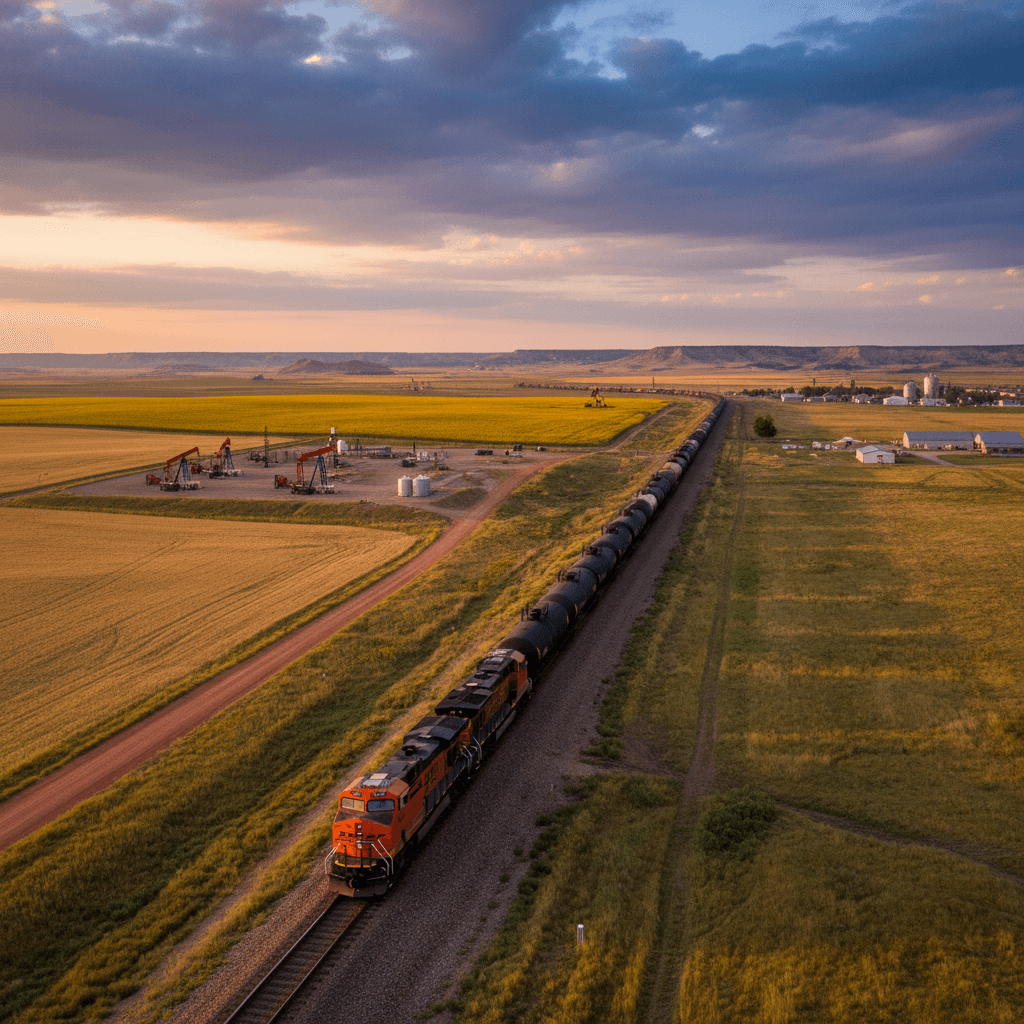
For Bakken operators, these converging trends paint a picture of extreme near-term volatility and long-term transition. The historic oil disruption supports high crude prices but also cripples key industrial and agricultural supply chains. Meanwhile, China's clean energy acceleration and the nuclear build-out underscore the sustained pressure on fossil fuel demand over the coming decades, even as current crises underscore the world's continued dependence on oil and gas.
Source
According to reports from OilPrice.com published on May 15 and May 16, 2026.

