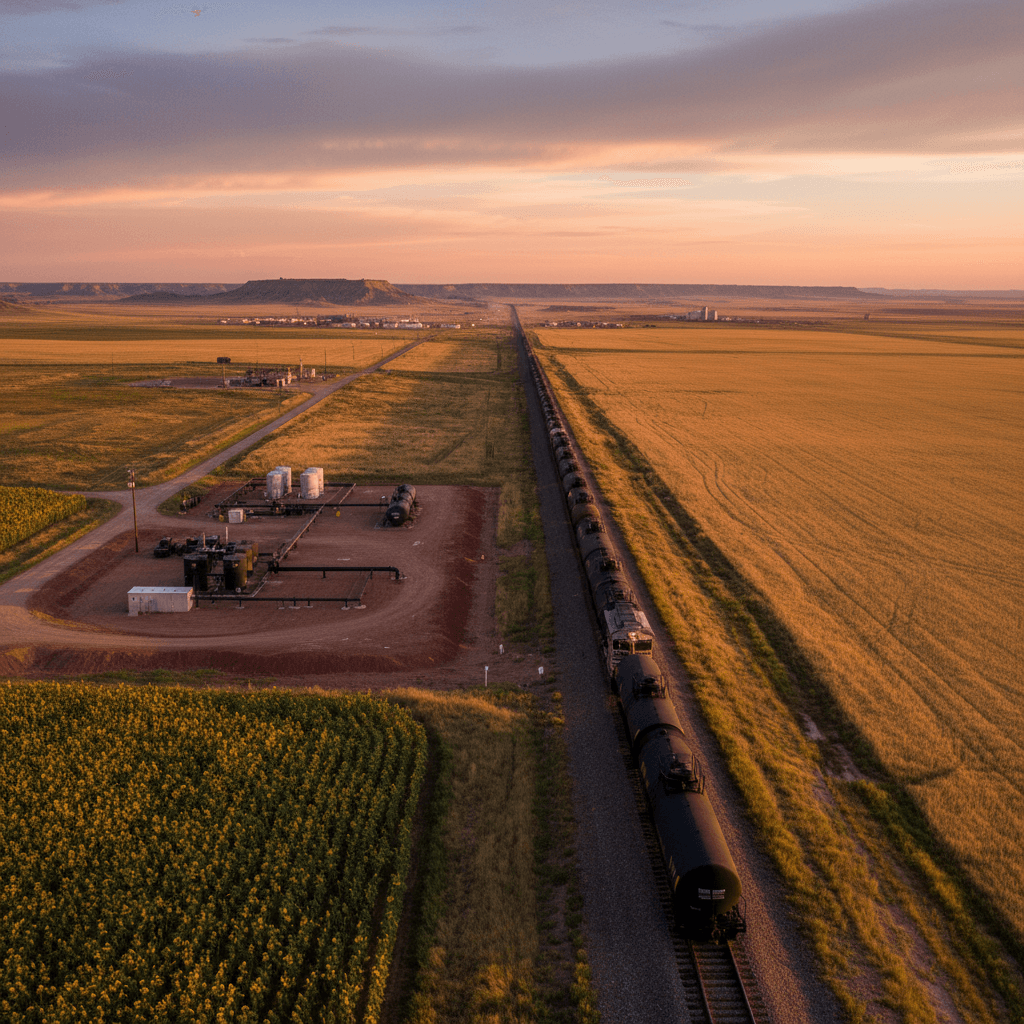
Global Energy, Metal Shocks Raise Costs for Bakken Operators
EU LNG ban and Persian Gulf disruptions tighten global markets as Texas power demand soars, pressuring Bakken production costs.
Europe's ban on Russian liquefied natural gas (LNG) and a severe blockade in the Persian Gulf are tightening global energy and industrial markets, raising the cost environment for oil and gas producers in North Dakota's Bakken formation. These simultaneous supply shocks increase competition for fuel and critical materials while signaling higher operational expenses.
The European Union began prohibiting spot-market purchases of Russian LNG on Saturday, April 25, according to a report from Rigzone. The ban could cut 2.8 million to 3.5 million tons of Russian LNG from the EU annually, roughly 3% of the bloc's total imports. This reduction coincides with a 40% jump in Europe's benchmark gas price due to conflict in the Middle East, forcing the continent to compete aggressively for alternative supplies to refill storage before winter.
The situation is exacerbated by the blockade of the Strait of Hormuz, which has trapped a fifth of global LNG supplies, Rigzone reported. Analysts warn the supply crunch could intensify. "We don’t see much of a risk to supply just yet, but there could be a change in a couple of months,” said Tom Marzec-Manser, director of Europe gas and LNG at Wood Mackenzie.
For Bakken operators, a tighter global gas market supports prices for associated natural gas but also increases costs for energy-intensive operations like drilling, sand processing, and wellsite power generation. The competition for LNG could also influence domestic gas pricing and pipeline flows.
Simultaneously, the Persian Gulf disruption is causing a historic shock to the aluminum market, a key material for manufacturing. According to OilPrice.com, analysts at trading firm Mercuria warn this is "the largest single supply shock a base metals market has suffered in the post-2000 era." The Gulf region accounts for 9% of world aluminum supply, and Mercuria estimates a deficit of at least 2 million tons by year-end.
Nick Snowdon, a Mercuria analyst, stated, “The most exposed supply chains to the Gulf shock are in the US and Europe.” For the Bakken, this implies rising costs for aluminum-intensive materials, including piping, wellhead equipment, and frac spread components, potentially increasing well development costs.
Domestically, soaring electricity demand in Texas presents another indirect pressure. The Electric Reliability Council of Texas (ERCOT) projects demand could reach 367,790 megawatts by 2032, more than quadrupling its current peak of 85,508 MW, Rigzone reported. While ERCOT President Pablo Vegas called the forecast "higher than expected," the identified growth is driven by large loads including data centers, cryptocurrency mining, and oil and gas processes.
This soaring demand in a major energy-consuming state could strain national power grids and increase electricity costs, affecting Bakken operators who rely on grid power for field operations and midstream facilities. Analyst Eli Rubin of EBW Analytics Group noted, "points to the near-insatiability of AI data center demand."
Collectively, these global and domestic market shifts create a more expensive operating landscape. Bakken producers face the dual challenge of capitalizing on supportive hydrocarbon prices while managing rising input costs for energy, metals, and power critical to drilling and completion activities.
Source
According to reports from Rigzone and OilPrice.com.

