
WTI Crude--
Brent Crude--
Natural Gas--
ND Rig Count--
WTI Crude--
Brent Crude--
Natural Gas--
ND Rig Count--
Global Energy Roundup: Aramco Mulls Asia Pricing, Hormuz Traffic Defies Tensions - Bakken Wire
Regulatory

Global Energy Roundup: Aramco Mulls Asia Pricing, Hormuz Traffic Defies Tensions

Saudi price move, stable shipping lanes, and UK carbon storage push have implications for Bakken crude competition and long-term strategy.

Bakken Wire Staffยท๐Ÿ”†Midday Wireยท

Saudi Aramco is preparing a new selling price for oil loaded at Egypt's Mediterranean port of Sidi Kerir for delivery to Asia, according to a Rigzone report. The move, if implemented, could adjust the competitive landscape for crude grades in the key Asian market. For Bakken producers, shifts in pricing by the world's largest exporter can influence global benchmarks and the relative attractiveness of U.S. light sweet crude exports.

In a related development, shipping traffic across the crucial Strait of Hormuz has picked up in recent days despite ongoing regional hostilities, Rigzone separately reported. The U.S. Navy has claimed it escorted some tankers across the waterway. Stable transit through this chokepoint is critical for global oil supply flows and price stability, factors that directly impact the revenue environment for North Dakota's oil producers.

Meanwhile, the carbon storage industry "has been given a significant boost" according to the UK's North Sea Transition Authority (NSTA). The NSTA announced the publication of two commissioned studies on the matter, Rigzone reported. While this development is centered in the UK North Sea, it reflects the global energy industry's accelerating pivot toward carbon capture and storage (CCS) technologies.

For the Bakken, these international developments underscore the interconnected nature of the oil market. Pricing strategies by major producers and geopolitical risks affecting shipping lanes are immediate factors for Bakken crude's competitiveness. The growing institutional focus on carbon storage, as seen with the NSTA, highlights a long-term strategic consideration for operators in North Dakota's basin as they assess future regulatory and economic landscapes tied to emissions management.

Source

According to Rigzone reports published July 29-30, 2026.
saudi aramcostrait of hormuzcarbon capture and storageccsoil pricesexportsshipping

Share this article

Related Articles

Federal Offshore Reef Program Announced, Bakken Impact Unclear - Bakken Wire
Regulatory

Federal Offshore Reef Program Announced, Bakken Impact Unclear

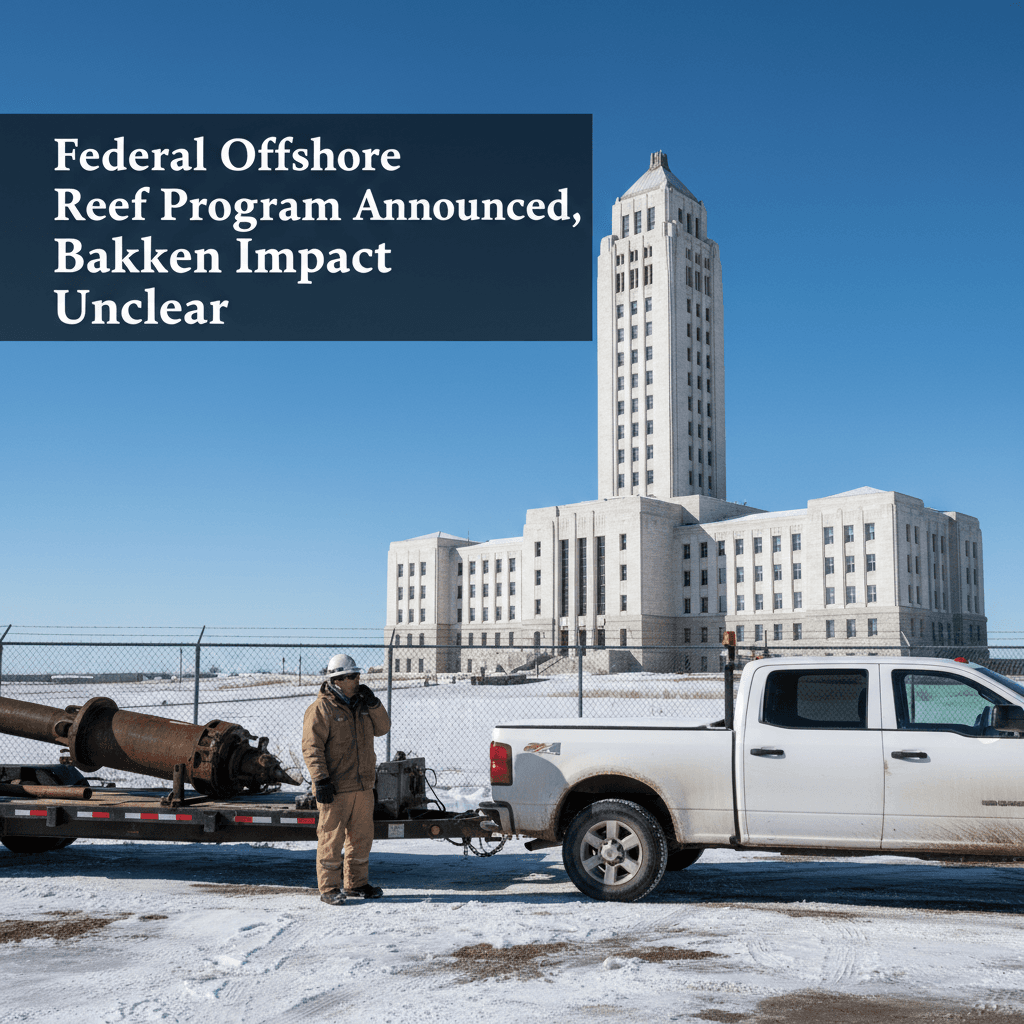
The federal Maritime and Minerals Administration (MMA) has announced a new "Reef in Place" program for the Outer Continental Shelf (OCS), according to a report from Rigzone. The program allows eligible decommissioned offshore structures to be converted into artificial reefs. Acting MMA Director Mike Olsen stated that the eligible structures "can continue to serve our coastal communities as artificial reefs," Rigzone reported. The announcement was made on November 18, 2026. The program applies specifically to federal offshore operations and has no direct regulatory or operational impact on onshore shale basins like North Dakota's Bakken formation. Bakken operators are subject to different state and federal land management and well-plugging regulations. For the Williston Basin industry, the news highlights the divergent regulatory paths for offshore versus onshore oil and gas development. While offshore operators may now have a new option for structure decommissioning, Bakken operators follow a stringent state-led process for well...

๐Ÿ”†Midday WireยทNov 18
Regulatory

Venezuela Gear Repairs, Federal Land Sale Plan Draw Bakken Attention

Friday, Nov. 13, 2026 โ€” Two policy developments reported by Rigzone on Nov. 12 are likely to draw attention from Bakken operators and royalty owners, even though neither report described North Dakota leases. Venezuela is sending state-owned oil equipment to the United States for repairs for the first time in more than a decade, according to Rigzone. The move points to a limited reopening of a trade channel that has been constrained for years. For Bakken operators, the broader significance lies in equipment logistics, service-market access and regulatory posture. The Bakken depends on a deep U.S. services base, so operators typically watch shifts in international equipment flows for signs of cost pressure, competition for shop capacity and changing trade-risk calculations. Rigzone also reported that the Trump administration unveiled plans to sell public land as part of a new strategy laying out Interior Department goals. For Bakken producers, federal-land policy matters...

โ˜€๏ธMorning WireยทNov 13
Regulatory

Venezuelan Oil Gear Sent to U.S. for Repairs After Decade

Venezuela is sending state-owned oil equipment to the United States for repairs for the first time in more than a decade, according to Rigzone. The report was published Thursday, Nov. 12, 2026. The development carries regulatory significance because it involves cross-border movement of state-owned oil equipment, a type of transaction that can be shaped by policy decisions, licensing and sanctions-related restrictions. Rigzone did not provide additional details on the equipment, the regulatory approvals involved or the companies performing the repairs. For Bakken operators, the significance is indirect but real. North Dakota producers depend on a deep U.S. oilfield services base for drilling, completions, workovers and maintenance. When foreign state-owned oil equipment uses U.S. repair shops and service yards, it can reflect the availability of American industrial capacity. It can also affect demand for specialized parts, machining, inspection and repair crews that compete with domestic workloads. The move may also signal...

๐ŸŒ…Afternoon WireยทNov 12