WTI Crude--
Brent Crude--
Natural Gas--
ND Rig Count--
WTI Crude--
Brent Crude--
Natural Gas--
ND Rig Count--
Regulatory

EIA Projects Record US Gas Output Amid Rising Demand, AI Data Center Buildout

As domestic consumption and LNG exports rise, North Dakota's Bakken formation is poised to help meet record production forecasts through 2027.

Bakken Wire Staff·☀️Morning Wire·

U.S. natural gas production is on track to hit new record highs in 2026 and 2027, with surging demand from liquefied natural gas (LNG) exports and a wave of gas-fired power plants for AI data centers driving the outlook, according to U.S. Energy Information Administration (EIA) data released in September 2026. For North Dakota's Bakken formation, a major gas-producing region, the forecasts reinforce a strong market for associated natural gas, despite a recent regulatory setback for a gas plant project in North Carolina.

The EIA now expects dry natural gas production to rise from a record 107.6 billion cubic feet per day (bcfd) in 2025 to 111.7 bcfd in 2026 and 115.9 bcfd in 2027, OilPrice.com reported. Domestic gas consumption is projected to increase from 91.9 bcfd in 2025 to 92.2 bcfd in 2026 and 94.3 bcfd in 2027. Average U.S. LNG exports are forecast to climb from 15.1 bcfd in 2025 to 17.4 bcfd in 2026 and 18.6 bcfd in 2027.

A significant portion of new demand is linked to the rapid buildout of data centers for artificial intelligence across the United States. According to a Global Energy Monitor (GEM) report cited by OilPrice.com, roughly half of the new gas-fired power capacity under development is directly tied to data centers. The U.S. is now constructing around twice as much gas-fired capacity as China, with its total gas power capacity at any stage of development rising 50% since January 2026 to 378 gigawatts.

"If all of these projects are completed, the United States will increase its gas fleet by around two-thirds, at a capital cost of over $647 billion," the GEM report found. Jenny Martos, a project manager at Global Energy Monitor, stated, "There has been an enormous surge in data centre proposals powered by gas in the past year, and the climate implications of that are huge. Building all of this gas for AI locks in decades of pollution."

This demand surge coincides with a judicial ruling that blocked a Duke Energy gas power plant in North Carolina, as reported by OilPrice.com. While individual projects face regulatory hurdles, the broader national trend points to robust, long-term demand for natural gas.

For Bakken operators, the EIA's revised upward forecasts and the link between AI infrastructure and gas-fired generation signal sustained need for the region's gas output. The data underscores a national energy landscape where record production is required to meet both growing LNG export commitments and burgeoning domestic power demand, positioning Bakken gas as a key contributor to the U.S. supply stack through the end of the decade.

Source

OilPrice.com
natural gaseiaproduction forecastlng exportsai data centersdemandbakken

Share this article

Related Articles

Regulatory

Democratic Election Wins Set to Alter Federal Energy Landscape for Bakken

The Democratic Party's wins in the 2026 midterm elections, securing control of both the House and Senate, are poised to reshape U.S. energy policy, creating a new regulatory environment for Bakken operators, according to an OilPrice.com analysis. The incoming Democratic-majority Congress is expected to launch investigations into oil deals involving the Trump White House and attempt to revive clean energy tax credits, increasing policy uncertainty at the federal level. Key investigations will focus on "the biggest oil deal in world history" in Venezuela and a 'diesel deal' with Russia's Vladimir Putin on the eve of the elections, OilPrice.com reported. Democratic Senator Ed Markey of Massachusetts, a member of the environment and public works committee, signaled the aggressive posture on election night. "They are going to need to plant new forests for all of the subpoenas we’ll be printing," Markey said. While President Donald Trump has vowed to veto legislation he...

🌅Afternoon Wire·Nov 8
Regulatory

Bakken Producers Watch Windfall Tax Debate

North Dakota’s Bakken operators are facing a new regulatory watch item after Rigzone reported that the oil industry is bracing for Democrats to use their newfound political muscle to push for a deal with President Donald Trump and impose a windfall tax. The report, published Thursday, Nov. 5, says the sector is preparing for the possibility of a windfall tax rather than describing a measure already enacted. For Bakken producers, the development matters because the Williston Basin remains one of North Dakota’s most important oil-producing areas, and state and federal tax changes can alter the economics of new wells, lease operating costs and capital returns to owners. According to Rigzone, the political discussion centers on Democrats leveraging their newfound political muscle to seek an agreement with Trump that could impose a windfall tax. The summary does not identify the tax rate, the companies that would be covered or the timing...

☀️Morning Wire·Nov 6
Oil Industry Braces for Potential Windfall Tax Push - Bakken Wire
Regulatory

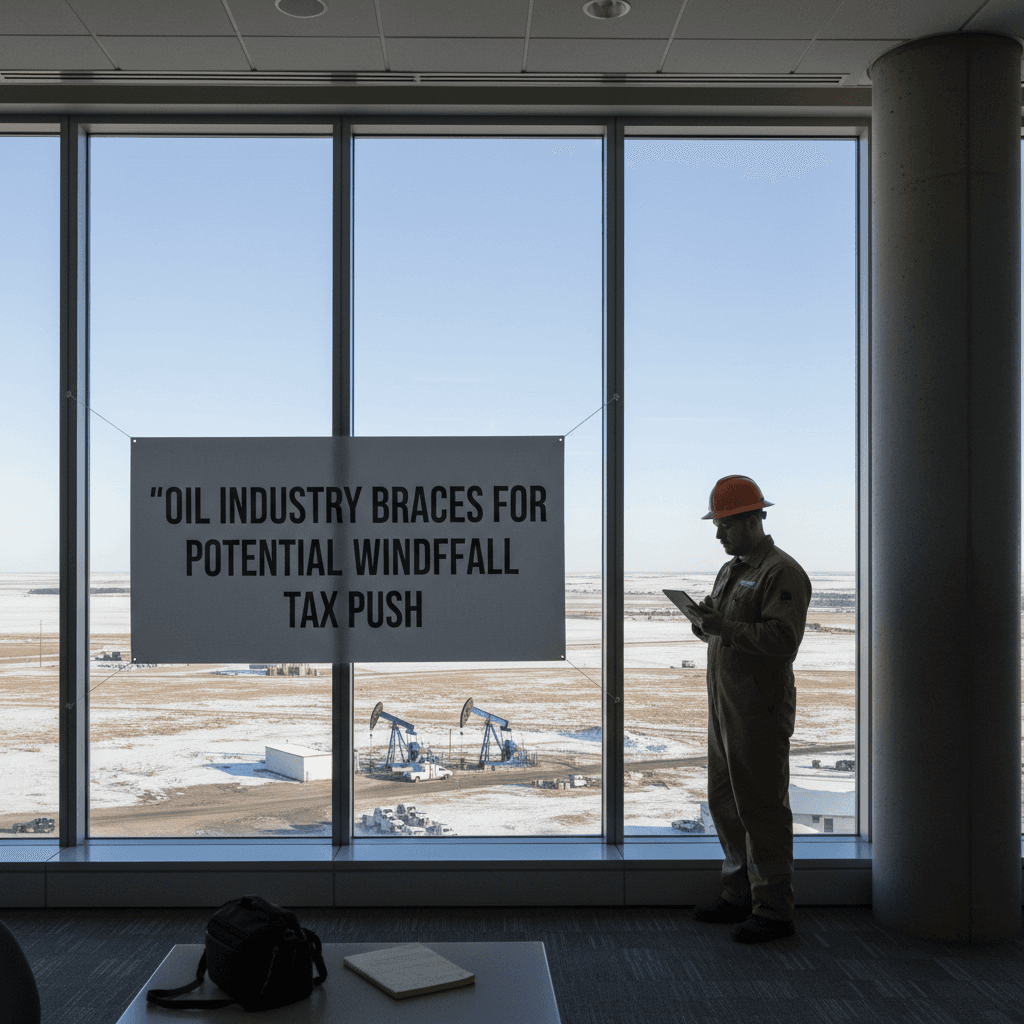
Oil Industry Braces for Potential Windfall Tax Push

The U.S. oil industry is preparing for the possibility of a new federal windfall tax, according to a report from Rigzone. The news service reported that the sector is bracing for Democrats to use their newfound political muscle to push for a deal with President Donald Trump to impose such a tax. For Bakken formation operators in North Dakota, the specter of a windfall tax represents a significant regulatory and financial uncertainty. Such a tax would typically target periods of high profitability, potentially reducing the capital available for drilling, well completion, and production operations in the Williston Basin. The reported political dynamic suggests a potential shift in Washington's approach to energy policy. A windfall tax could directly impact the cash flow of companies operating in the Bakken, one of the nation's primary oil-producing regions. This could influence decisions on everything from maintaining rig counts to funding new well development. While...

🌅Afternoon Wire·Nov 5