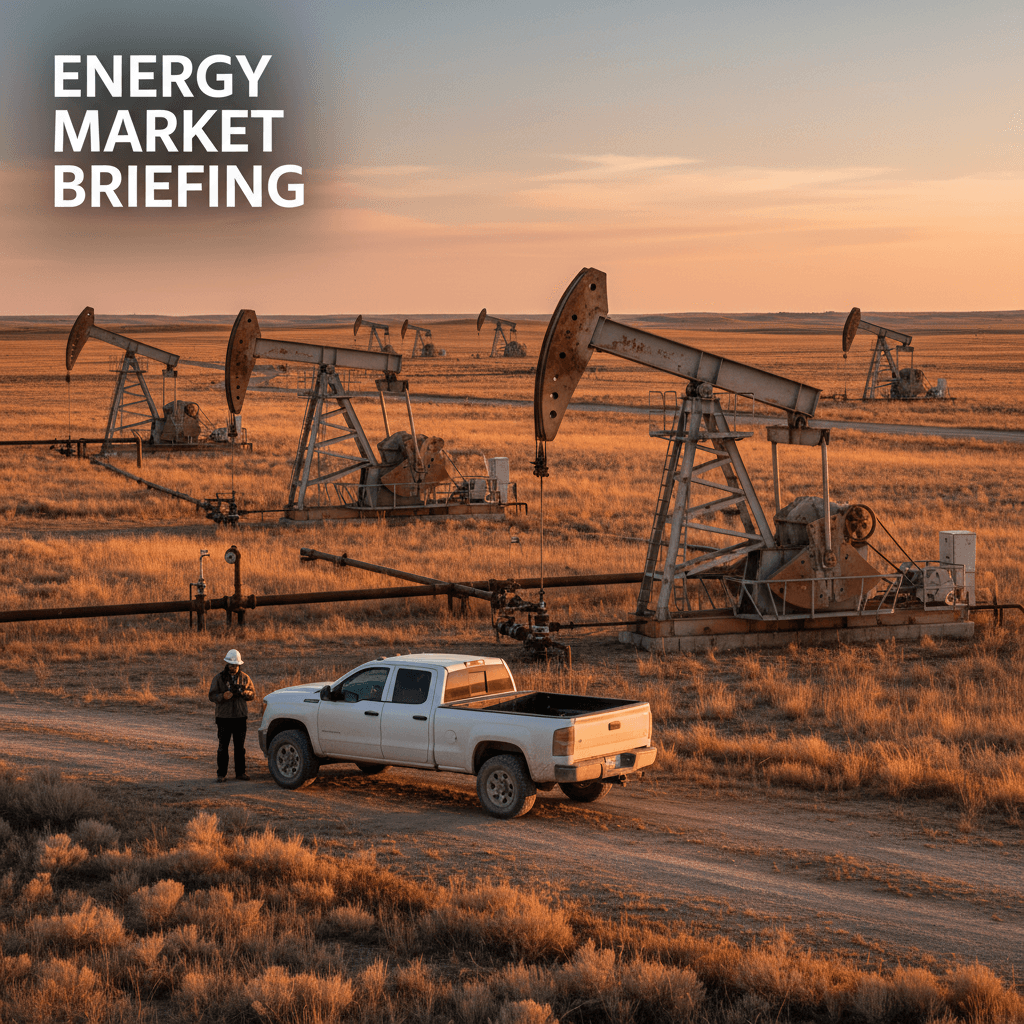
Global Energy Roundup: Venezuela Output Surges, UK Inflation Worries Mount
Chevron reports major production gains in Venezuela as rising energy costs threaten to push UK inflation higher; power constraints may slow automation adoption.
Venezuela's oil production is accelerating under renewed U.S. investment, with Chevron reporting significant output increases, according to an OilPrice.com report. Following the political change in January, U.S. firms are pushing to raise production in the country, which holds the world's largest proven crude reserves of roughly 303 billion barrels.
Chevron CFO Eimear Bonner stated the supermajor has increased its oil production in Venezuela from 40,000 barrels per day (bpd) to 250,000 bpd over the past few years. Output from its three joint ventures alone rose 12% year-on-year over the past six months to 280,000 bpd. Bonner added Chevron expects its production across Venezuela to rise by 50% by the end of 2028, reaching 420,000 bpd.
Nationwide, average crude oil production by PDVSA and its foreign partners increased by 20,000 bpd in July to 1.21 million bpd, according to Ministry of Hydrocarbons data. This compares to an average of 847,000 bpd in 2025. The report notes that Spain's Repsol is another major actively seeking to triple production in the country.
Meanwhile, rising energy prices are set to push UK inflation higher, complicating the global economic picture. According to a separate OilPrice.com report, the UK's Consumer Prices Index (CPI) inflation is tipped to rise to 2.9% in July from 2.6% in June. This follows a July hike in the energy price cap by regulator Ofgem, which increased the average annual household gas and electricity bill by £221 to £1,862.
Economist Ellie Henderson of Investec said this energy price jump alone will add 0.5 percentage points to July’s inflation reading. RSM chief economist Thomas Pugh noted the rise adds "fresh pressure to household budgets and complicates the outlook for interest rates." UK economic growth recently slowed to 0.4%, described as a first warning of an impending slowdown linked to higher prices and borrowing costs from the Iran war.
In industry operations, a Rigzone summary indicates power constraints are becoming a real brake on robotic adoption, according to Robert Liew, Director of Integrated Energy Research at Wood Mackenzie. This note on infrastructure limitations comes as global energy systems face increasing demand and complexity.
For Bakken operators, these global developments highlight a shifting supply landscape with the potential return of a major heavy oil producer, while broader inflationary pressures and energy-driven cost increases could impact operating expenses and the economic environment for future projects.
Source
OilPrice.com (Venezuela, UK inflation), Rigzone (robotics adoption)