Global Energy Security Shocks Mount, Raising Bakken Price Outlook
Proposed Hormuz toll and escalating Russia-Ukraine attacks threaten to sustain higher oil prices, benefiting ND producers.
A proposed 20% U.S. toll on Strait of Hormuz cargo and a new wave of attacks on Russian refineries are compounding global energy market instability, setting the stage for sustained price support crucial to Bakken producers. The dual shocks underscore the fragile state of global energy trade, a key determinant for North Dakota's oil-dependent economy.
According to OilPrice.com, former President Donald Trump has proposed charging ships 20% of the commercial value of all cargo passing through the critical Strait of Hormuz. The report calculates that, with pre-conflict oil flows of 21 million barrels per day, such a toll could add approximately $294 million daily to oil shipment costs alone, or over $107 billion annually if oil is priced at $70 per barrel. This would transform a geopolitical disruption into a permanent structural cost for global energy markets.
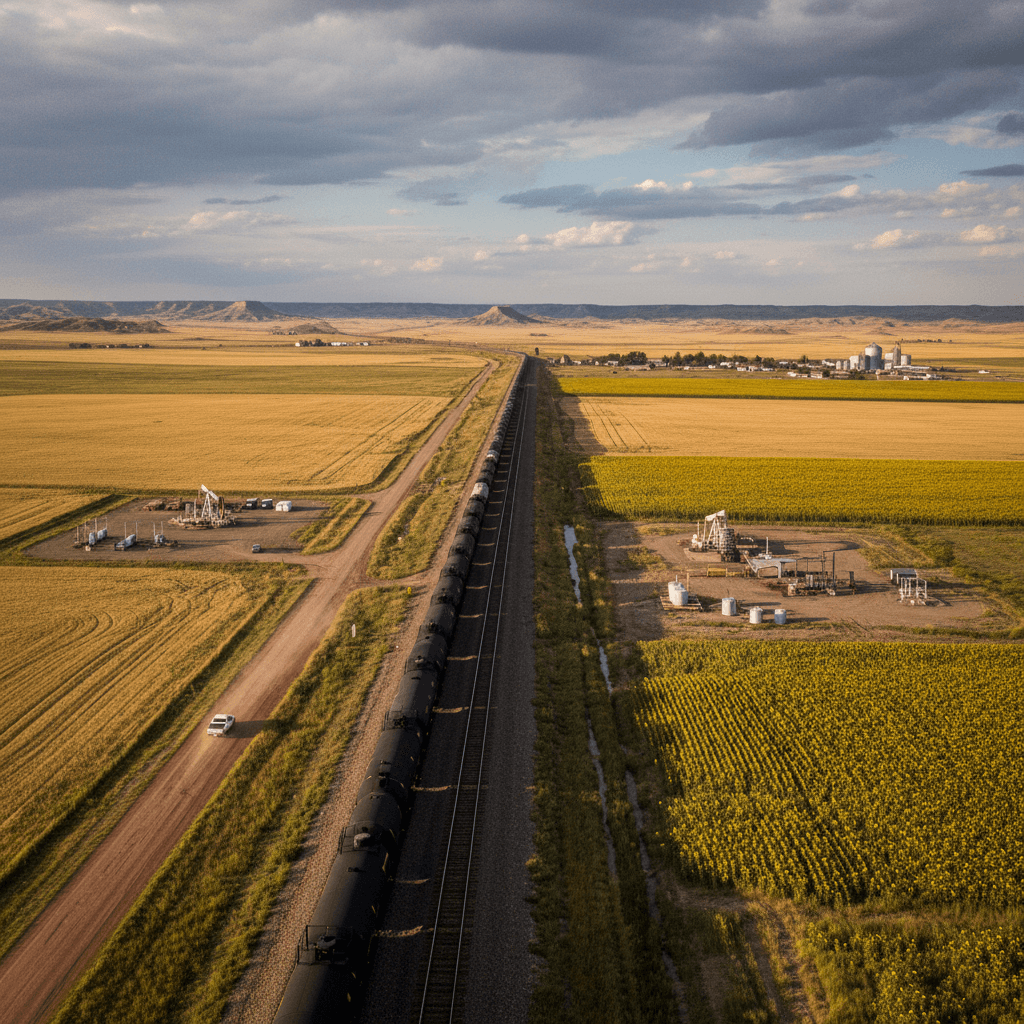
For Bakken operators, any policy that adds a significant, lasting premium to the cost of waterborne crude directly benefits the economics of inland production. Higher global benchmark prices, driven by such supply chain costs, improve the netback for North Dakota crude, which is largely transported via pipeline and rail.
Simultaneously, refinery disruptions in Russia are tightening global fuel supplies. Rigzone reported that a wave of Ukrainian attacks has pushed Russian refinery runs to their lowest level in more than 21 years. In a separate report from July 14, Rigzone noted that Kyiv struck a slew of Russian energy targets overnight, while Moscow retaliated by hitting fuel facilities in the Ukrainian port of Odesa.
These attacks constrain global diesel and gasoline production, supporting crack spreads and providing indirect bullish pressure on crude feedstock prices, including Bakken barrels. The reduction in Russian refining capacity limits the amount of petroleum products available on the global market, potentially increasing demand for U.S.-refined products and the crude oil needed to produce them.
The combined effect of a potential major new tariff on seaborne oil and continued attrition of refining capacity in a major producing nation creates a volatile but price-supportive environment. While the proposed Hormuz toll is described by OilPrice.com as "legally questionable, economically incoherent and strategically dangerous," its mere proposal injects a new layer of risk premium into oil markets.
For North Dakota, where state revenue and operator budgets are highly sensitive to crude prices, prolonged periods of geopolitical risk premium can directly translate into increased drilling activity, higher production, and greater royalty payments. The state's producers, who operate outside of these immediate conflict zones, stand to benefit from the dislocation and increased costs affecting other major supply routes and refining centers.
The ongoing instability highlights the relative security of U.S. inland supply chains, though Bakken crude prices remain ultimately tied to global benchmarks swayed by these events.
Source
OilPrice.com, Rigzone