Global Energy Shift Accelerates Post-War, Solar Dominates U.S. Additions
Persian Gulf pipeline scramble and continued U.S. solar boom reshape energy landscape, with implications for long-term oil trade and competition.
The permanent closure of the Strait of Hormuz is forcing a fundamental rewiring of global oil trade, with Gulf exporters accelerating pipeline projects to bypass the critical chokepoint, according to an OilPrice.com report. The legacy of the Middle East war is expected to permanently alter energy infrastructure, moving exports away from vulnerable maritime routes.
Persian Gulf exporters are urgently rerouting crude from ports to pipelines. The UAE is aiming to have an operational pipeline to the port of Fujairah by 2027, while Saudi Arabia is already using its East-West pipeline to bypass the blockade. Iraq, whose southern output has plunged 70% to 1.3 million barrels per day due to its reliance on Hormuz, is discussing tripling its pipeline capacity within three months. Analysts say the "genie is out of the bottle" now that Iran's longstanding threat has materialized.
Concurrently, solar power continues to dominate new energy capacity additions in the United States, despite a shift in federal policy. Data from the Federal Energy Regulatory Commission (FERC) shows solar was the largest form of new installations for the 28th straight month as of last year, according to OilPrice.com. Renewables made up 88% of all 2025 energy additions, with utility-scale solar alone accounting for 72.6%.
FERC projects solar capacity will grow by 86 gigawatts over the next three years, surpassing coal and becoming the nation's second-largest energy source behind natural gas by 2029. A shortage of gas-fired turbines is further incentivizing investment in renewables and storage as the fastest way to add new power. Industry leaders describe the current period as one of the best for renewable investment in the U.S. in two decades.
In other energy news, OPAL Fuels and GFL have agreed to two joint projects to produce renewable natural gas at landfills in Alabama and Georgia, Rigzone reported. The projects will be located at the Stones Throw Landfill in Tallapoosa County, Alabama, and the Grady Road Landfill in Polk County, Georgia.
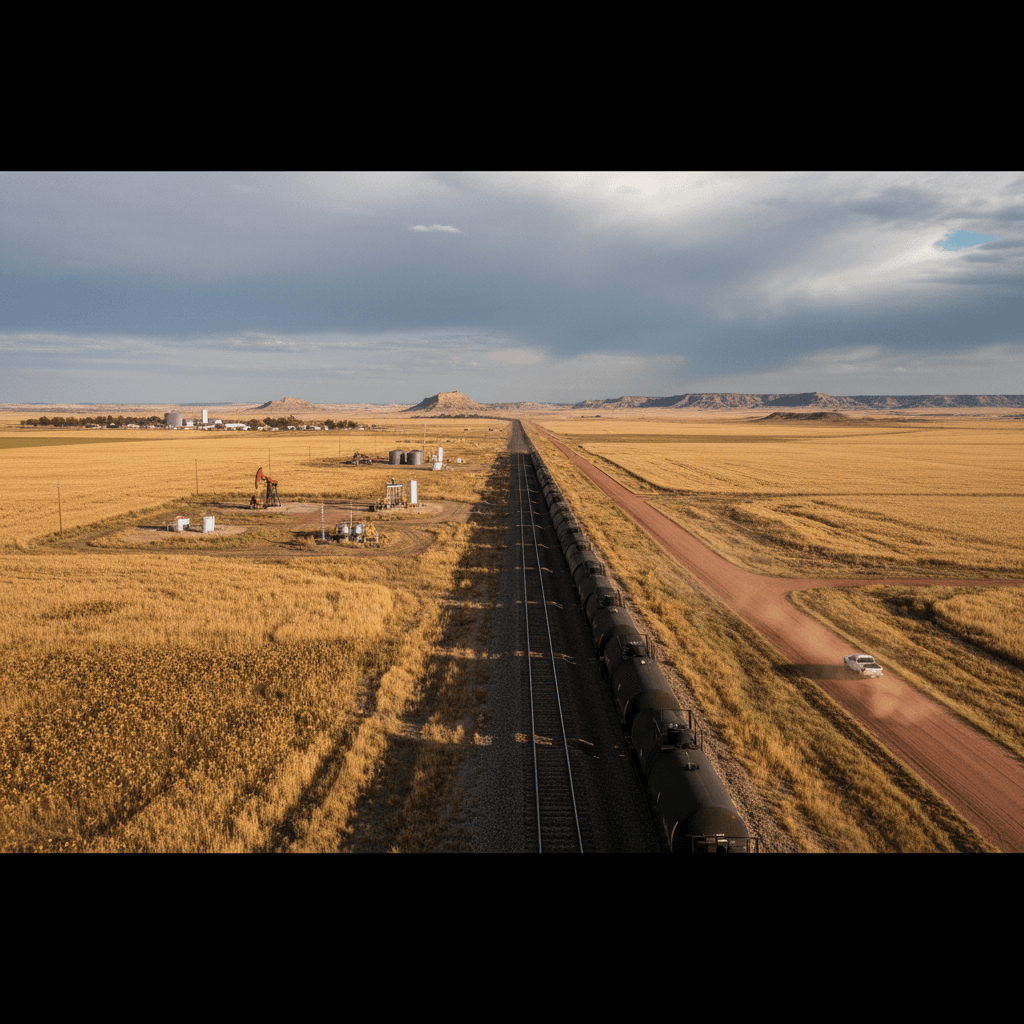
For Bakken operators, these global trends underscore a shifting competitive and demand landscape. The restructuring of Persian Gulf export routes could affect long-term global crude oil price benchmarks and trade flows. Meanwhile, the relentless growth of domestic solar capacity highlights the evolving U.S. energy mix, even as natural gas—a key companion to Bakken oil production—remains the dominant source.
Source
OilPrice.com, Rigzone

