Global Energy Shifts Drive Record U.S. Exports, Supply Pain
UK accelerates renewables push as Asian demand for U.S. crude soars amid Middle East supply shock, impacting global oil flows.
The United States is poised to set a monthly record for crude oil exports, with shipments projected to hit 5.44 million barrels per day in April, according to data from Kpler cited by Reuters. Exports are forecast to climb further to 5.48 million bpd in May, driven by soaring demand from Asia following the disruption of Middle Eastern supplies due to the war in Iran.
Most U.S. export tankers are heading to Asia, with flows to the continent surging to 2.27 million bpd in April and an expected 3.29 million bpd in May, the Kpler data shows. This marks a dramatic increase from the 1.11 million bpd shipped in January. The surge comes as Asia's total crude imports have collapsed, falling to an estimated 14.8 million bpd in April from 24.87 million bpd in February before the conflict, highlighting a supply gap that U.S. producers are helping to fill.
Meanwhile, the UK government announced a major push on Tuesday to break the link between volatile natural gas prices and electricity bills by accelerating clean energy projects. The plan aims to unlock up to 10 gigawatts of new renewable capacity on government land, powering the equivalent of 5 million homes, according to a statement from Energy Secretary Ed Miliband. The government also plans the biggest overhaul in years of planning and grid connection rules to speed up project development.
The UK's move comes as it, and other import-dependent nations, feel the shock of soaring oil and gas prices since the war began. The UK saw record wind power generation in Q1 2026 but still relies on gas for about a third of its electricity.
The supply crunch is causing severe pain for other importers. Pakistan is now paying an all-time high premium of $34 per barrel on petroleum product imports, according to a report by the Express Tribune. Pakistan State Oil reported a premium of $35.612 per barrel on a recent diesel cargo. The country, which imports about 80% of its oil, is vulnerable due to its reliance on Strait of Hormuz flows for LNG, diesel, and crude.
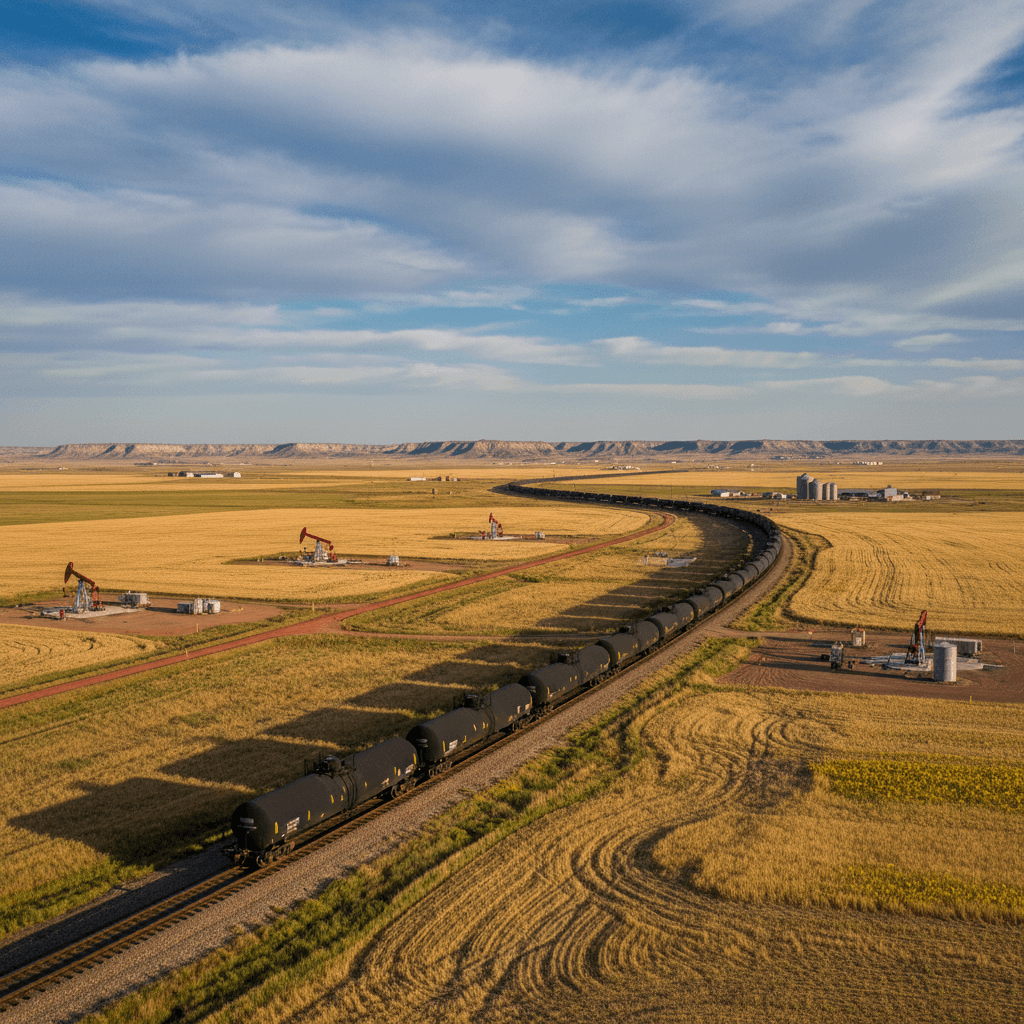
For Bakken operators, the record U.S. export figures and the structural shift in global flows toward American crude underscore the critical role of domestic production in a destabilized market. The intense Asian demand for non-Middle Eastern barrels provides a key outlet for North Dakota crude. However, the UK's accelerated renewable push and the severe supply shocks impacting importers illustrate the dual pressures of the energy transition and geopolitical volatility shaping long-term demand and security concerns.
Source
OilPrice.com reports from April 21, 2026, citing UK government statements, Kpler data via Reuters, and the Express Tribune.