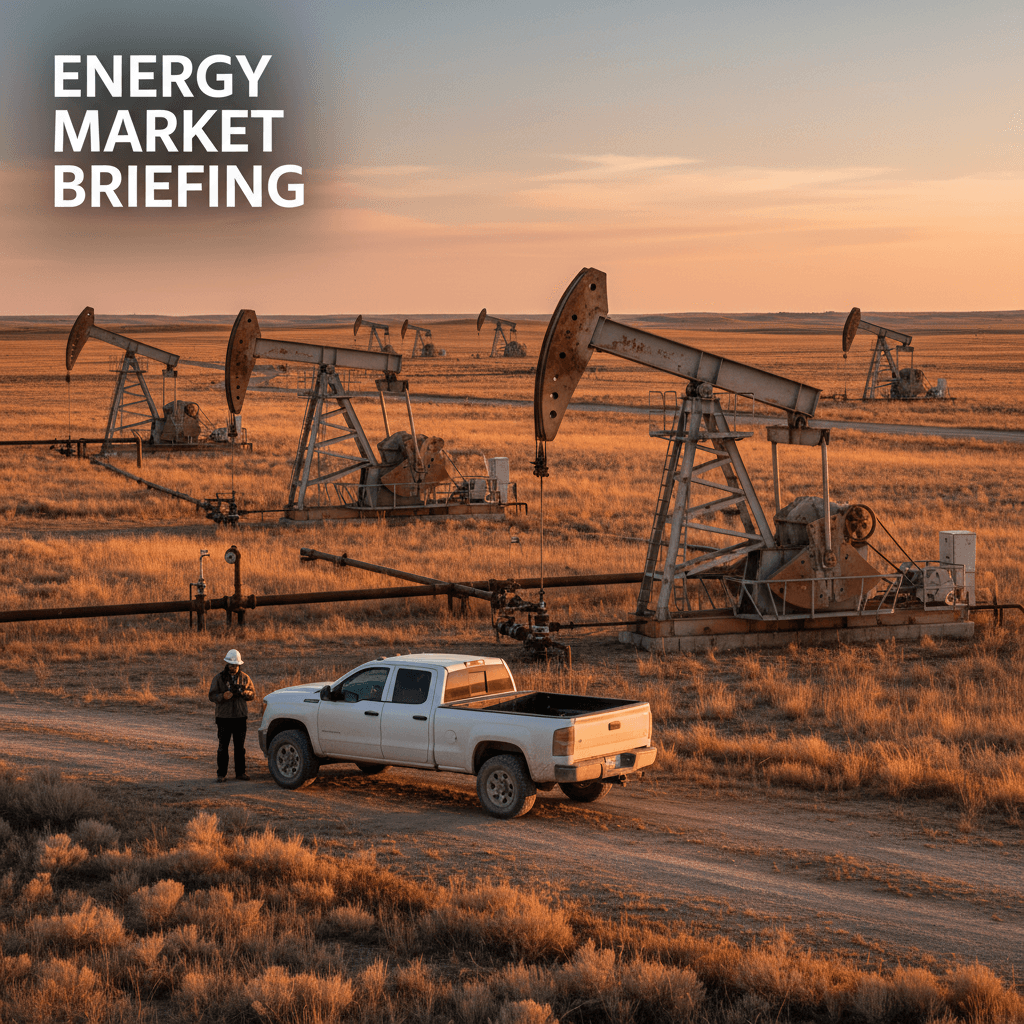
Global Energy Shifts Highlight Security, Tech Race as Bakken Watches
European policy stumbles, U.S. nuclear lead, and surging EV demand form a complex backdrop for oil and gas producers.
European energy policy is facing heightened scrutiny as a severe heat wave coincides with warnings of stalled investment in the continent's clean energy transition. According to a report from Semafor cited by OilPrice.com, bankers at London Climate Action Week last week argued that EU and UK regulations are too prescriptive and risk curbing crucial transition financing. The report states European leaders have "floundered" in response to recent energy crises, failing to establish sufficient protective measures after supply shocks from the war in Ukraine and the closure of the Strait of Hormuz.
The continued volatility underscores a global push for energy security through diversification. As noted in an op-ed for Fortune, renewables like wind and solar are increasingly viewed as tools for energy autonomy because they "cannot be embargoed, blockaded, or shut off by a foreign power." However, OilPrice.com reports that Europe's efforts have been "insufficient," leaving a major energy gap as it faces extreme heat, which a new Allianz risk report calls a "structural economic risk" that could cost Europe's largest economies over $600 billion by 2030.
In contrast, the United States is building a substantial lead in one advanced energy technology. New data from Visual Capitalist and the National Public Utilities Council shows the U.S. has 28 small modular nuclear reactor (SMR) siting announcements, more than the next four countries combined. National laboratories lead U.S. activity with seven announcements. SMRs, which produce up to 300 MWe, are seen as a flexible, clean-energy technology suited for remote sites or data centers where full grid connections are costly.
Meanwhile, electric vehicle adoption, a key driver of long-term oil demand forecasts, received a jolt from Tesla's second-quarter results. The company reported 480,126 vehicle deliveries, crushing Wall Street estimates of roughly 406,600, according to OilPrice.com. Deliveries surged from 358,023 in the first quarter. Tesla's energy storage segment also saw strong growth, deploying 13.5 GWh of battery storage, up from 9.6 GWh a year ago. The results, driven partly by improving European demand, suggest stronger-than-anticipated EV market momentum.
For Bakken operators, these global developments highlight the competing pressures shaping the energy landscape. European policy uncertainty and vulnerability to supply shocks reinforce the strategic value of stable, secure hydrocarbon production from regions like North Dakota. Simultaneously, the aggressive U.S. rollout of SMRs points to a future with more diverse, reliable baseload power that could impact industrial and operational energy costs. Tesla's blowout quarter serves as a reminder that electrification of transport continues to advance, potentially influencing long-term planning for oil producers despite current robust demand.
Source
OilPrice.com reports from July 2, 2026.