Global Energy Shifts Impact Markets as Bakken Operators Watch Volatility
Russian project start-up and renewed Hormuz closure create competing pressures on oil prices, while U.S. space nuclear plans signal long-term energy focus.
A major Russian oil project has started production while a critical Middle East oil chokepoint has closed again, creating competing forces for global crude markets watched by Bakken operators. Meanwhile, the U.S. government is pushing a new long-term energy frontier with plans for a nuclear reactor in lunar orbit.
PJSC Gazprom has achieved commercial oil production from the sixth block of the Achimov deposits at the Urengoyskoye field in West Siberia, according to Rigzone. The state-owned company started four wells in Block 6A using mobile treatment units and plans to drill more than 40 wells for full-scale development.
Gazprom described the Achimov deposits as geologically complex, lying at depths of 11,150 to 12,140 feet with low permeability and high pressure. The project employs high-tech solutions like 3D modeling for drilling long horizontal wells and multi-stage hydraulic fracturing, techniques also foundational to Bakken shale development.
"The first-ever production of oil from the Achimov deposits of the Urengoyskoye field was made possible due to the development of tools for digital modeling and drilling of high-tech wells," said Gazpromneft-Zapolyarye director-general Vladimir Krupenikov, according to the report. The Urengoy field, discovered in 1966, is a traditional gas-producing area.
In a stark reversal for oil transit, Iran's Islamic Revolutionary Guard Corps declared control of the Strait of Hormuz had "returned to its previous state" on Saturday, closing the waterway, OilPrice.com reported. This walk-back came just hours after markets had priced in an opening, causing Brent crude to fall roughly 9.5% to around $89.89 a barrel on Friday.
The IRGC cited an ongoing U.S. naval blockade of Iranian ports, calling it "piracy," and stated the strait would remain shut until the blockade is lifted. This directly contradicted a statement from President Donald Trump that the strait was "completely open for business." The strait handles roughly 20 million barrels per day, or 20% of global oil supply.
On the water, ship tracking showed minimal traffic, with Bloomberg reporting several oil tankers had turned back in the Persian Gulf after appearing to attempt passage, according to the source.
In a separate long-term energy development, the Trump administration has mandated that NASA, the Pentagon, and the Department of Energy develop a nuclear system capable of orbiting the moon, with a target launch date of 2028, OilPrice.com reported. The plan, issued April 14, aims to fast-track reactor designs for space, where solar and fossil fuels are not viable for permanent bases.
"With great power competition rising, the ocean floor, Arctic, and lunar surface are becoming the front lines of global security and economic progress — but they remain energy deserts," said Tyler Bernstein, CEO of nuclear battery startup Zeno Power, according to the source.
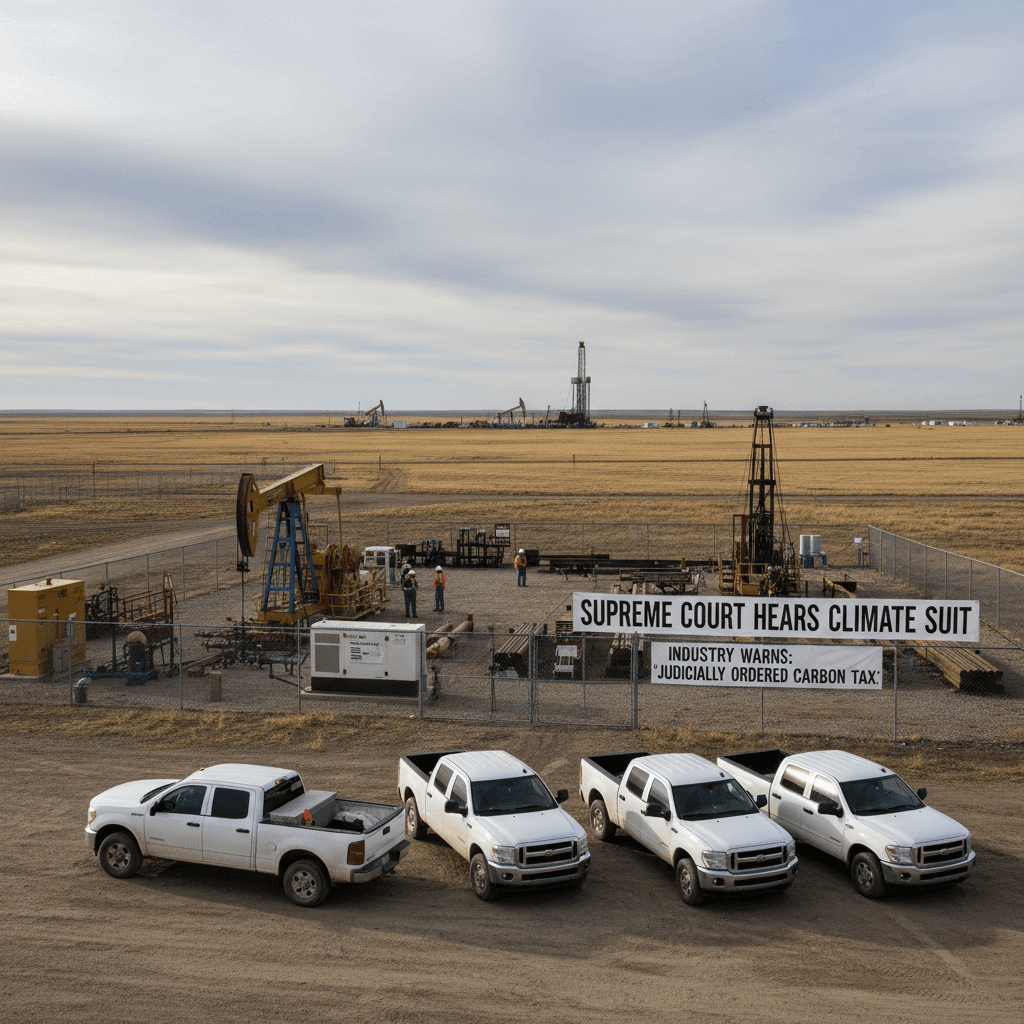
For Bakken operators, the immediate focus remains on the volatile crude price signals stemming from the geopolitical standoff at Hormuz, which threatens to reverse Friday's price drop, while the start-up of new complex oil projects in Russia underscores continued global investment in technically challenging reserves.
Source
According to Rigzone and OilPrice.com