WTI Crude--
Brent Crude--
Natural Gas--
ND Rig Count--
WTI Crude--
Brent Crude--
Natural Gas--
ND Rig Count--
Global Energy Strikes, Coal Deal May Pressure Bakken Gas - Bakken Wire
Global Markets

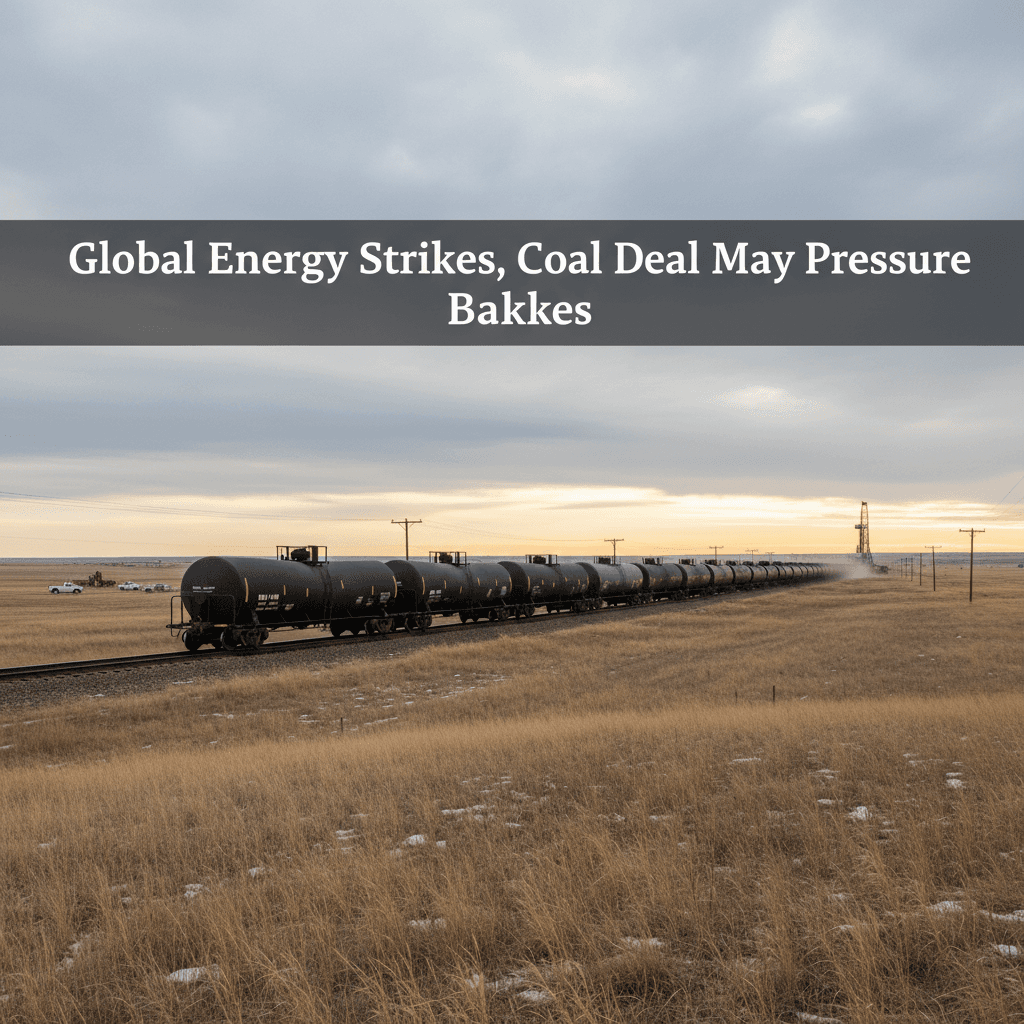
Global Energy Strikes, Coal Deal May Pressure Bakken Gas

Russian attacks on Ukraine power plants and a major U.S. coal supply contract could influence natural gas markets tied to Bakken production.

Bakken Wire Staff·🔆Midday Wire·

Russian forces launched a "massive strike" on Ukrainian electricity plants overnight, according to a report from Rigzone. While geographically distant, such attacks on global energy infrastructure have historically contributed to volatility in worldwide energy markets, including natural gas.

Separately, Hallador Energy has signed a $700-million agreement to supply a utility operating in the Midcontinent Independent System Operator (MISO) Zone 6, Rigzone reported. The coal will be supplied from the Merom Generating Station in Indiana.

For Bakken operators, these developments underscore external market forces that can influence local economics. The Bakken formation produces significant associated natural gas alongside its crude oil. The price of that gas, and the economics of capturing versus flaring it, are sensitive to broader supply and demand fundamentals.

Increased geopolitical tension, highlighted by the attacks on Ukrainian energy assets, can lead to heightened uncertainty in European gas markets. This can have a knock-on effect on U.S. LNG export dynamics and domestic natural gas pricing benchmarks, which Bakken gas prices often track.

The long-term coal supply contract for MISO, a major regional grid, indicates continued demand for baseload power generation from fossil fuels in parts of the Midwest. Sustained coal plant operation can compete with natural gas for power generation demand, potentially applying a ceiling on gas price rallies in the region.

Ultimately, Bakken wellhead economics are driven primarily by crude oil prices. However, the value of the associated gas stream remains a key factor for operator cash flow and the state's gas capture goals. Events that pressure or support national gas prices directly impact that revenue component and the economic incentive to reduce flaring in North Dakota's oil fields.

Source

According to reports from Rigzone on October 14, 2026.
natural gasgeopoliticsenergy marketsflaringmisobakken

Share this article

Related Articles

The Midday Take - Energy Market Briefing
Global Markets

Energy Market Briefing

Bakken Wire Midday Energy Briefing Saturday, November 28, 2026 1. Headlines Oil prices are mixed in thin post-Thanksgiving trading. As of midday, WTI crude is down 0.72% to $83.08, while Brent crude has edged up 0.22% to $90.84. According to Rigzone, Brent is heading for its first weekly gain in five weeks, breaking a cold streak. The immediate price action is being attributed to a focus on rising Middle East attacks, specifically recurring Houthi strikes on Saudi energy infrastructure like the Ras Tanura refinery. Geopolitical and supply-side headlines dominate. OilPrice.com reports that the widely forecasted oil glut is looking "increasingly elusive," with physical market tightness pushing Dated Brent toward $100. This is attributed to Houthi attacks, faltering Norwegian supply, and lower-than-expected Iraqi exports. Ahead of a critical OPEC+ meeting this Sunday, Iraq is publicly pushing for a higher production quota, arguing it needs more revenue for infrastructure. However, three unnamed...

🔆Midday Wire·Nov 28
Russian Refinery Attacks Cut Runs to Multi-Decade Lows, Rystad Says - Bakken Wire
Global Markets

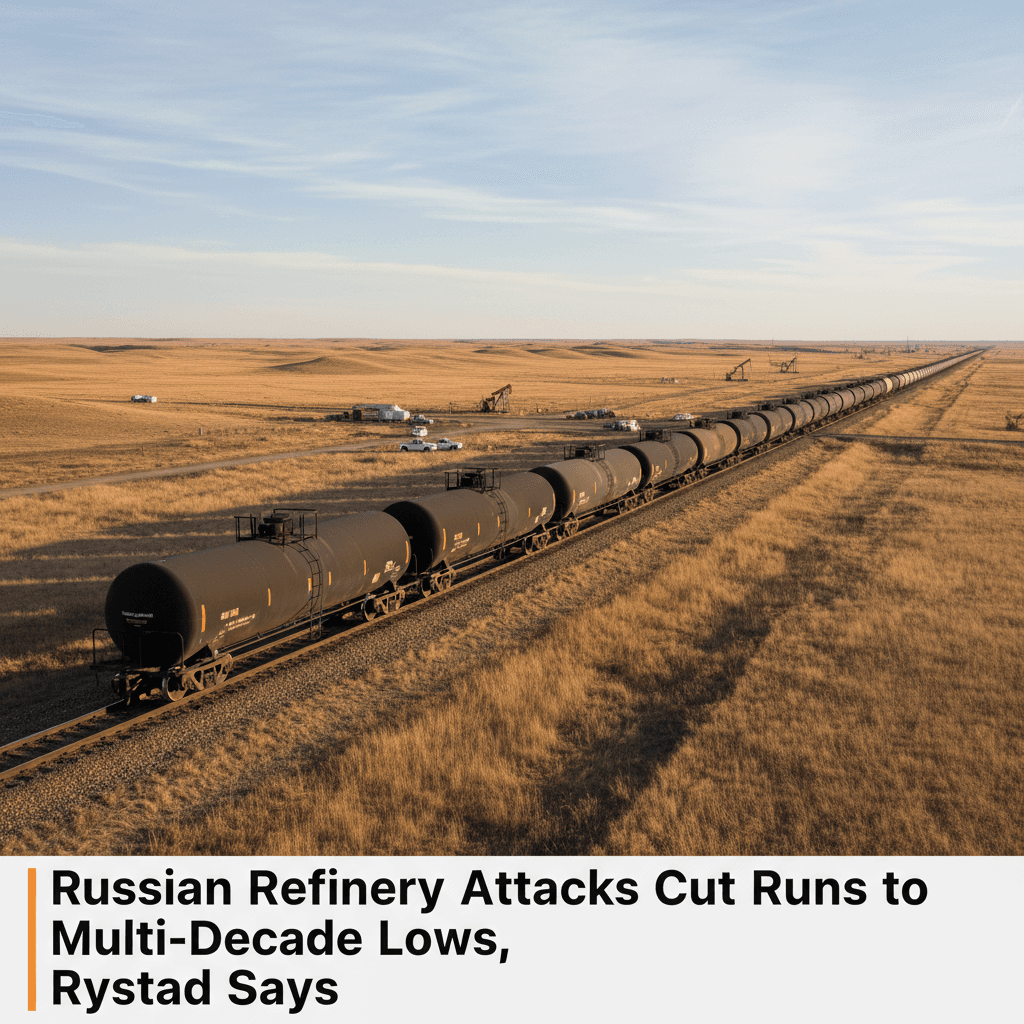
Russian Refinery Attacks Cut Runs to Multi-Decade Lows, Rystad Says

Russian oil refinery runs have dropped to their lowest level in more than two decades, according to analysis from Rystad Energy. The energy consultancy attributes the plunge in processing rates to continued Ukrainian strikes on refinery infrastructure, Rigzone reported on November 28. The sustained attacks have significantly curtailed Russia's capacity to turn crude oil into refined products like diesel and gasoline. This represents a major disruption to global supplies of these fuels. For Bakken operators, such a sharp reduction in refined product output from a major producer can have bullish implications for the crude oil they extract. Reduced global refinery runs, especially on this scale, tighten the market for refined fuels. This can strengthen crack spreads—the profit margin for refining a barrel of crude—which in turn can increase demand from refineries for crude oil feedstock to capitalize on those margins. While the Bakken formation is primarily an oil-producing region, its...

🔆Midday Wire·Nov 28
The Morning Take - Energy Market Briefing
Global Markets

Energy Market Briefing

Bakken Wire Morning Briefing Saturday, November 28, 2026 1. Headlines Oil markets are mixed in thin post-Thanksgiving trading, with WTI crude down 0.72% to $83.08 while Brent crude edges up 0.22% to $90.84. The Bakken differential to WTI is -$3.42. According to Saxo Bank, cited by Rigzone, Brent is heading for its first weekly gain in five weeks, breaking a cold streak. The primary drivers cited by reports are recurring Houthi attacks on Saudi energy infrastructure and tightening physical supplies, with some analysts raising the prospect of $100 Brent. Attention is focused on the upcoming OPEC+ meeting this Sunday. Multiple sources report that members have reached an in-principle agreement to leave their collective production target unchanged for Q1 2027. However, internal disagreement persists, primarily over Iraq's push for a higher production quota. Iraq has rejected a third-party capacity assessment and is negotiating for a larger allowance, arguing it needs more...

☀️Morning Wire·Nov 28