WTI Crude$--/bbl +0.00 (+0.00%)
Brent Crude$--/bbl +0.00 (+0.00%)
Natural Gas$--/MMBtu +0.00 (+0.00%)
ND Rig Count-- +0 WoW
WTI Crude$--/bbl +0.00 (+0.00%)
Brent Crude$--/bbl +0.00 (+0.00%)
Natural Gas$--/MMBtu +0.00 (+0.00%)
ND Rig Count-- +0 WoW
Global Inflation Concerns Resurface, Impacting Bakken Outlook - Bakken Wire
Global Markets

Global Inflation Concerns Resurface, Impacting Bakken Outlook

Spiking energy prices and new U.S. tariffs are reigniting investor fears, creating a complex price environment for North Dakota producers.

Bakken Wire Staff·🔆Midday Wire·

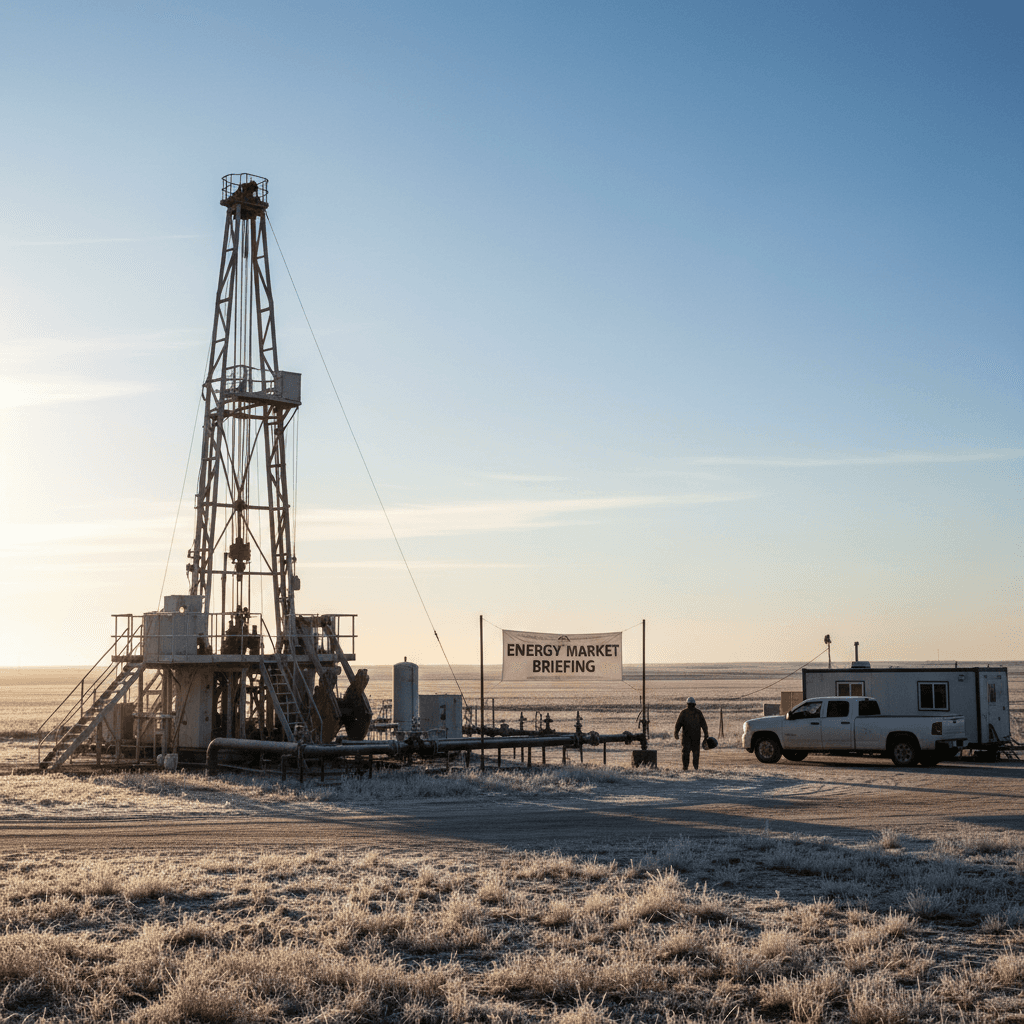
A renewed wave of global inflation anxiety is shaping the economic landscape for Bakken shale operators, according to industry reports. Key factors driving these concerns include spiking energy prices, new U.S. tariffs, and significant spending on artificial intelligence.

Rigzone reported that these combined factors are "reawakening investors' inflation fears." For Bakken operators, this environment presents a dual-edged sword. Higher global energy prices can support stronger crude oil prices, which directly benefit the revenue of North Dakota's producers. However, broader inflation increases the cost of operations, including equipment, labor, and services.

The mention of "more U.S. tariffs" introduces another layer of uncertainty. While the specific tariffs were not detailed in the report, such trade policies can disrupt global supply chains and impact the demand for U.S. crude exports, a critical outlet for Bakken oil. This could influence price differentials for Bakken crude at the wellhead.

The surge in spending on artificial intelligence, noted as a contributing factor to inflation angst, reflects broader economic shifts. For the oilfield, AI and related technologies are increasingly used for operational efficiency in drilling and completions. While this spending may contribute to near-term inflationary pressures, its long-term adoption could help Bakken operators control costs.

The resurgence of inflation fears typically prompts a response from central banks, potentially leading to higher interest rates. This increases the cost of capital for exploration and production companies, which could slow development plans in the Williston Basin if financing becomes more expensive. Operators must now navigate a market where supportive commodity prices are tempered by rising input costs and financial uncertainty.

The overall impact hinges on whether the boost from higher energy prices outweighs the drag from increased operational and financial expenses. For mineral rights owners, royalty statements may see support from prices, but the pace of new drilling could be influenced by capital availability.

Source

Rigzone
inflationglobal marketsoil pricesbakkentariffsoperations

Share this article

Related Articles

The Afternoon Take - Energy Market Briefing
Global Markets

Energy Market Briefing

Bakken Wire Energy Market Briefing Afternoon Edition | Saturday, July 25, 2026 1. Headlines Crude oil prices are sharply lower today, with WTI falling over 3% to settle at $89.31 and Brent dropping to $96.78, according to Rigzone. The sell-off is being attributed to two primary factors: reports of renewed diplomatic efforts between the U.S. and Iran, and confirmation that oil continues to flow through the Red Sea, reducing immediate fears of a catastrophic supply disruption. This pullback follows a period of high volatility driven by the ongoing conflict and the blockade of the Strait of Hormuz. The EIA's weekly report, noted by Rigzone, showed a build in U.S. crude inventories to 411.7 million barrels, adding downward pressure. Simultaneously, Rigzone reports that "global inflation angst is back," with spiking energy prices, new U.S. tariffs, and massive AI spending reigniting investor concerns about persistent inflation and its impact on demand. Despite...

🌅Afternoon Wire·Jul 25
Free
Global Roundup: AI Nuclear Plans, CCS Challenges, Plastic-to-Hydrogen Tech - Bakken Wire
Global Markets

Global Roundup: AI Nuclear Plans, CCS Challenges, Plastic-to-Hydrogen Tech

China is advancing a plan to integrate artificial intelligence throughout the nuclear energy lifecycle, a move highlighting the growing role of AI in critical energy infrastructure. According to OilPrice.com, researchers at the Chinese Academy of Sciences unveiled the Accelerator-Driven Advanced Nuclear Energy System (ADANES) this week at the World Artificial Intelligence Conference in Shanghai. The system aims to change the safety logic of conventional reactors, with AI processing operational signals to enable early shutdown during mishaps. Wang Shoujun, president of the Chinese Nuclear Society, stated that AI will play a core role in improving the quality, efficiency, and safety of nuclear energy. However, the "black box" nature of current large language models presents a transparency challenge for stringent nuclear safety requirements. The ADANES architecture is designed to embed AI across five layers, from data infrastructure to system control, throughout a plant's full life cycle. China is also developing a national-scale...

🌅Afternoon Wire·Jul 25
Global Inflation Fears Resurface, Impacting Energy Market Sentiment - Bakken Wire
Global Markets

Global Inflation Fears Resurface, Impacting Energy Market Sentiment

Renewed global inflation concerns, driven by spiking energy prices and new U.S. tariffs, are shaping the market environment for North Dakota's oil and gas operators, according to a report from Rigzone. The financial news service reported that investor anxiety over inflation is being reawakened by a combination of factors, including higher energy costs, additional U.S. tariff actions, and significant spending on artificial intelligence. These macroeconomic forces directly influence the capital markets and commodity price outlook critical to the Bakken. For Bakken operators, a return of inflation angst presents a mixed financial picture. On one hand, the cited "spiking energy prices" can translate to higher near-term revenues for oil and gas production. However, persistent inflation typically pressures operating costs, including for labor, equipment, and services like hydraulic fracturing. Furthermore, inflation fears can lead to higher interest rates as central banks act to cool the economy. This increases the cost of capital...

🌅Afternoon Wire·Jul 25