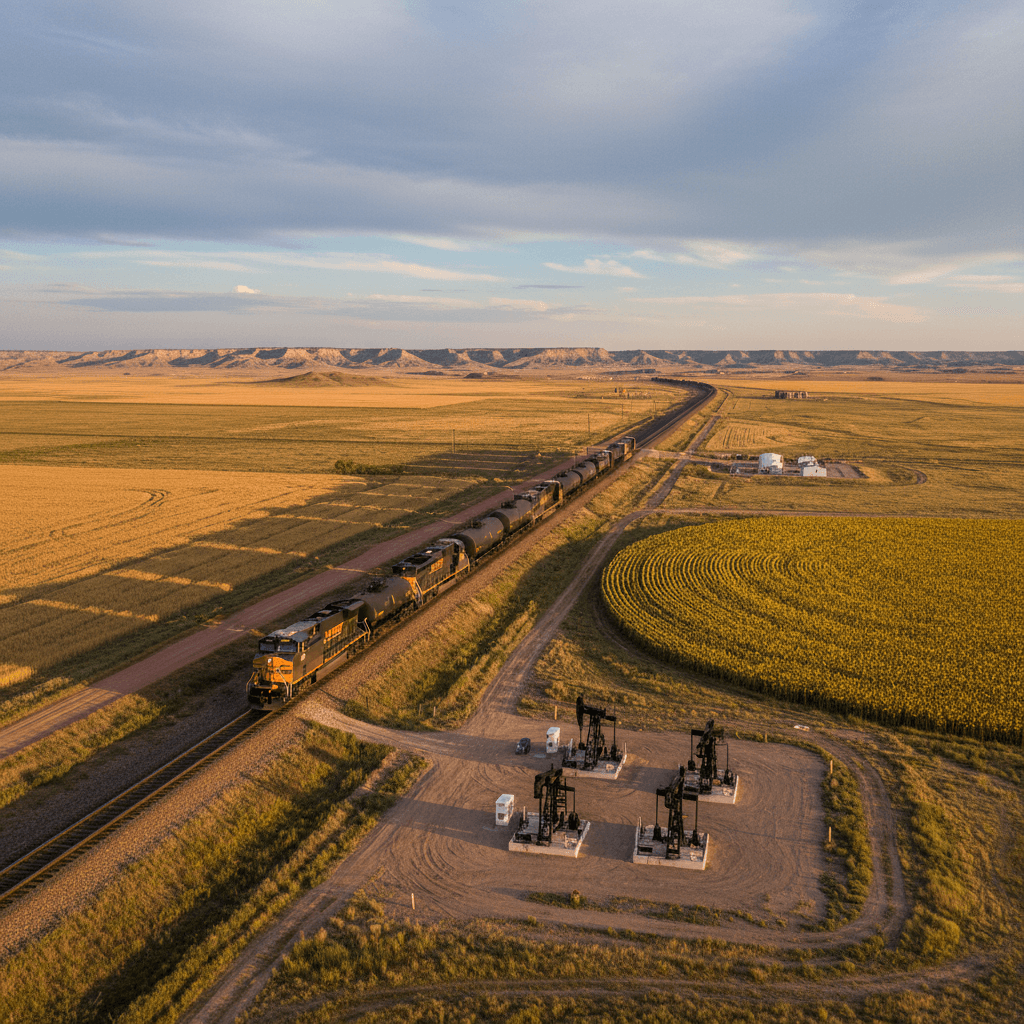
Global Inventory Rebuild, Battery Shift Signal Long-Term Demand for Bakken Oil
Strategic stockpile replenishment and new energy storage tech create a complex but stable outlook for North Dakota crude.
The global oil market is entering a new phase defined by the mandatory rebuilding of depleted strategic reserves, a structural shift that underpins long-term demand for crude oil from basins like the Bakken, according to an analysis from OilPrice.com. This comes alongside major industrial investments in next-generation battery technology that could reshape long-term energy supply chains.
According to OilPrice.com, the world's emergency oil buffers have been substantially depleted after absorbing initial shocks from renewed Middle East tensions involving Iran. The analysis states that markets are shifting from being dominated by emergency stockpile releases to being "increasingly driven by mandatory replenishment." This fundamental need for governments and companies to rebuild inventories provides a sustained demand floor, even as geopolitical uncertainty elevates freight rates and war-risk premiums.
For Bakken operators, this structural pivot toward inventory replenishment suggests a market less vulnerable to short-term demand volatility and more anchored by strategic purchasing. The report notes that "physical supply need not disappear entirely for markets to become structurally tighter," indicating that Bakken crude, with its access to U.S. refineries and pipeline networks, remains a critical component of domestic energy security.
Concurrently, a significant shift is underway in the energy storage sector, which could influence long-term energy narratives. A massive 183,000-square-foot plant dedicated to manufacturing grid-scale sodium-ion battery systems is under construction in Sacramento, California, according to OilPrice.com. The facility, being built by Peak Energy, aims to produce 4 gigawatt-hours of systems per year starting in Q1 2027.
This technology, which reduces energy storage costs by 20% according to the developer, is seen as a U.S. strategy to compete with China's dominance in lithium-ion battery supply chains. China's CATL also debuted its own sodium-ion system, with global shipments slated for 2027. The development highlights a global race to diversify energy storage away from lithium, a market China controls.
For the Bakken, the rise of grid-scale storage supports the integration of intermittent renewables but does not displace the near- to mid-term need for hydrocarbon-based power generation and the crude oil used to produce fuels. The focus on sodium-ion technology, a novel field for both the U.S. and China, suggests a reorientation of supply chain competition that may leave traditional energy sectors like oil production less directly impacted in the short term.
In a separate deal highlighting ongoing global natural gas demand, Rigzone reported that Chevron signed a new five-year agreement to supply 46 petajoules of gas to Australian utility Alinta. While this involves Western Australian gas, it underscores the continued role of major international oil companies in securing long-term energy supply agreements, a market reality that also supports integrated operators in the Williston Basin.
Source
Analysis from OilPrice.com; project details from OilPrice.com; supply agreement from Rigzone.

