WTI Crude--
Brent Crude--
Natural Gas--
ND Rig Count--
WTI Crude--
Brent Crude--
Natural Gas--
ND Rig Count--
Global Oil Price Rally from Iran Conflict Boosts Russia's Tax Take - Bakken Wire
Regulatory

Global Oil Price Rally from Iran Conflict Boosts Russia's Tax Take

The geopolitical premium from the Middle East war is reshaping global oil flows and revenues, with implications for Bakken producers.

Bakken Wire Staff·☀️Morning Wire·

Russia's oil tax revenues surged to a six-month high in April, according to a report from Rigzone. The increase is attributed to a global crude price rally driven by the ongoing war in Iran, which began escalating earlier this year.

For operators in North Dakota's Bakken formation, the sustained geopolitical risk premium provides a supportive price environment. While Bakken crude trades at a discount to international benchmarks like Brent, a higher global price floor generally translates to improved wellhead economics. This can bolster cash flow for producers, potentially influencing decisions on maintenance capital and production levels.

The conflict in the Middle East has disrupted traditional supply routes and tightened the global oil market. This creates both challenges and opportunities for U.S. shale producers. On one hand, heightened volatility and uncertainty can complicate long-term planning. On the other, it underscores the role of stable, non-OPEC supply sources like the Bakken in global energy security.

The revenue windfall for Russia, as reported by Rigzone, highlights how geopolitical events are redistributing oil income among producing nations. For North Dakota, the key takeaway is that external shocks continue to be a dominant driver of market conditions. Bakken operators must navigate this volatility while maintaining operational efficiency.

The situation remains fluid, and any de-escalation in Iran could quickly remove the current price premium. For now, the market is factoring in continued risk, which supports the higher price environment that benefited Russian tax coffers in April and similarly underpins Bakken economics.

Source

Rigzone
geopoliticsoil pricesiranrussiamarket update

Share this article

Related Articles

Federal Offshore Reef Program Announced, Bakken Impact Unclear - Bakken Wire
Regulatory

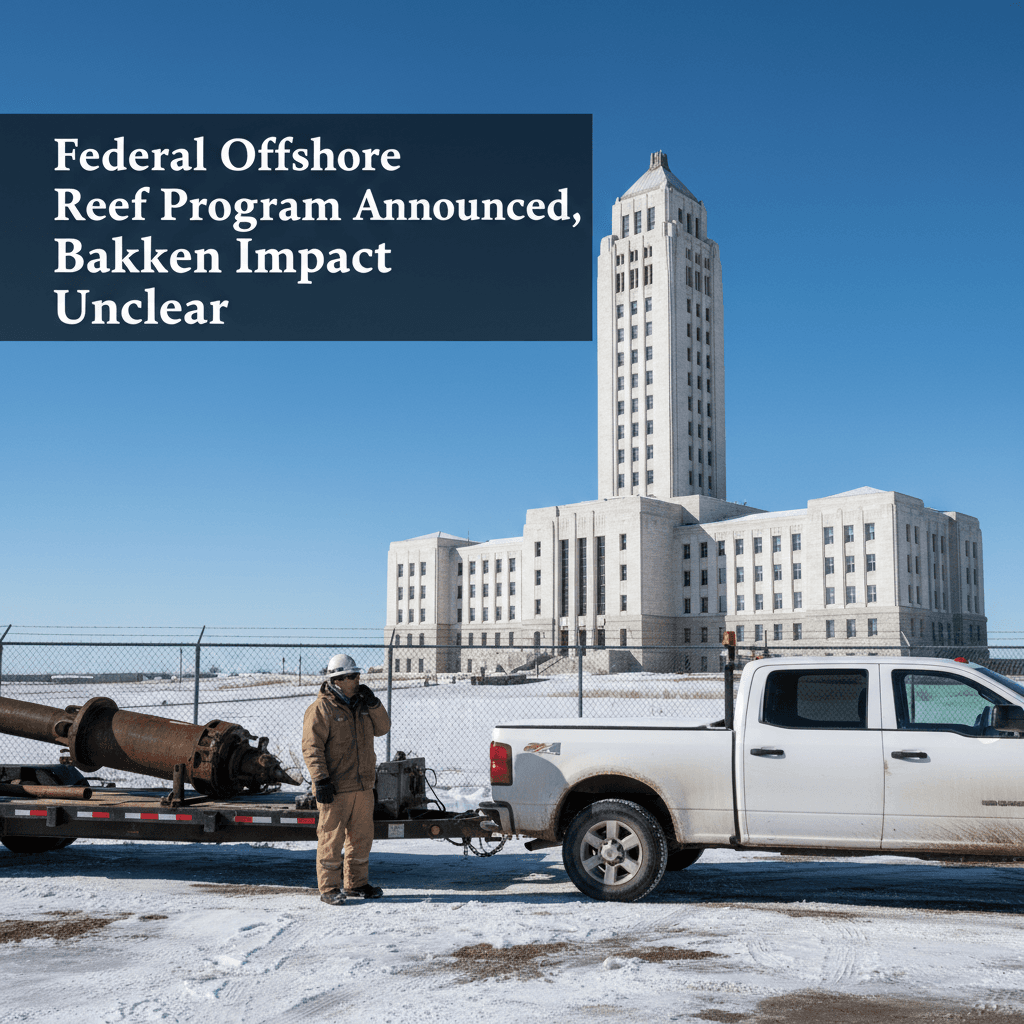
Federal Offshore Reef Program Announced, Bakken Impact Unclear

The federal Maritime and Minerals Administration (MMA) has announced a new "Reef in Place" program for the Outer Continental Shelf (OCS), according to a report from Rigzone. The program allows eligible decommissioned offshore structures to be converted into artificial reefs. Acting MMA Director Mike Olsen stated that the eligible structures "can continue to serve our coastal communities as artificial reefs," Rigzone reported. The announcement was made on November 18, 2026. The program applies specifically to federal offshore operations and has no direct regulatory or operational impact on onshore shale basins like North Dakota's Bakken formation. Bakken operators are subject to different state and federal land management and well-plugging regulations. For the Williston Basin industry, the news highlights the divergent regulatory paths for offshore versus onshore oil and gas development. While offshore operators may now have a new option for structure decommissioning, Bakken operators follow a stringent state-led process for well...

🔆Midday Wire·Nov 18
Regulatory

Venezuela Gear Repairs, Federal Land Sale Plan Draw Bakken Attention

Friday, Nov. 13, 2026 — Two policy developments reported by Rigzone on Nov. 12 are likely to draw attention from Bakken operators and royalty owners, even though neither report described North Dakota leases. Venezuela is sending state-owned oil equipment to the United States for repairs for the first time in more than a decade, according to Rigzone. The move points to a limited reopening of a trade channel that has been constrained for years. For Bakken operators, the broader significance lies in equipment logistics, service-market access and regulatory posture. The Bakken depends on a deep U.S. services base, so operators typically watch shifts in international equipment flows for signs of cost pressure, competition for shop capacity and changing trade-risk calculations. Rigzone also reported that the Trump administration unveiled plans to sell public land as part of a new strategy laying out Interior Department goals. For Bakken producers, federal-land policy matters...

☀️Morning Wire·Nov 13
Regulatory

Venezuelan Oil Gear Sent to U.S. for Repairs After Decade

Venezuela is sending state-owned oil equipment to the United States for repairs for the first time in more than a decade, according to Rigzone. The report was published Thursday, Nov. 12, 2026. The development carries regulatory significance because it involves cross-border movement of state-owned oil equipment, a type of transaction that can be shaped by policy decisions, licensing and sanctions-related restrictions. Rigzone did not provide additional details on the equipment, the regulatory approvals involved or the companies performing the repairs. For Bakken operators, the significance is indirect but real. North Dakota producers depend on a deep U.S. oilfield services base for drilling, completions, workovers and maintenance. When foreign state-owned oil equipment uses U.S. repair shops and service yards, it can reflect the availability of American industrial capacity. It can also affect demand for specialized parts, machining, inspection and repair crews that compete with domestic workloads. The move may also signal...

🌅Afternoon Wire·Nov 12