Global Oil Security Concerns Deepen Amid Hormuz Closure
Japan and South Korea seek joint storage, China supplies Australia jet fuel as North Dakota marks industry milestone.
The prime ministers of Japan and South Korea have agreed to boost oil supply cooperation, involving joint storage, according to a report from Nikkei cited by OilPrice.com. The two leaders are meeting in South Korea to discuss financial and technical details of the system.
Both nations are heavily dependent on oil and gas imports from the Persian Gulf and have been severely affected by the closure of the Strait of Hormuz, OilPrice.com reported. Resource-poor Japan relies on the Middle East for as much as 95% of its crude oil feedstocks. South Korea, similarly import-dependent, had to set a ceiling on fuel prices in March for the first time in three decades to stabilize its market.
The two countries are actively seeking supply replacement. South Korean officials visited Oman, Kazakhstan, and Saudi Arabia last month in a bid to secure crude that does not need to pass through Hormuz, according to OilPrice.com. Both have recently received oil cargoes from Iran after individual deals, allowing passage through the strait.
Meanwhile, the Australian government said it has secured three shipments of jet fuel totaling more than 600,000 barrels from China, Rigzone reported. Australia is also pursuing negotiations with more neighboring countries for fuel supply.
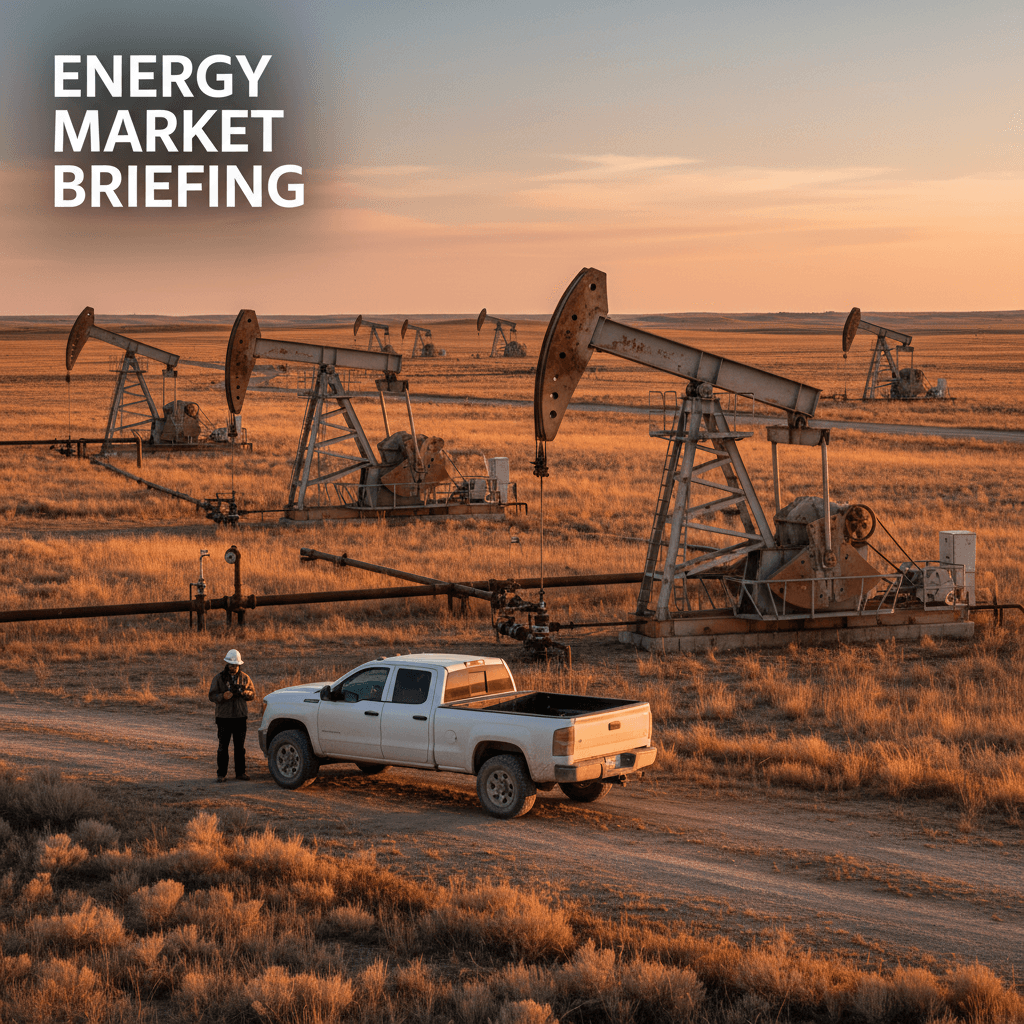
These developments underscore the global scramble for secure energy supplies as geopolitical tensions disrupt traditional trade routes. For Bakken operators, the sustained international demand and supply chain stress could provide a backdrop supporting the long-term export value of North Dakota's crude.
This week, the North Dakota Department of Mineral Resources is marking the 75th anniversary of the discovery of oil in the state, according to Bing News. The milestone highlights the state's evolution into a major energy producer capable of contributing to global energy security.
The ongoing Hormuz crisis, affecting two of the world's largest oil importers, reinforces the strategic importance of stable production basins like the Bakken. While North Dakota crude flows primarily to U.S. refineries, global market dislocations can influence broader price structures and investment.
Source
OilPrice.com, Rigzone, Bing News