Global Oil Volatility Continues as ND Marks 75 Years Since First Bakken Strike
Prices retreat ahead of US-Iran talks while North Dakota reflects on an industry that now produces over 1 million barrels daily.
Global oil prices edged lower Friday as markets awaited high-stakes talks between the U.S. and Iran, according to Rigzone. West Texas Intermediate fell 1.3% to settle below $97 a barrel, with Brent crude ending near $95. The decline comes amid a fragile ceasefire in the Middle East, with the strategically vital Strait of Hormuz still largely closed to traffic.
The talks, set to begin Saturday in Islamabad, will focus on reopening the Strait of Hormuz and a ceasefire in Lebanon, Rigzone reported. U.S. Vice President JD Vance is leading the American delegation. The ongoing blockade has kept crude prices more than 30% above pre-conflict levels despite the recent sell-off, which marked the biggest weekly retreat in six years. Traffic through the strait showed little sign of a meaningful pickup as shipowners awaited clarity.
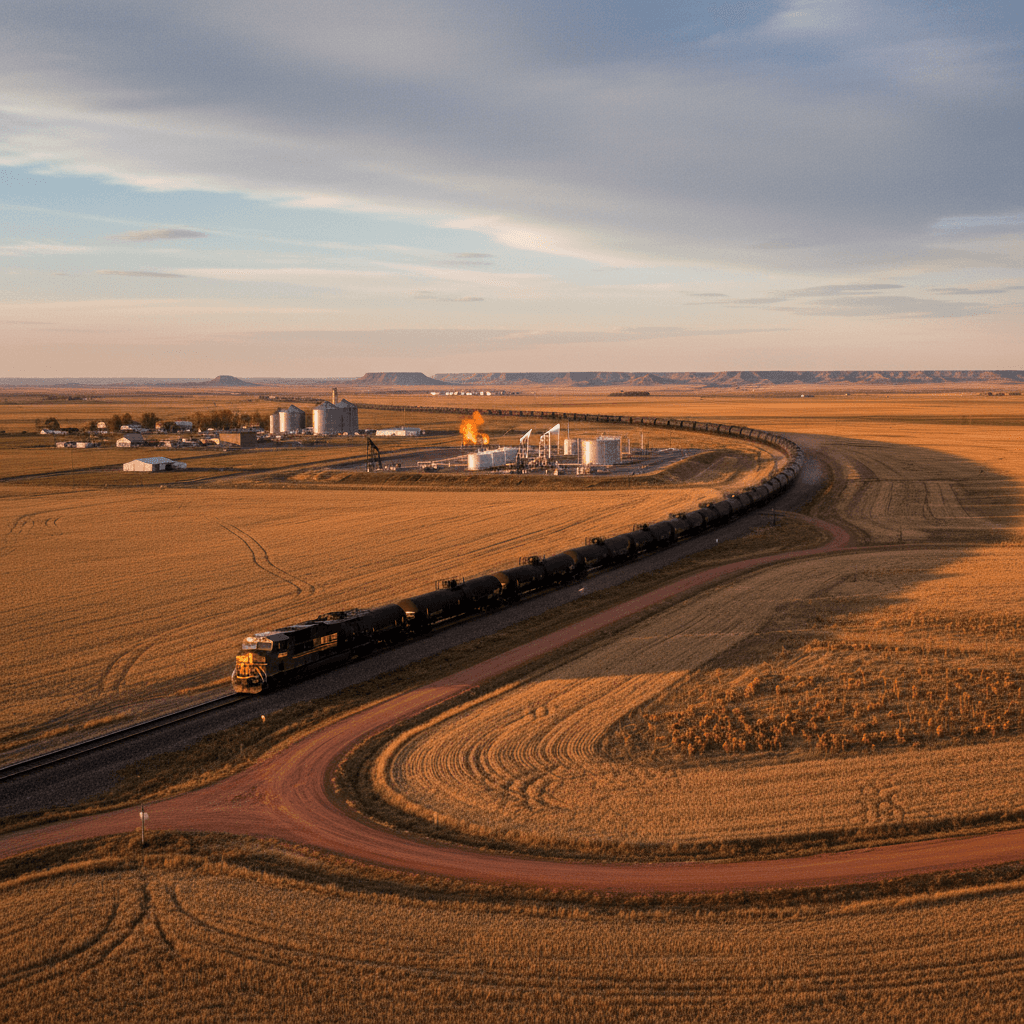
Against this backdrop of global uncertainty, North Dakota this month marks the 75th anniversary of the discovery that launched its modern oil industry. On April 4, 1951, the Clarence Iverson #1 well struck oil near Tioga, according to a column in the Inforum. The transformation since has been profound. Today, the state produces over a million barrels of oil every day, a milestone reached by 8 p.m. each evening, compared to the 18 months it took to produce the first million barrels in 1951.
The industry now supports roughly 63,000 jobs and generates nearly $50 billion in annual economic impact for North Dakota, with more than $4 billion flowing back annually in taxes, fees, and royalties. North Dakota Petroleum Council President Ron Ness emphasized the industry's role in reversing decades of population decline. "We have flipped in the last 20 years," Ness said. "We have flipped the age of North Dakotans to being one of the oldest states to being one of the youngest states."
Department of Mineral Resources Director Lynn Helms compared the technological leap from 1951 to today as "the difference between a Model T and the space shuttle." Geologist and Tioga native Kathy Neset pointed to the state's youth as its greatest resource, stepping into a highly technical, global industry.
For Bakken operators, the global headlines underscore the geopolitical risks that can swiftly impact the price of their daily million-barrel output. Meanwhile, the local reflection highlights an industry foundation that provides economic stability even amidst international volatility. The negotiations this weekend will be closely watched for any sign of a resolution that could ease supply constraints and alter the global price landscape.
Source
Bing News, Rigzone

