WTI Crude--
Brent Crude--
Natural Gas--
ND Rig Count--
WTI Crude--
Brent Crude--
Natural Gas--
ND Rig Count--
Global Pipeline Developments Highlight LNG, Geopolitical Risks - Bakken Wire
Pipeline & Infrastructure

Global Pipeline Developments Highlight LNG, Geopolitical Risks

International JV launch, Canadian LNG pact, and Middle East strikes underscore energy market dynamics relevant to Bakken exports.

Bakken Wire Staff·🔆Midday Wire·

A major Southeast Asian gas joint venture launched Wednesday, while a key Canadian LNG project secured critical agreements with Indigenous groups, according to separate reports from Rigzone. Concurrently, escalating military strikes between Iran and the U.S. introduced new geopolitical risk to global energy markets.

Eni and Petronas formally launched a 50:50 joint venture combining their assets in Indonesia and Malaysia, Rigzone reported. The JV starts with a production base of 300,000 barrels of oil equivalent per day (boed) and aims to grow to over 500,000 boed within three years. Such large-scale international gas developments can influence global LNG supply competition, which ultimately affects the pricing environment for U.S. natural gas, including associated gas produced from the Bakken formation.

Separately, the Ksi Lisims LNG project on Canada's west coast executed 'benefits agreements' with Indigenous groups, Rigzone reported. The developer stated these agreements help clear the path for investors to greenlight the project by the end of this year. New LNG export capacity from North America creates additional demand outlets for natural gas, which could support prices for Bakken gas volumes that are often constrained by regional pipeline capacity.

In a third development, Iran's Islamic Revolutionary Guard Corps launched missiles on four American targets, including shelters housing F-35 jets and a U.S. command center at Al-Azraq Air Base in Jordan, according to state-run IRIB News cited by Rigzone. Such geopolitical escalation in the Middle East typically injects volatility into global oil prices, which can directly impact the economics for Bakken crude oil producers and their planning.

For Bakken operators, these international events underscore the interconnected nature of the energy market. Global LNG developments shape gas demand, while instability in key oil-producing regions can swiftly alter the crude price landscape that defines North Dakota's primary revenue stream.

Source

Rigzone (Eni/Petronas JV, Ksi Lisims LNG agreements, Iran-US strikes)
pipelinelnggeopoliticsnatural gasexportsbakken

Share this article

Related Articles

Pipeline & Infrastructure

Canada Moves to Fast-Track Oil Pipeline for Asian Markets

Canadian Prime Minister Mark Carney is invoking new powers to fast-track regulatory approval for a major new oil pipeline, according to a report from Rigzone. The move aims to expand Canada's access to Asian crude markets. While the specific pipeline project was not named in the report, the push for increased export capacity from Canada represents a significant shift in North American energy infrastructure policy. For Bakken operators, the development carries both competitive and logistical considerations. Increased pipeline capacity from Western Canada could influence crude pricing benchmarks across the continent, including the Bakken's own local price at Clearbrook, Minnesota. Greater volumes of Canadian crude reaching global markets can affect the supply-demand balance for similar light sweet crudes produced in the Williston Basin. Historically, pipeline constraints have limited Canadian crude to primarily U.S. Midwest markets, keeping a lid on prices. A new high-capacity outlet to Asia could alter that dynamic, potentially...

☀️Morning Wire·Oct 4
Canadian Prime Minister Fast-Tracks New Oil Pipeline for Asian Markets - Bakken Wire
Pipeline & Infrastructure

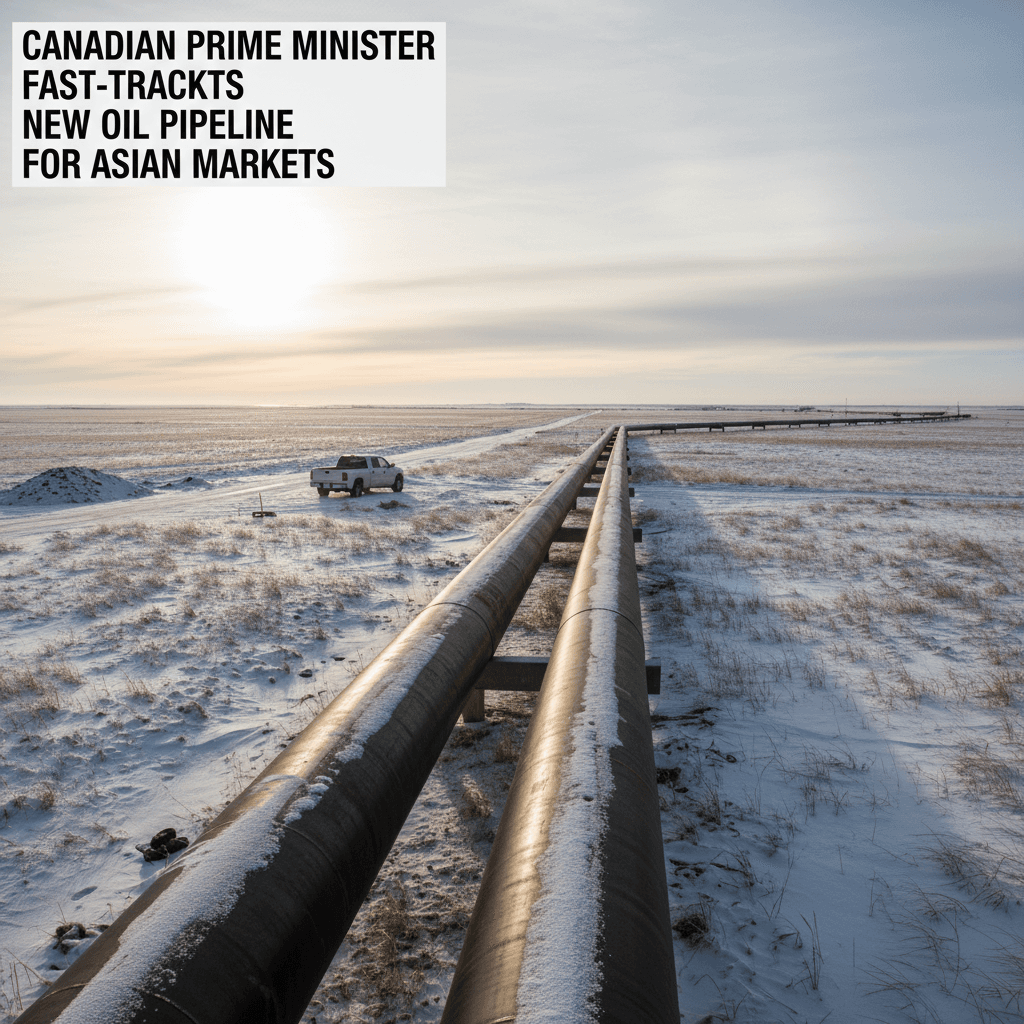
Canadian Prime Minister Fast-Tracks New Oil Pipeline for Asian Markets

Prime Minister Mark Carney has invoked new powers to expedite regulatory approval for a new, high-capacity oil pipeline, according to a report from Rigzone. The move aims to expand Canada's access to Asian markets. The development, reported on October 2, signals a renewed push by Canada to move its crude oil to West Coast export terminals. For Bakken operators in North Dakota, new Canadian pipeline capacity can influence regional market dynamics. Increased pipeline takeaway capacity from Western Canada can affect the flow of competing crudes, including Bakken barrels, through existing midcontinent pipeline systems. Changes in these flows can impact local basis differentials—the difference between the price of Bakken crude at the wellhead and the U.S. benchmark price. While the Rigzone report did not specify a pipeline route or capacity, any major new Canadian export conduit could alter crude oil logistics in North America. Bakken crude often moves to market via...

🔆Midday Wire·Oct 3
Pipeline & Infrastructure

Canada Moves to Fast-Track Oil Pipeline for Asian Market Access

Canadian Prime Minister Mark Carney is expediting regulatory approval for a new, high-capacity oil pipeline intended to expand Canada's access to Asian markets, according to a report from Rigzone. The report, published October 2, stated Carney has invoked new powers to fast-track the project. The development highlights ongoing efforts by North American producers to reach lucrative overseas markets beyond domestic and traditional refining hubs. Increased Canadian export capacity to Asia could influence global crude pricing benchmarks and shipping routes. For operators in North Dakota's Bakken formation, new Canadian pipeline capacity represents a shifting competitive landscape. Bakken crude, which primarily moves to market via pipelines, rail, and truck, often competes with Canadian heavy and light crude grades in the U.S. Midwest and Gulf Coast refining markets. Enhanced Canadian access to Asian buyers could, over time, alter flow patterns and competition for pipeline space within the continent. However, the specific impact on...

🌅Afternoon Wire·Oct 2