Global Pressure on Exports, Trader Sentiment Weigh on Oil Outlook
Speculative bets shrink as political risk of U.S. export restrictions and continued supply disruptions create market uncertainty.
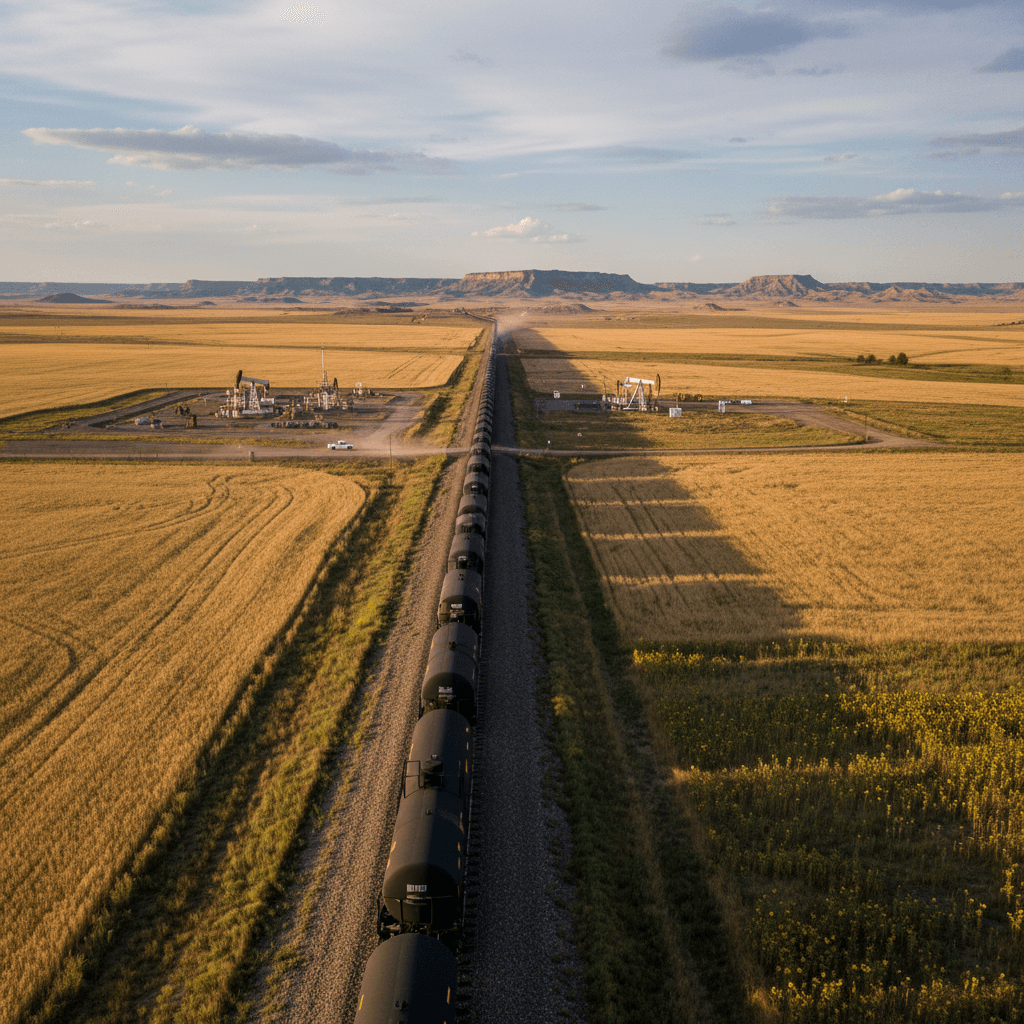
The Trump administration is facing growing political pressure to restrict U.S. exports of crude oil and refined products, according to a report from OilPrice.com. An administration spokesperson has stated there are no current plans for such a ban, but the idea has surfaced amid elevated domestic fuel prices and global supply disruptions stemming from the Iran war. For Bakken producers, whose light crude is often exported, any move to restrict exports could disrupt international markets and potentially discourage domestic production.
Money managers reduced their bullish bets on crude oil futures for a second consecutive week, signaling thin conviction in a sustained price rally. In the week to August 4, portfolio managers cut their net long position in NYMEX WTI by 7,257 lots to 101,050 lots, according to exchange data reported by OilPrice.com. The net long in ICE Brent crude was slashed by 11%, or 20,361 lots, to 164,722 lots. Analysts at ING and Saxo Bank both flagged the reduced speculative exposure despite persistent geopolitical supply risks.
Prices rebounded to start this week, with Brent crude reaching $84.67 and WTI hitting $79.30, after Iran issued six demands for a U.S. peace deal and the Houthis claimed a strike on an Aramco refinery in Jazan. The price volatility and shifting trader sentiment underscore the fragile market balance.
The global supply disruption continues to ripple through specific fuel markets. In India, major state-controlled refiners have seen losses on retail sales of liquefied petroleum gas (LPG) narrow nearly threefold in August compared to July, an Indian energy ministry official said Monday. The revenue loss per household cylinder has narrowed to $1.97, down from $5.25 in July. India, which relies on the Strait of Hormuz for 90% of its LPG imports, has been scrambling for supply since the waterway's closure, boosting imports from longer and costlier routes.
For North Dakota operators, the confluence of events highlights a precarious environment. Political risk of export restrictions poses a direct threat to market access, while wavering speculative confidence could add downward pressure on prices despite ongoing supply threats. The situation in India illustrates the continued global fuel market dislocations caused by the closed Strait of Hormuz, supporting the premium for non-Persian Gulf supplies, which includes crude from the Bakken.
Source
According to reports from OilPrice.com published August 10, 2026.

