Global Risks Mount for Bakken: Piracy, AI Demand, and LNG Uncertainty
Somali piracy resurgence threatens shipping lanes, while AI's energy hunger and a volatile European gas market present complex global pressures for North Dakota operators.
A surge in Somali piracy, driven by diverted shipping from the blocked Strait of Hormuz, is creating new security risks for global oil shipments, according to a report from OilPrice.com. With the Iran war diverting U.S. naval resources, pirates have hijacked at least three oil tankers—MT Honour 25, MT Eureka, and MT Asana—between April and July 2026. The report states pirate groups, now coordinated with Yemeni Houthi militants and Somali terrorist group Al-Shabaab, are using advanced weaponry and GPS tracking. Ransom demands are steep, with $10 million sought for the MT Eureka and $3 million for the MT Honour 25.
Separately, the explosive growth of artificial intelligence is causing major technology firms to dramatically increase their energy consumption, often relying on fossil fuels. OilPrice.com reported that Amazon is building a gas-fired power plant in Texas projected to release 33 million tons of CO2 annually, which would make it the largest source of power-related emissions in the United States. While Amazon scores as the cleanest among eight major AI firms tracked, Elon Musk's xAI ranks as the dirtiest, with nearly all its projects powered by on-site gas burning.
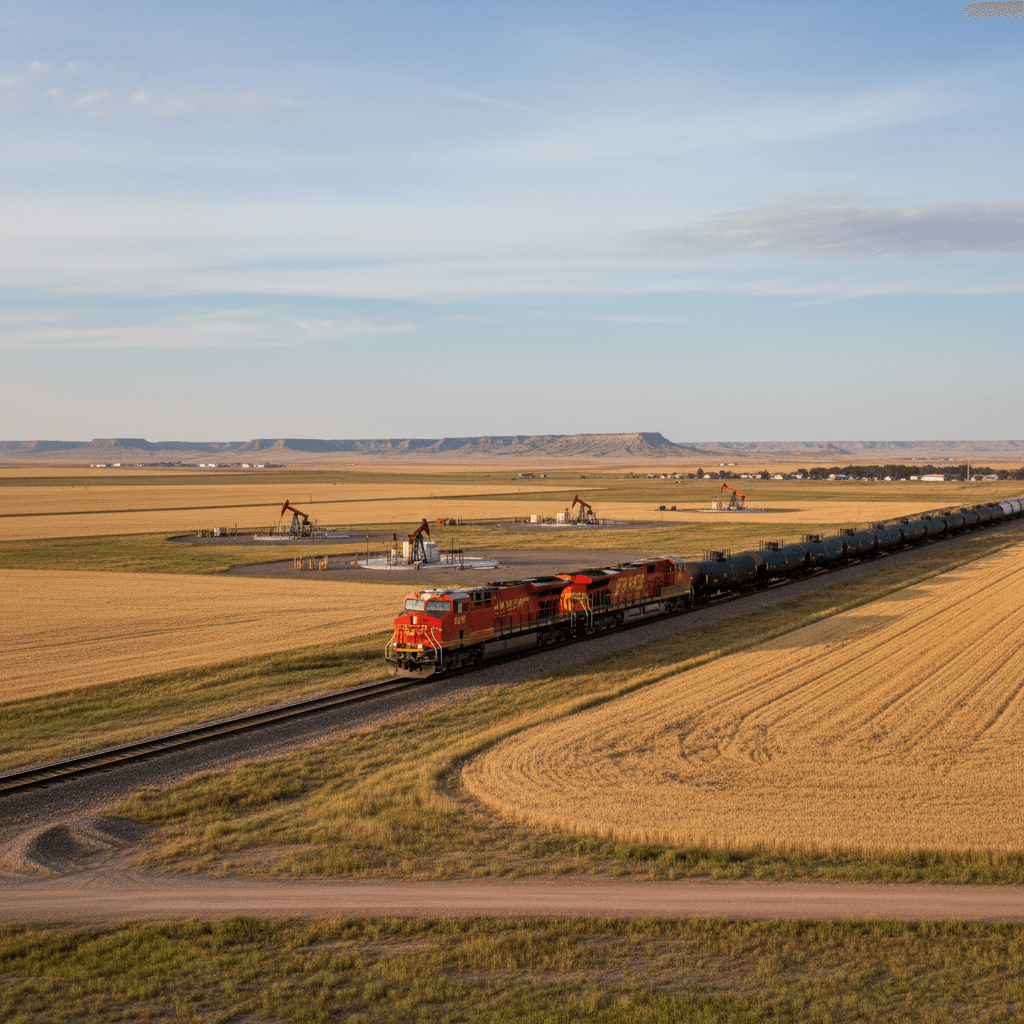
For Bakken operators, these global developments intersect with local interests. Increased maritime security risks could indirectly affect shipping costs and insurance for refined products or equipment. Meanwhile, the soaring energy demand from data centers, particularly those reliant on natural gas, represents a potential long-term demand driver for associated gas from the Bakken formation, though it also sharpens the focus on emissions profiles.
In Europe, the natural gas market faces a precarious winter despite a forecasted strong El Niño weather pattern, according to analysis cited by OilPrice.com. Rystad Energy indicates European temperatures would need to be at least 2 degrees Celsius above average to reduce LNG demand to last winter's level. While a strong El Niño is likely, its warming effect in Europe is less consistent than in Asia, creating uncertainty. With Middle East hostilities already pushing LNG prices higher and cutting Persian Gulf deliveries, a mild winter is not guaranteed.
This volatility in the global LNG market underscores the importance of diverse demand outlets for U.S. natural gas, including production from the Bakken. Stability in European demand supports the economic rationale for U.S. LNG exports, which in turn supports natural gas prices and the economics of gas capture for North Dakota producers.
Source
According to reports from OilPrice.com published August 14-15, 2026.

