Global Shale, Offshore Rivals Advance as Space Solar Tech Draws Controversy
Argentina's Vaca Muerta posts record output while Suriname's offshore project gets green light, highlighting competitive pressures and geopolitical shifts relevant to Bakken operators.
Record production from Argentina's Vaca Muerta shale formation underscores the rapid globalization of shale development, a sector long dominated by U.S. plays like North Dakota's Bakken. According to OilPrice.com, Vaca Muerta's crude oil output hit an all-time high of 887,227 barrels per day in May 2026, a 19% increase from the previous year. Natural gas production also rose to 5.5 billion cubic feet per day.
The boom has turned the Neuquén province into an economic powerhouse within an otherwise struggling Argentine economy. The average monthly salary in the oil and gas sector there is about $5,600, triple the average in Buenos Aires. The report notes the shale patch is now viewed by international companies as a "de-risked basin" with proven geology that offers an alternative to supplies reliant on Middle Eastern shipping corridors like the Strait of Hormuz.
Meanwhile, geopolitical turmoil is boosting investment in other Western Hemisphere projects. OilPrice.com reported that TotalEnergies and APA Corporation have approved the final investment decision for the $26 billion GranMorgu offshore project in Suriname. The project, targeting 760 million barrels of recoverable resources, is set to come online in 2028 with a floating production vessel capable of 220,000 barrels per day.
The development positions Suriname to become South America's next major oil producer, following neighboring Guyana's success. The report links the project's advancement to Middle East tensions, which are causing price surges and making non-Middle Eastern sources more attractive.
In a separate technological development, a California startup's plan to boost solar power generation has drawn significant controversy. Reflect Orbital received U.S. Federal Communications Commission permission to test a satellite with an 18-meter-wide mirror designed to reflect sunlight to solar farms at night, according to OilPrice.com.
The company aims to sell reflected sunlight for up to $5,000 an hour. However, the project faces opposition from scientists concerned about impacts on astronomy, wildlife migration, human health, and agriculture. Over 1,800 comments were filed with the FCC, and scientific societies representing around 2,500 researchers have requested a full environmental review.
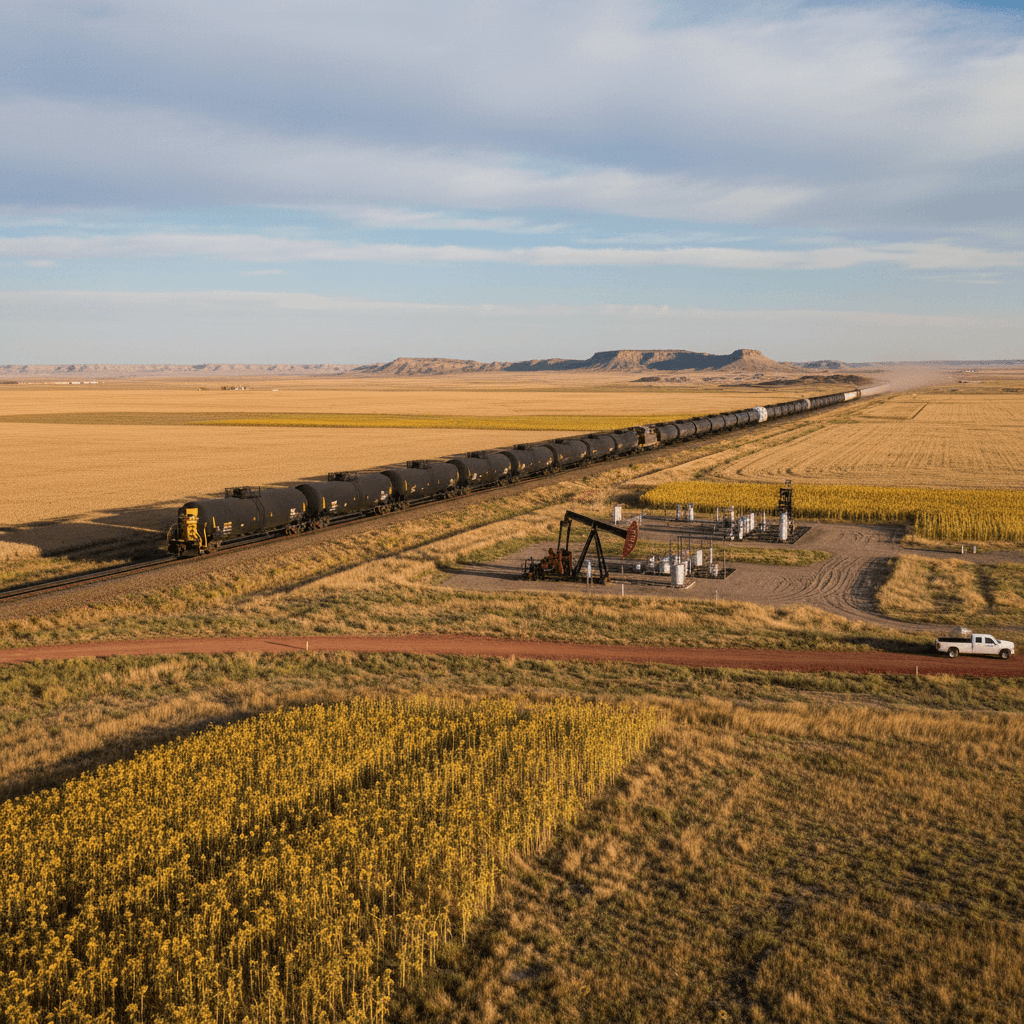
For Bakken operators, the reports highlight a shifting global landscape. The success of Vaca Muerta validates shale geology outside North America, potentially attracting capital and competitive attention. Suriname's offshore boom represents another large-scale, low-carbon-intensity project coming online later this decade, adding to global supply. Meanwhile, controversial advancements in renewable technology, like space-based solar reflection, indicate continued pressure and innovation in the energy transition arena.
Source
OilPrice.com reports from August 1, 2026.