Global Strait Standoff Boosts Bakken Oil Price, Stalls Rig Growth
North Dakota crude commands a rare premium as Iran conflict volatility dominates markets, but public companies hold drilling plans steady for 2026.
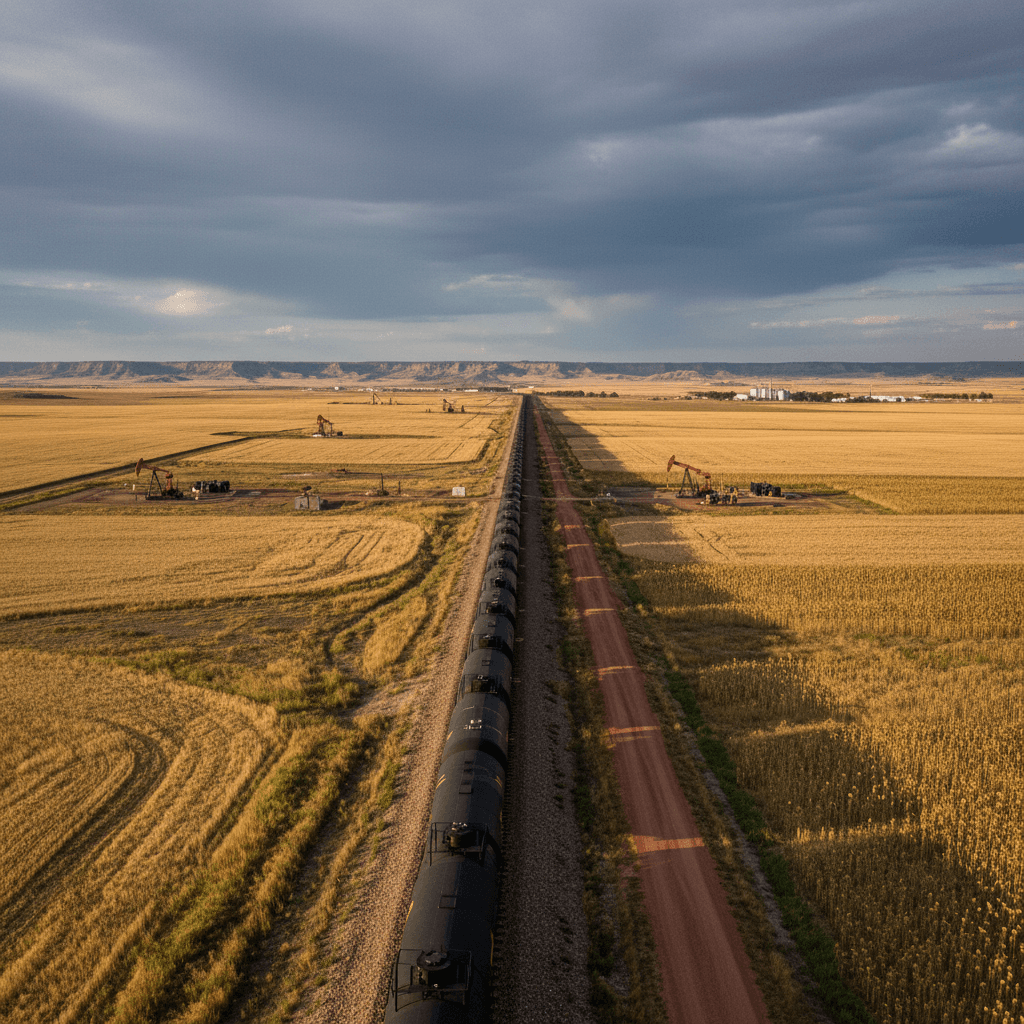
The price of North Dakota crude oil shipped on the Dakota Access Pipeline is currently fetching nearly $7 more per barrel than a key U.S. benchmark, a rare premium driven by global market volatility from the ongoing conflict involving Iran, according to state regulators. Nathan Anderson, director of the North Dakota Department of Mineral Resources, and Justin Kringstad, director of the North Dakota Pipeline Authority, discussed the dynamic in a monthly briefing.
Regulators are not certain why Bakken crude at its Illinois destination is outperforming benchmarks, but one possibility is its light, sweet quality makes it ideal for refining into jet fuel and diesel, products in high demand in Europe. "Royalty owners, the producers, the state, all share that uplift," Kringstad said, according to the North Dakota Monitor. Anderson noted that while not all the premium may filter back, "I would suspect that some portion of it, probably not all of it for sure, does make its way back."
This price anomaly is a direct result of a global oil market thrown into chaos. The primary choke point is the Strait of Hormuz, a maritime channel for about a fifth of the world’s oil, which has been effectively closed since the war escalated at the end of February. A fragile and extended truce between the U.S. and Iran, reported by Rigzone, has done little to resolve the standoff. Iran is keeping the strait closed to most traffic, and the U.S. maintains a naval blockade on Iranian ports.
"This is largely dominated by the word volatility. That’s the way I would describe pricing over the last 50 days," Anderson said. "But over the last seven days, I think we’ve had almost a $20 swing in price." This extreme uncertainty is the key reason publicly-traded oil companies operating in North Dakota are not investing in new drilling despite high prices, as their 2026 budgets are already set.
The current rig count in North Dakota is 26, with companies indicating plans to add only one or two more. Anderson does not expect public companies to increase drilling activity until 2027. However, the number of rigs performing maintenance work has risen from 110 to 125 since last month, suggesting operators are focusing on optimizing existing wells while prices are favorable. Privately-owned companies have more flexibility and could potentially add drilling if prices remain high.
The global industry continues to navigate the disrupted landscape. International oilfield contractor Saipem SpA reported stable first-quarter profits, but noted in its results that "a further prolonged closure of the Strait of Hormuz could impact the delivery of certain components which are critical to Saipem's projects globally." This underscores the widespread supply chain risks emanating from the prolonged geopolitical crisis.
Source
North Dakota Monitor, Rigzone

