Global Straits Disruption, UK Calls for Project Decisions
Strait of Hormuz tanker traffic slows after U.S.-Iran clashes, while UK industry urges action on key North Sea developments.
Tanker traffic through the Strait of Hormuz has eased since late last week as vessel owners and operators remain cautious amid renewed hostilities between Iran and the United States, according to OilPrice.com. The slowdown follows a series of attacks and retaliatory strikes over the weekend that continue to test a fragile ceasefire.
On Thursday, June 25, an attack on the container ship Ever Lovely prompted some shipowners to pull back. The U.S. military conducted strikes on Iran in response on Friday, OilPrice.com reported. A subsequent Iranian attack on Saturday hit the Panama-flagged oil tanker Kiku, which was carrying more than 2 million barrels of crude oil while transiting the strait. This prompted additional U.S. retaliatory strikes.
“After yesterday’s U.S. strikes in response to the Iranian attack on M/V Ever Lovely, Iran was given a chance to honor the ceasefire agreement but elected not to when its forces launched a one-way attack drone that hit M/T Kiku this morning at 4:30 a.m. ET,” U.S. Central Command (CENTCOM) said on Saturday, according to OilPrice.com.
Since a weekly peak of vessels transiting Hormuz on June 24, traffic has "materially eased," according to ship-tracking data by Kpler compiled by Bloomberg and cited by OilPrice.com. Rigzone also reported that commercial traffic through the strait persisted at a reduced level after the attacks raised fresh concerns about the willingness of shipowners to traverse the waterway.
Although the U.S. and Iran have reportedly agreed to cease attacks ahead of tentatively planned new talks this week, a return to normal traffic levels is "far from certain and far from near," OilPrice.com reported. The persistent volatility in the key global shipping lane underscores the ongoing geopolitical risks that can impact global oil flows and market stability.
In a separate development, the UK offshore industry body Offshore Energies UK (OEUK) said "urgent decisions" are needed on the Rosebank and Jackdaw oil and gas projects "for national security," according to a summary from Rigzone. While these North Sea projects are distant from the Bakken, such calls highlight the global industry's focus on securing energy supplies and advancing critical developments amid a complex geopolitical landscape.
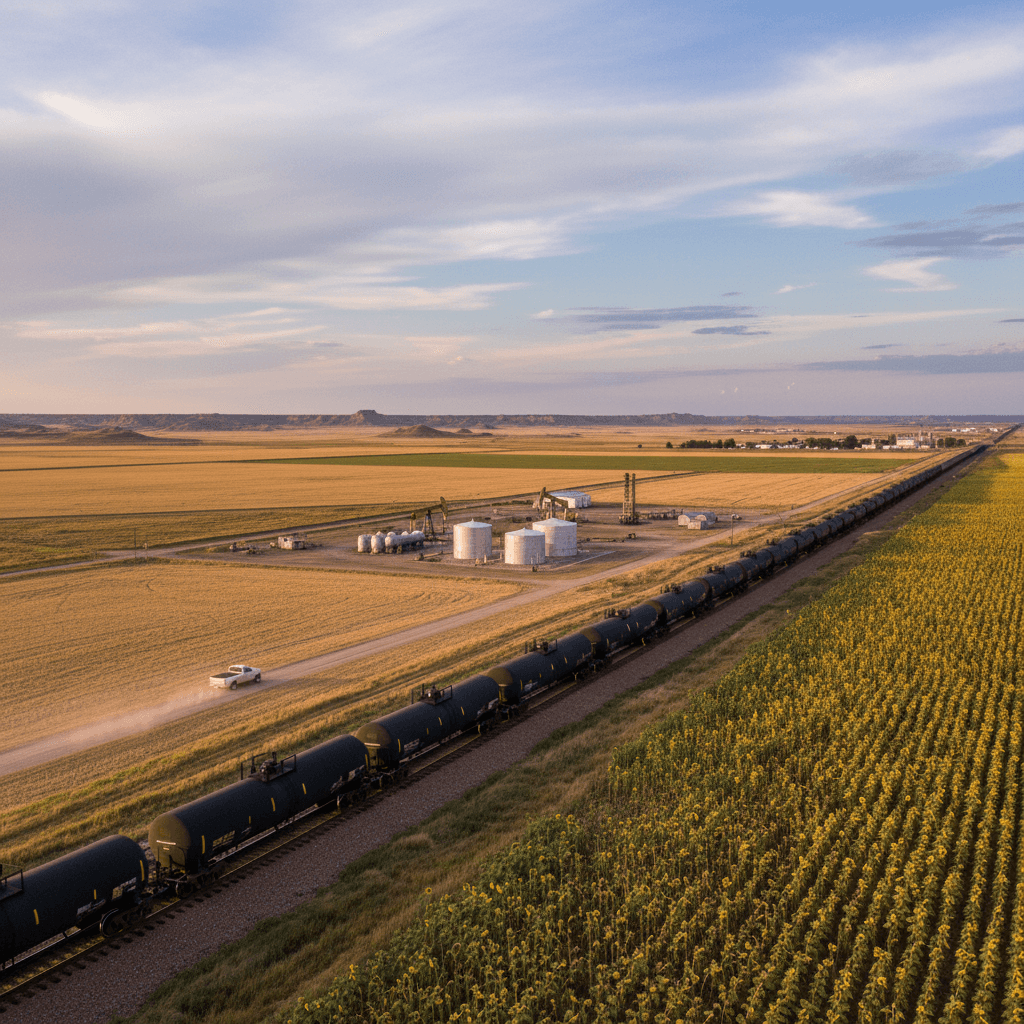
For Bakken operators and crude shippers, the situation in the Strait of Hormuz serves as a reminder of how swiftly events in global chokepoints can disrupt seaborne trade, potentially affecting freight rates and global crude benchmarks. North Dakota's oil production, which is largely transported via pipeline and rail, is somewhat insulated from immediate maritime disruptions. However, sustained volatility in key shipping lanes can contribute to broader market uncertainty and price volatility, factors that directly influence Bakken economics.
Source
According to OilPrice.com and Rigzone.