Global Straits Tension, EV Battery Value Highlight Energy Landscape
Iran conflict threatens key oil chokepoint as EV market evolves, impacting Bakken operators' market outlook.
The effective closure of the Strait of Hormuz, a key global oil transit route, is creating a severe dilemma for the U.S. military and threatening energy market stability, according to an analysis from OilPrice.com. The strait historically shipped up to 30% of the globe's oil, and senior security sources indicate that meaningful workarounds for moving oil through other routes are at least two years away. The report states that global shipping firms now see the Strait as a "lethal gamble," despite U.S. assurances of a secured corridor.
This geopolitical tension directly impacts the market for Bakken crude, which relies on stable global flows and pricing. The report notes that short-term measures to keep oil prices subdued are running out fast. The situation stems from the ongoing conflict with Iran, where the Islamic Revolutionary Guard Corps (IRGC) has emerged as the dominant force in Tehran following leadership changes in early 2026. According to OilPrice.com, the IRGC now controls key military decisions and may control 50% of Iran’s economy.
Meanwhile, a separate market evolution is unfolding in the electric vehicle sector. Another OilPrice.com report suggests the most valuable part of an EV may not be the car itself, but its battery. In China's rapidly expanding EV market—where the average EV is only 1.8 years old—vehicles are depreciating quickly, sometimes retaining only 40% of value after three years. However, the battery is emerging as a long-lived energy asset that remains useful for stationary electricity storage long after the car is obsolete.
This shift in how energy is stored and utilized represents a longer-term consideration for the fossil fuel industry. While not an immediate threat to Bakken production, the evolution of batteries into independent energy assets could influence long-term demand forecasts for transportation fuels.
In Central Asia, the Iran conflict has disrupted trade routes critical to the region, though longer-term continuity is expected. Before the 2026 war, trade between Iran and Central Asian republics was growing, with Kazakhstan targeting $3 billion in turnover. Key connectivity projects like the International North-South Transport Corridor (INSTC) and Iranian ports offered the region vital access to the Indian Ocean. An Eurasian Economic Union (EAEU)-Iran free trade agreement took effect in May 2025, with potential to dramatically expand trade volumes.
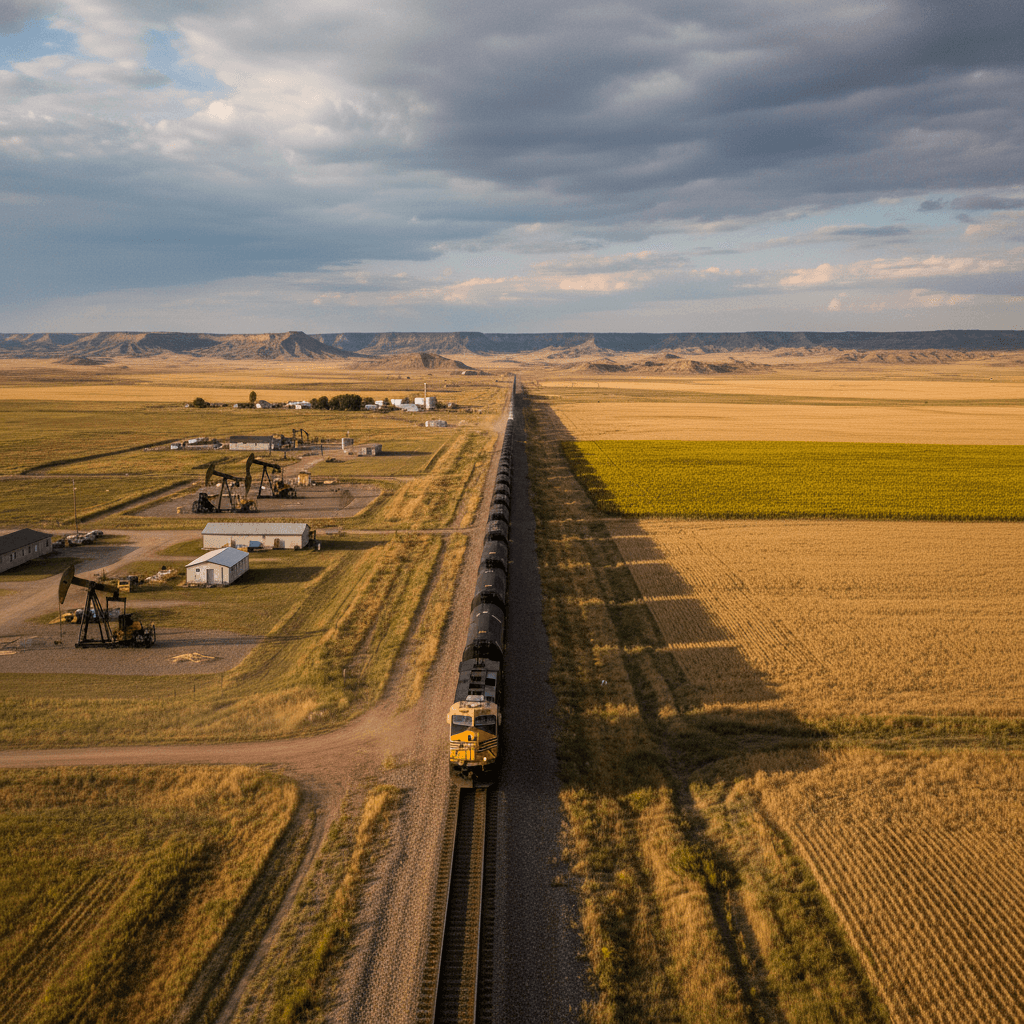
For Bakken operators, the immediate concern remains the Strait of Hormuz. Any prolonged disruption there could trigger significant volatility in global oil prices, affecting revenues and planning in North Dakota's core oil-producing region.
Source
According to reports from OilPrice.com published July 27, 2026.