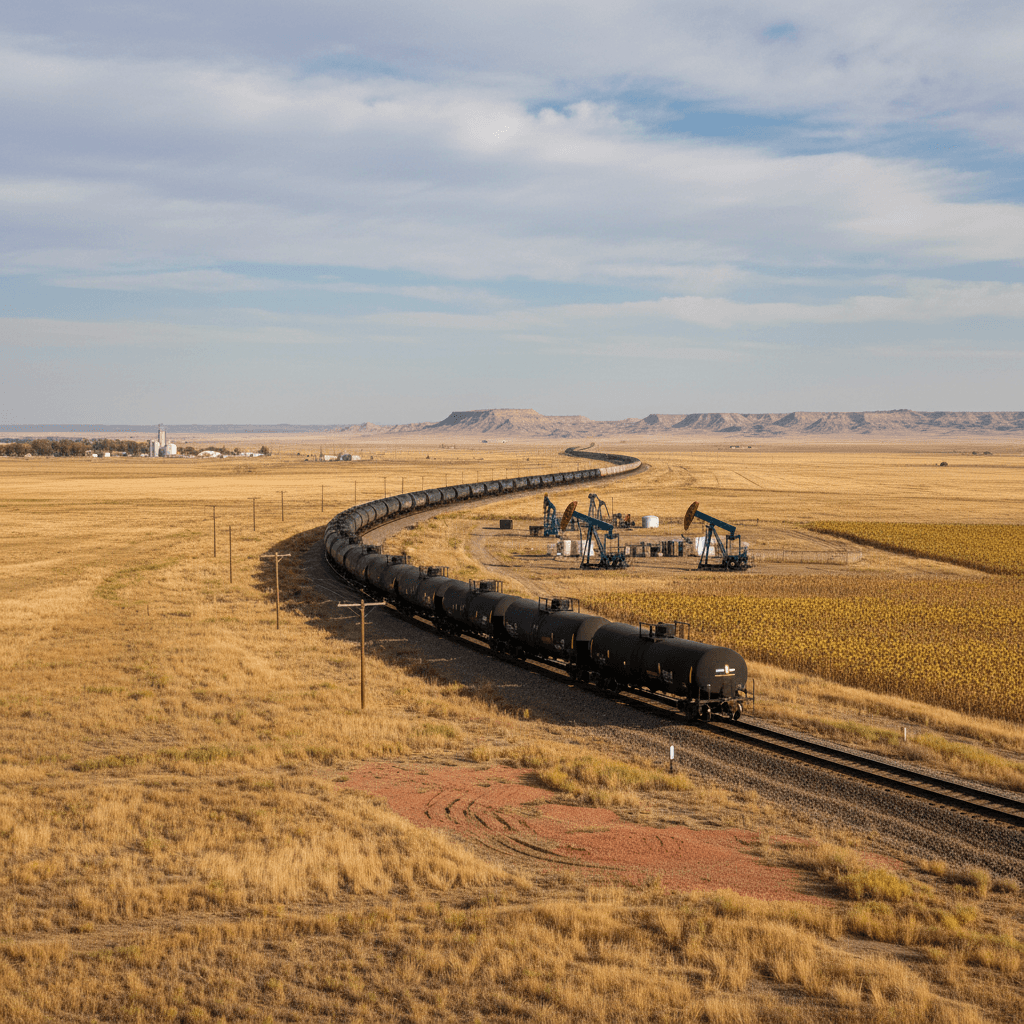
Global Supply Shocks, Strong Demand Underpin Bakken's Market Position
Attacks on Russian refineries, Aramco constraints, and India's import reliance highlight sustained need for secure crude sources like North Dakota's.
Persistent global supply disruptions and strong demand from major importers are reinforcing the strategic value of stable production basins like the Bakken, according to recent industry reports and news events. A new attack on Russian refining capacity and warnings of "historical supply constraints" from a key producer come as India, a top importer, highlights its acute vulnerability to overseas supply shocks.
Ukraine struck two of Russia's oil refineries overnight, according to Rigzone. Such repeated attacks have degraded Russia's downstream capacity over the course of the conflict, intermittently tightening global refined product markets and supporting crude pricing benchmarks to which Bakken crude is linked.
Simultaneously, Saudi Aramco revealed it achieved total hydrocarbon production of 9.5 million barrels of oil equivalent per day in the second quarter "despite historical supply constraints," Rigzone reported. While the company did not detail the constraints, the statement underscores ongoing challenges within the global supply system that have helped maintain a floor under oil prices.
This environment of geopolitical risk and constrained supply amplifies the importance of major consuming nations securing diverse crude streams. According to a joint report from the Confederation of Indian Industry and EY, India remains highly dependent on crude oil imports, with 90% of all demand met by purchases from overseas, OilPrice.com reported. The report noted India's dependence on primary energy imports fell to 42% in FY 2025 from 47% in FY 2017, but crude import reliance remains "massive."
India, the world's third-largest crude oil importer, has seen this dependence steadily rise amid soaring demand and falling domestic production, according to the report. The article stated that the Middle East crisis "sent Indian refiners scrambling for alternatives," leading to record imports from Russia and increased purchases from West Africa.
The source material detailed that India's current maximum strategic reserve capacity can cover only eight days of national oil demand, making it "one of the most exposed to supply shocks." In response, state-owned ONGC will build a new storage site at Mangaluru to hold about 13 million barrels.
For Bakken operators and North Dakota, this global landscape underscores the basin's role as a reliable, non-OPEC source of light sweet crude. While the sources did not mention U.S. or Bakken exports specifically, the heightened search for secure alternatives by major importers like India, coupled with ongoing supply disruptions elsewhere, supports sustained export demand. The stability of production from North Dakota, governed by predictable state regulations, offers a contrast to the volatility affecting other regions.
The confluence of these factors—military strikes on competitor infrastructure, supply constraints flagged by a leading producer, and the explicit import desperation of a growing economy—creates a supportive macro environment for Bakken crude. It highlights the continued relevance of Williston Basin output in a global market where security of supply is increasingly priced.
Source
According to OilPrice.com and Rigzone.

