Global Tensions, High Prices Shape Market for Bakken Crude
U.S. pressure on Iran and record import costs in Asia underscore the volatile geopolitical backdrop supporting global oil prices.
U.S. President Donald Trump has threatened "tremendous economic consequences" for any country providing a "lifeline" to Iran, according to a post on his Truth Social platform reported by OilPrice.com. The threat, part of what he termed the "MOST CRUSHING ECONOMIC OPERATION EVER TAKEN," aims to isolate Iran economically by targeting oil smuggling, financial transfers, and other support mechanisms. China, which buys over 90% of Iran's sanctioned oil, is seen as a key target of the pressure campaign.
The escalating U.S.-Iran tensions are contributing to sustained high global oil prices. This was highlighted by new data showing Japan's import bill hit a record $76.39 billion in July, driven by elevated crude costs, OilPrice.com reported. While Japan's crude import volumes rose only 5.5% year-over-year, the value of its oil imports surged 87.8%. Analysts cited the combination of high prices and Japan's urgent diversification away from Middle Eastern supplies since February as key factors.
Japan's pivot has included seeking crude from the United States and Canada, among other nations. This global reshuffling of crude flows to replace disrupted Iranian and Middle Eastern barrels provides a supportive backdrop for non-OPEC suppliers like those in the Bakken. An analyst quoted by Reuters noted oil prices "remained elevated as the market is supported by sporadic attacks in the Middle East but lacks fresh momentum without a major escalation."
In corporate news, Saudi Arabia's state-owned Aramco and Maaden signed an agreement to create a joint venture to explore and mine copper and other energy transition minerals domestically, Rigzone reported. While not directly related to North Dakota production, the move highlights the global energy sector's continued strategic investments beyond traditional hydrocarbons.
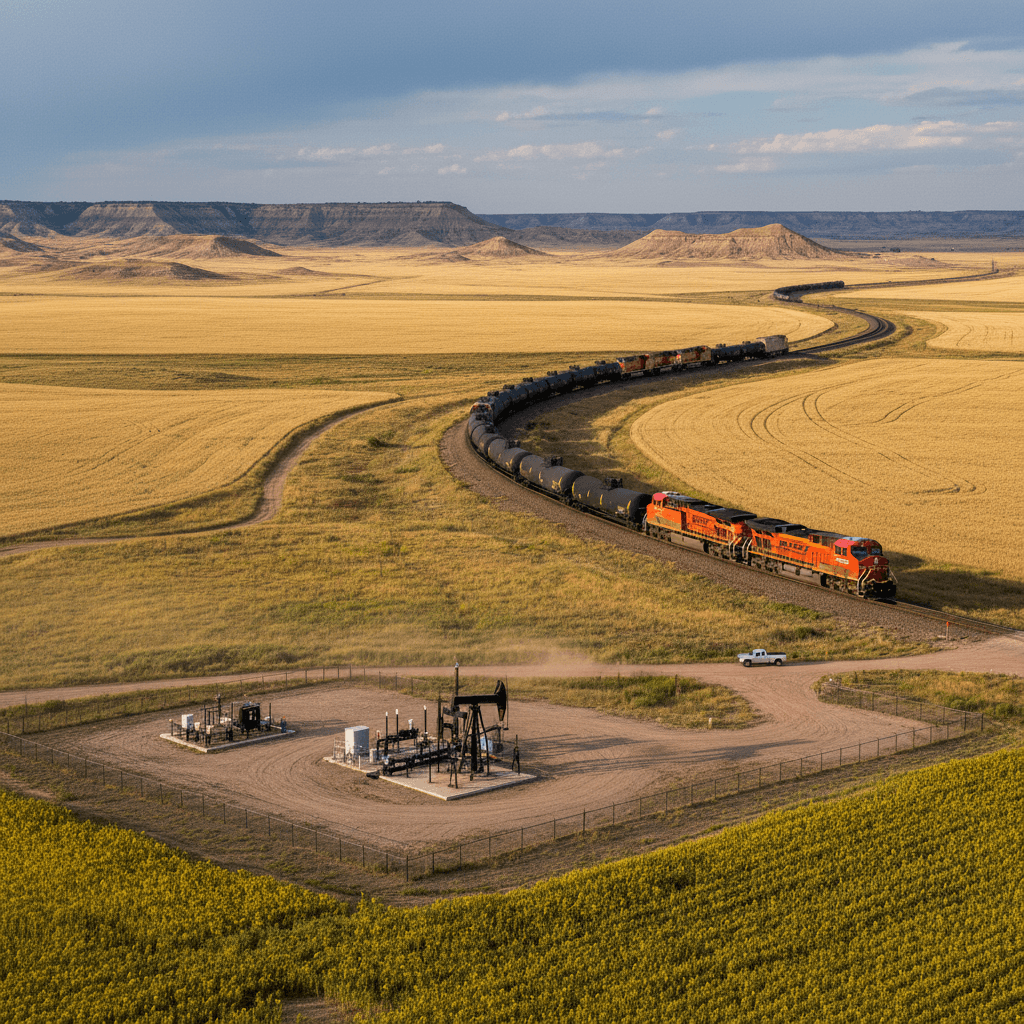
For Bakken operators, the persistent geopolitical risk premium and strong Asian import demand, particularly from U.S. allies diversifying supply, reinforce the market for American crude exports. However, the volatility also introduces uncertainty, as any major escalation or de-escalation in the Middle East could swiftly alter price dynamics. The U.S. administration's aggressive stance on Iran sanctions seeks to further constrict global supply, a factor that typically supports the price benchmarks to which Bakken crude is linked.
Source
OilPrice.com, Rigzone