High Oil Prices Meet Low Rig Count in North Dakota
Active Bakken rigs hold at 23 as WTI surges past $108, raising questions about production response.
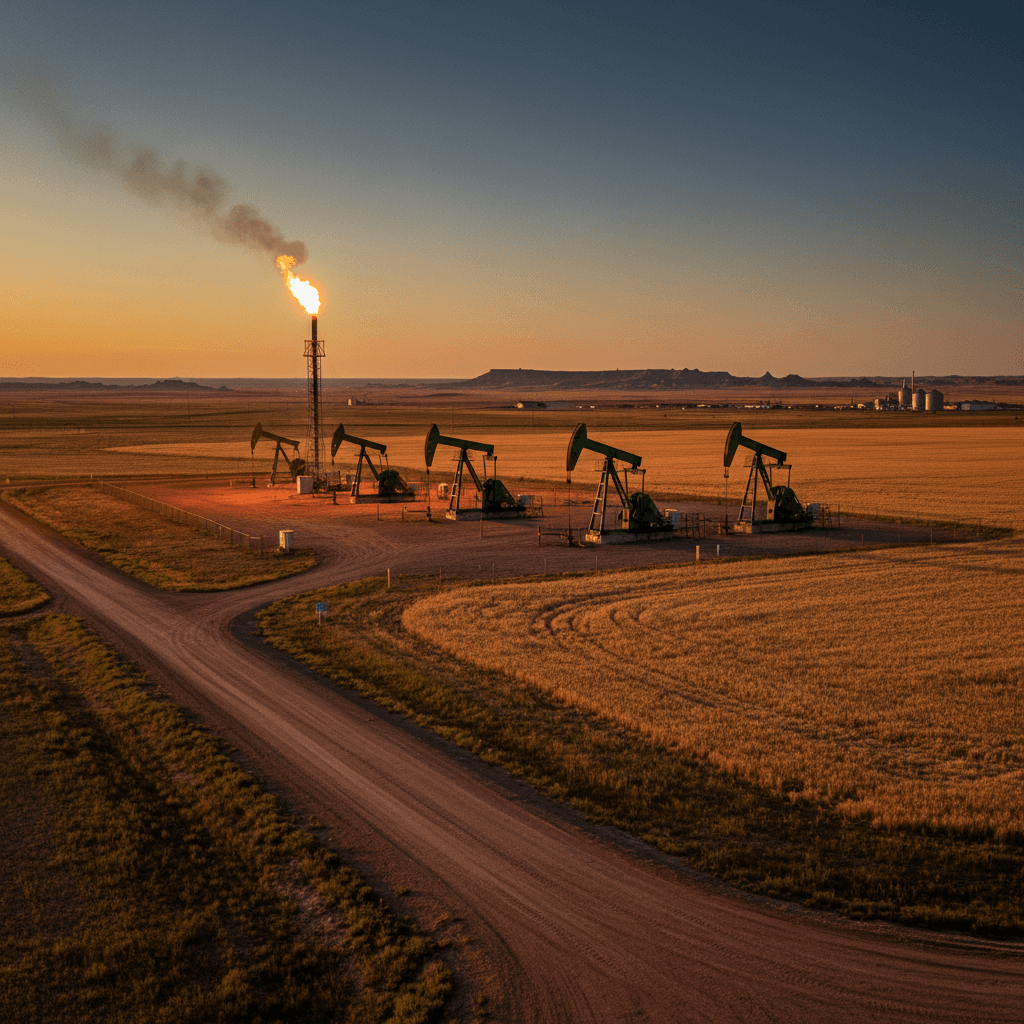
North Dakota's oil industry faces a familiar tension as surging crude prices clash with a historically low rig count. On Wednesday, WTI crude traded at $108.28, a gain of over 8%, while the number of active drilling rigs in the state remained at 23, according to live Bakken Wire data.
The current rig count is a fraction of the 50-60 rigs typical during periods of strong activity in the Bakken formation over the last decade. Historically, the rig count is a leading indicator for future oil production, as new wells take months to drill, complete, and bring online. A sustained low count suggests production gains may be limited in the coming quarters without a significant uptick in drilling activity.
The sharp price rally, with Brent crude also above $111, improves cash flow for operators and should theoretically incentivize more drilling. However, the muted rig response highlights a shift in industry discipline, where public producers prioritize shareholder returns and debt reduction over aggressive volume growth. The Bakken's premium to the benchmark also improved, with the differential narrowing to -$3.42 per barrel versus WTI.
Natural gas prices, at $2.65 per MMBtu, remain a persistent challenge for the associated gas produced from Bakken oil wells. Low gas prices can pressure operator economics and influence decisions on which wells to complete.
For royalty owners and state revenues, the high oil price environment delivers immediate benefits from existing production. However, the flat rig count signals that the long-term trajectory of North Dakota's output, which has plateaued in recent years, may not see a substantial boost from current prices alone. Operators are likely focusing on drilling their highest-return inventory and optimizing existing wells.
The outlook for Bakken production now hinges on whether sustained high prices can finally break the capital discipline trend and trigger a rig count expansion. For the near term, production levels are expected to hold relatively steady, supported by strong prices but constrained by the pace of new well additions.
Source
Live Bakken Wire data for April 29, 2026.