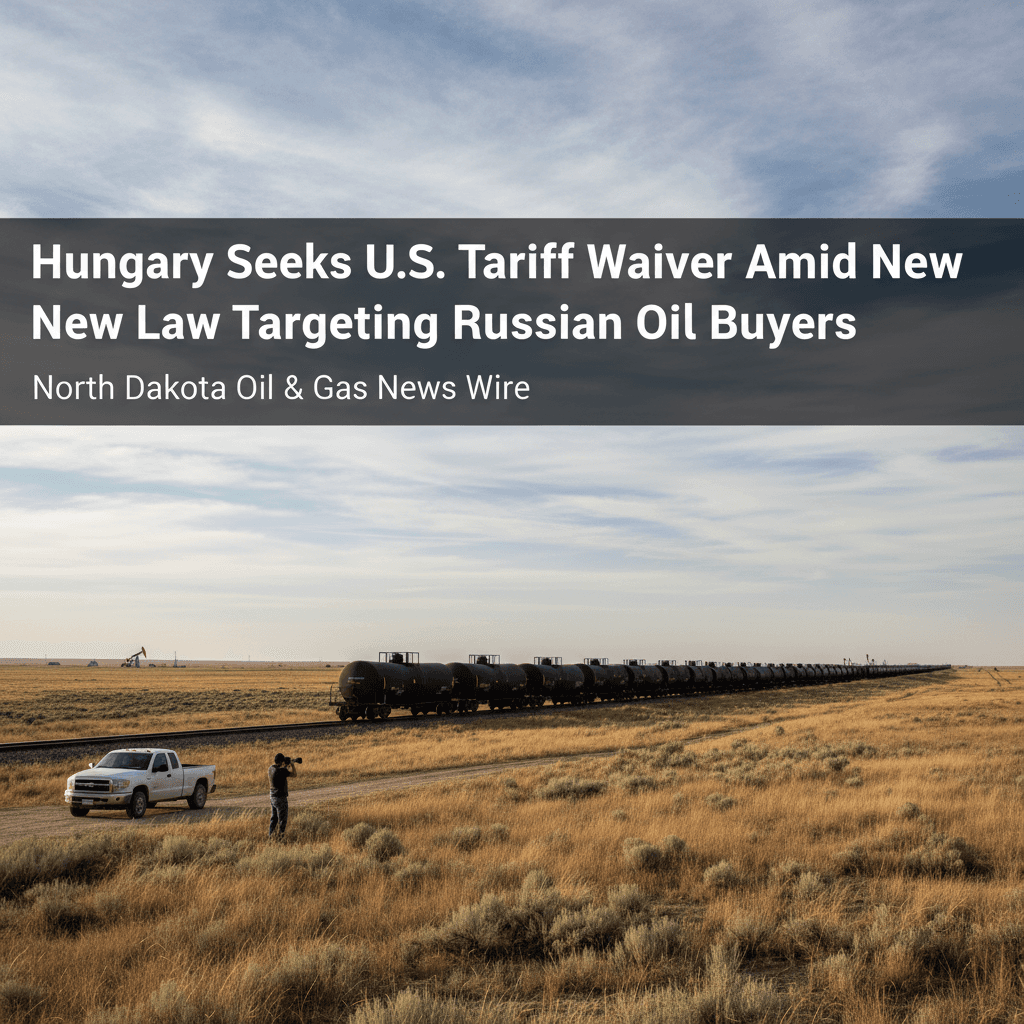
Hungary Seeks U.S. Tariff Waiver Amid New Law Targeting Russian Oil Buyers
New U.S. sanctions law could pressure European importers of Russian crude, potentially opening doors for alternative suppliers like Bakken producers.
Hungary has formally asked U.S. officials to waive potential tariffs as it faces scrutiny under a new American law targeting major importers of Russian oil. The request tests the foreign policy of Hungary's new government and highlights shifting global trade flows that could impact demand for non-Russian crudes, including from the Bakken.
President Donald Trump signed the "Lindsey O. Graham Sanctioning Russia and Iran Act of 2026" into law on Friday, September 18, according to a report from OilPrice.com. The legislation authorizes the President to impose trade tariffs of up to 100% on all U.S. imports from countries that are among the five largest importers of Russian-origin crude oil or natural gas, if those countries make new purchases after the law's enactment.
Hungary is identified as one of the biggest importers of Russian crude, following China, India, and Turkey, making it a potential target for these tariffs. For years under former Prime Minister Viktor Orban, Hungary maintained close ties with Russia and continued buying Russian oil after the invasion of Ukraine.
The country's new Prime Minister, Peter Magyar, who won a landslide election earlier this year, has pledged to diversify energy imports and break from his predecessor's pro-Russia policy. Marton Hajdu, chair of the Foreign Policy Committee in Hungary's Parliament and a member of Magyar's party, recently met with U.S. officials in Washington.
In a Facebook post cited by OilPrice.com, Hajdu stated he asked U.S. lawmakers "to help Hungary reduce its reliance on Russian energy and ensure its energy supply from multiple sources." He specifically requested that the U.S. not impose tariffs on Hungary during its transition period away from Russian energy, framing the dialogue as building relations "based on long-term interests and shared values."
Bakken Implications While the source material does not mention the Bakken directly, the geopolitical maneuver underscores a broader theme critical to North Dakota producers: sustained pressure on Russian energy exports creates long-term opportunities for secure suppliers. Any enforced diversification of European energy supplies, particularly for a landlocked nation like Hungary, reinforces the strategic value of crude from stable trade partners.
U.S. sanctions policy that successfully redirects global oil trade away from Russia benefits all American oil-producing regions by tightening international supply and supporting price benchmarks linked to Bakken crude. The direct threat of tariffs on U.S. goods from compliant nations also adds a complex layer to trade relations, which Bakken operators monitor closely due to the basin's reliance on functional export markets.
The situation remains in flux, dependent on presidential discretion under the new law and the sincerity of Hungary's energy pivot. However, the legislative action signifies continued U.S. commitment to economically isolating Russian energy, a policy that historically correlates with increased relevance for Atlantic Basin crude suppliers.
Source
According to a report from OilPrice.com published September 21, 2026.