WTI Crude--
Brent Crude--
Natural Gas--
ND Rig Count--
WTI Crude--
Brent Crude--
Natural Gas--
ND Rig Count--
Global Markets

IEA Cuts Demand Forecast, Warns on Russian Refinery Damage

Global energy watchdog's dual reports signal potential headwinds for crude markets and refining margins, impacting Bakken producers.

Bakken Wire Staff·☀️Morning Wire·

The International Energy Agency (IEA) has issued two significant reports that could shape the global oil market environment for Bakken producers. The agency slashed its forecasts for oil demand this year and warned that consumption may decline further in the coming months, according to Rigzone.

Simultaneously, the IEA reported that drone strikes are degrading Russia's oil refining sector. The attacks are now hitting secondary-processing units, which may require six to eight months to replace, Rigzone reported.

For Bakken operators, these developments present a mixed outlook. A downward revision in global oil demand forecasts typically signals potential pressure on crude oil prices. Lower prices can directly impact the profitability of drilling and completion activities in the Williston Basin, potentially affecting operators' capital spending plans.

However, the reported damage to Russian refining capacity introduces a countervailing factor. Reduced refining output from a major global supplier can tighten supplies of refined products like gasoline and diesel, which could support refining margins. Stronger refining margins can improve the economics for Bakken crude, which is primarily shipped to refineries in the U.S. Midwest and Gulf Coast for processing.

The net effect on Bakken crude prices will depend on which force dominates: weaker overall demand or tighter refined product supply. The IEA's warning of a potential further consumption decline adds a layer of uncertainty for producers making long-term decisions.

The Bakken formation is North Dakota's primary oil-producing region, and its operators are sensitive to shifts in global supply-demand balances. These latest assessments from a leading energy watchdog will be factored into market sentiment and pricing models as companies monitor the interplay between faltering demand and constrained refining capacity.

Source

Rigzone (IEA Slashes Oil Demand View, published 2026-09-11; IEA Says Ukraine Strikes Degrade Russian Oil Refining Sector, published 2026-09-11)
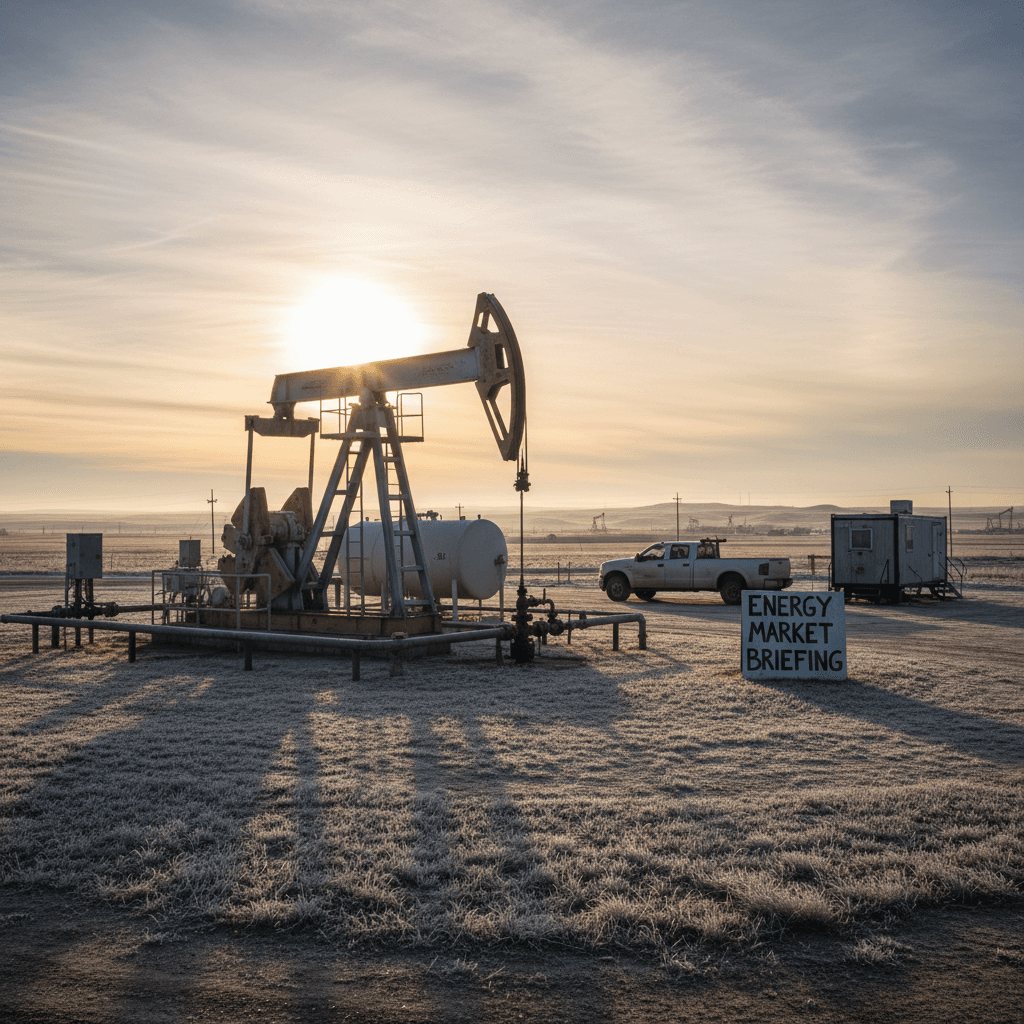
ieaoil demandglobal marketsrefiningbakkennorth dakota

Share this article

Related Articles

Global Markets

Europe's Lowest Gas Inventory Since 2020s Lifts Global LNG Risk for Bakken

Europe is entering winter with its lowest gas inventory of the 2020s, according to OilPrice.com, a development that keeps global LNG risk elevated even as North Dakota operators face a domestic gas market that remains detached from the rally. EU storage sites were 71.6% full in Gas Infrastructure Europe’s Nov. 11 update, with Germany at 58%, well below the five-year average for the start of the heating season. Asian spot LNG is trading above $30 per million British thermal units, OilPrice.com reported. Rystad Energy’s winter LNG outlook, published this week, stops short of predicting a further rally and tells buyers to plan for a wide range of outcomes instead of one base case. Rystad says Europe will have to pay up to keep US cargoes from being pulled toward Asia, where the loss of Middle Eastern supply has buyers chasing the same Atlantic LNG. The balance sheet is tight. The...

🌅Afternoon Wire·Nov 12
Global Markets

Global LNG, Climate Pledges Shape Bakken Market Signals

Global energy markets are sending mixed signals for North Dakota’s Bakken producers as Europe pays more for Russian LNG ahead of a ban and major governments reaffirm climate commitments while still relying on hydrocarbons, according to OilPrice.com. For Bakken operators and royalty owners, the immediate backdrop is higher global LNG and natural gas prices caused by supply disruptions. OilPrice.com reported that Europe has been paying higher prices for LNG imports after the Iran war and the blocked Strait of Hormuz cut off a large part of Qatar’s LNG supply, sending benchmark LNG and natural gas prices in Europe and Asia soaring. That price environment can matter for U.S. energy demand and export-linked pricing, even as North Dakota’s crude and associated gas markets are driven by many factors. The tightness is reflected in European buying patterns. German campaign group Urgewald said the EU paid $9.6 billion between January and October to...

🔆Midday Wire·Nov 12
The Morning Take - Energy Market Briefing
Global Markets

Energy Market Briefing

Daily Energy Market Briefing Thursday, November 12, 2026 1. Headlines Oil prices are down this morning, with WTI trading at $85.79 (-0.86%) and Brent at $92.14 (-0.67%), according to price data. The market is digesting conflicting signals on global supply flows. Multiple sources, including OilPrice.com and Rigzone, report that crude shipments from the Persian Gulf to India have surpassed Russian flows for the first time since the Iran war began, reaching an estimated 2.1 million barrels per day (bpd) so far this month versus 1.8 million bpd from Russia, per Kpler data. This indicates a material recovery in Hormuz traffic via ship-to-ship transfers. Simultaneously, reports cite Saudi Arabia informing OPEC that its crude production surged 26% last month to the highest level since before the war. On the demand side, U.S. gasoline prices have reportedly fallen below $4 per gallon for the first time since August. In corporate news, Flex...

☀️Morning Wire·Nov 12