IEA Warns Renewed U.S.-Iran Conflict Threatens Oil Surplus, Global Supply Rebounds
Global supply jumped 4.1 million bpd in June but new hostilities could flip 2026 market forecast, as legal and geopolitical risks mount.
The International Energy Agency (IEA) warned Friday that renewed U.S.-Iran hostilities could upend its forecast for an oil market surplus next year, according to its July Oil Market Report. The agency noted an escalation in hostilities on July 7-8 has clouded the outlook, despite a recent tentative recovery in oil flows.
Global oil supply rebounded by 4.1 million barrels per day (bpd) to 98.8 million bpd in June, the IEA reported, amid a partial recovery in Gulf production and as tankers rushed to exit the Persian Gulf following the reopening of the Strait of Hormuz. However, global output remains about 9.4 million bpd below pre-war levels. The IEA's supply forecast for a decline of 3.7 million bpd to 102.6 million bpd in 2026 is now "contingent on a swift de-escalation of renewed hostilities."
Oil prices have plunged since the U.S. and Iran signed a memorandum of understanding in mid-June, with North Sea Dated prices down $31 per barrel in June to $68 by early July, their lowest since January. Meanwhile, refined product markets remain tight, underpinning a rally in refinery margins to four-year highs by early July, the IEA said.
The renewed conflict centers on control of the Strait of Hormuz. According to a separate report, the U.S. launched another major round of strikes across Iran this week, targeting roughly 90 military sites. Tehran responded with attacks on U.S. facilities in Bahrain, Kuwait, and Qatar, insisting it will continue enforcing its own navigation regime. Western intelligence assessments conclude Tehran is prepared to accept renewed military escalation rather than relinquish control, and commercial vessels refusing to use its designated routes are under attack.
In other global energy news, a UK High Court ruling has ended Nord Stream AG's attempt to recover $662 million in insurance claims for the 2022 sabotage of the Nord Stream 1 gas pipeline. The judge ruled it a standard war-risk exclusion, relieving insurers Lloyd’s and Arch of liability. This ruling establishes a key legal precedent that sabotage linked to interstate conflict may be excluded from commercial coverage, even far from active battlefields. It also cements Europe's shift away from Russian pipeline gas, with the system once carrying up to 55 billion cubic meters annually now unlikely to be restored.
Renewed fighting has also broken out in South Sudan's oil-producing Jonglei State, threatening the fragile peace that has reigned since 2018, according to the same report.
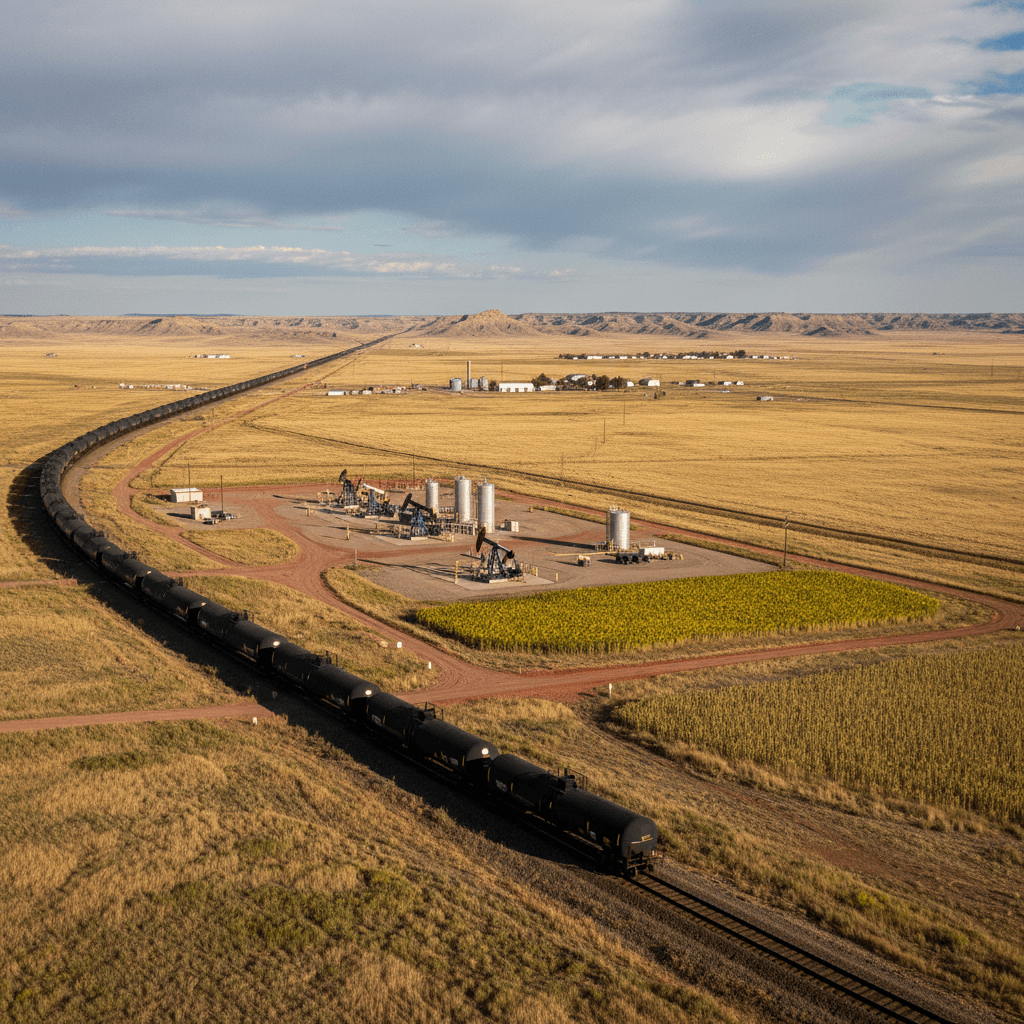
For Bakken operators, the IEA's warning underscores the extreme volatility and geopolitical risk still dictating global oil prices. The sharp rebound in global supply in June contributed to the recent price collapse, but renewed conflict could swiftly reverse those gains. The persistent tightness in refined product markets, however, continues to support strong refinery margins. The Nord Stream insurance ruling highlights the enduring legal and infrastructure risks in a fragmented global energy landscape, reinforcing the value of stable, domestic production from basins like the Bakken.
Source
OilPrice.com (IEA Warns Renewed U.S.-Iran Conflict Could Upend Oil Surplus Forecast, published July 10, 2026); OilPrice.com (Nord Stream Loses Landmark Insurance Case as War Exclusion Prevails, published July 10, 2026); OilPrice.com (U.S. Strikes Fail to Break Iran’s Grip on the Strait of Hormuz, published July 10, 2026)

