Israel Strikes Iranian Petrochem Plant, Oil Prices Spike 5%
Escalation in Middle East rattles global markets, renewing focus on geopolitical risk for Bakken producers.
Global oil prices spiked 5% in early Asian trading Monday after Israel launched airstrikes on a petrochemical plant in southwestern Iran, marking a major escalation in Middle East hostilities according to OilPrice.com. The Israel Defense Forces confirmed strikes on "several targets" at a complex in the Mahshahr area early Monday, the first direct energy sector attack on Iranian territory since a ceasefire took effect on April 8.
This follows a weekend of reciprocal missile attacks between the two nations. On Sunday, Iran targeted Israel, and Israel retaliated against Iranian military targets, Rigzone reported, despite U.S. President Donald Trump's call for Israeli Prime Minister Benjamin Netanyahu to refrain from hitting back. Analysts at Saxo Bank described the exchange as "one of the most serious tests" of the April ceasefire, which was intended to halt fighting involving the U.S., Israel, and Iran, according to OilPrice.com.
President Trump attempted to reassure markets, telling the Financial Times that the attacks "will not have any effect" on negotiations for a potential U.S.-Iran peace deal and asserting that the United States "calls the shots." However, Saxo Bank analysts noted that "despite repeated optimism from the U.S. administration, a lasting peace agreement appears increasingly elusive."
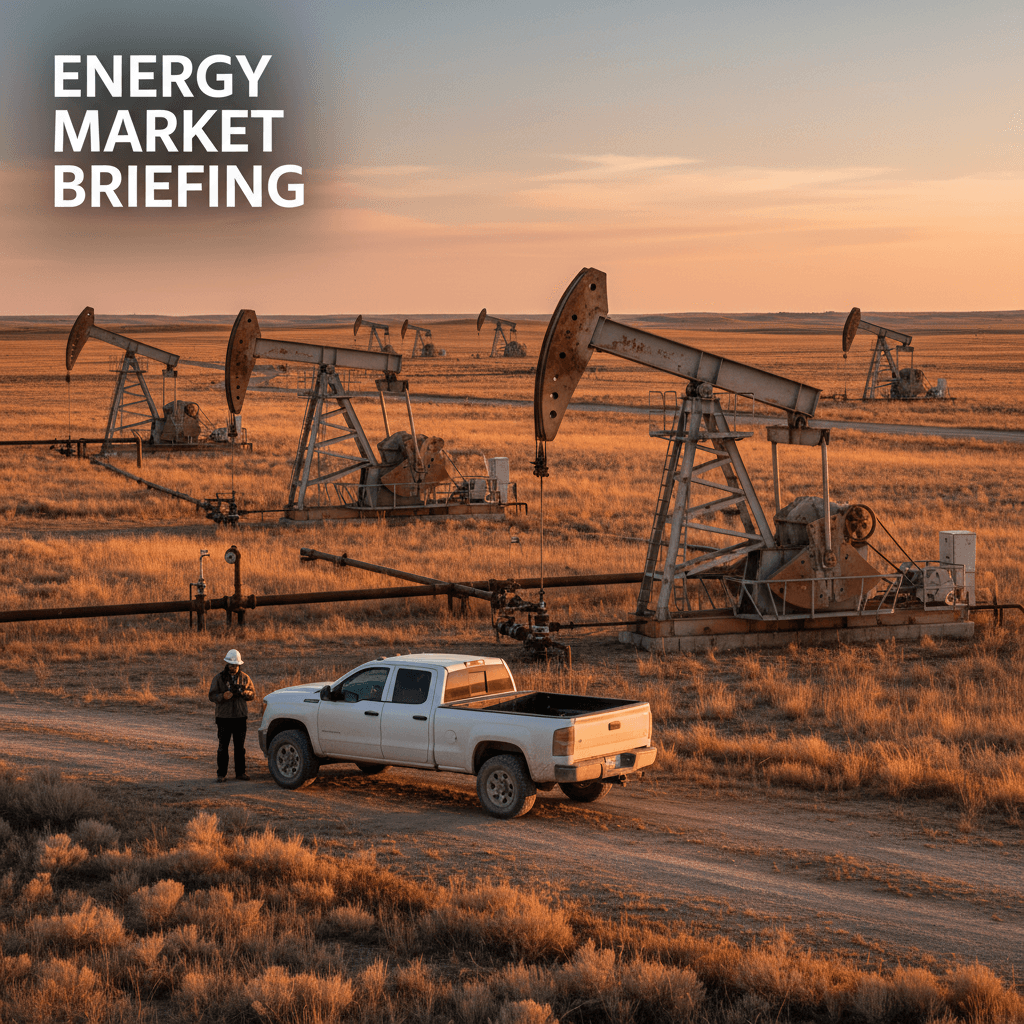
The immediate market reaction underscores the persistent geopolitical risk premium faced by Bakken producers. Any sustained disruption to global flows, particularly from the Middle East, can rapidly alter the price landscape for North Dakota crude. Analysts warned that the "near-closure of the Strait of Hormuz continues to tighten global energy markets," with several oil majors cautioning that physical shortages could emerge within weeks, OilPrice.com reported.
In other global energy news, Italian energy major Eni has secured a new exploration block offshore The Gambia, according to Rigzone. The block is located in a region of the Atlantic margin with proven hydrocarbon discoveries. While a separate play, such international exploration activity highlights the continued global competition for resource development.
For operators in the Williston Basin, the sudden price volatility triggered by the Middle East escalation is a stark reminder that local breakevens and drilling plans remain tethered to global events. The stability of the ceasefire and the security of key global chokepoints like the Strait of Hormuz will be critical factors watched by Bakken management teams and royalty owners in the coming days.
Source
OilPrice.com, Rigzone