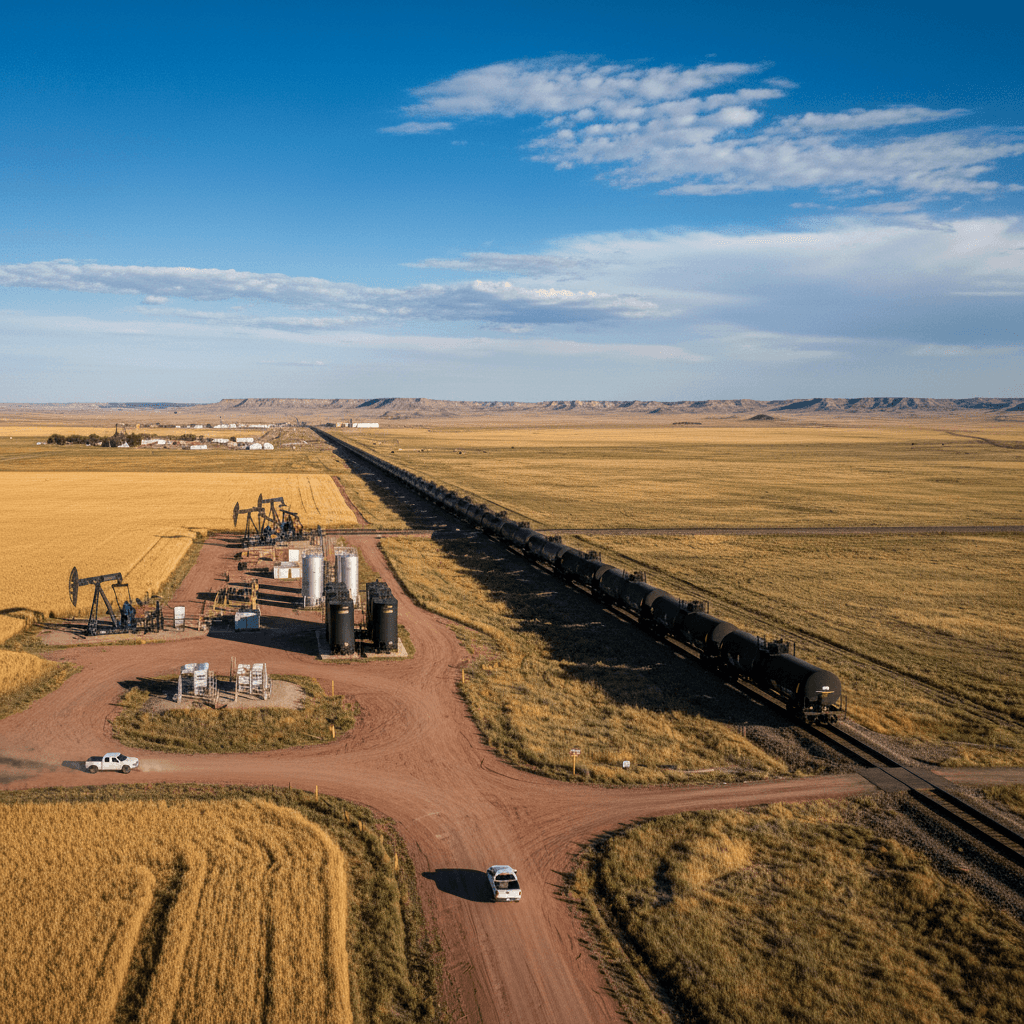
Kuwait Eyes Oil Storage Expansion Amid Market Upheaval
Global market volatility and new LNG deals signal shifting energy landscape with implications for Bakken crude pricing.
Global energy markets are facing continued volatility, with Kuwait considering an expansion of its global oil storage capacity, according to Rigzone. This development comes amid what the source described as "unprecedented upheaval" stemming from the U.S. and Israeli campaign against Iran that began in late February 2026.
Separately, chemical and energy group INEOS has entered a deal to supply liquefied natural gas (LNG) to Asia, Rigzone also reported. The agreement with Japanese conglomerate Marubeni marks INEOS' first LNG deliveries to the Asia-Pacific region.
For Bakken operators, these moves highlight the interconnected nature of global energy markets and their direct impact on North Dakota's oil fields. Increased strategic oil storage by major producers like Kuwait can influence global crude inventories and price benchmarks, which ultimately determine the profitability of Bakken crude. Market upheaval typically leads to heightened price volatility, affecting drilling plans and cash flow for independent producers.
The new LNG supply deal underscores the ongoing global competition for energy market share. While the Bakken is primarily an oil play, its associated natural gas production is significant. Large-scale LNG contracts can affect global gas pricing and development economics for gas capture projects in the Williston Basin, which remain a regulatory and economic focus for North Dakota.
The reported market disruption since February aligns with a period of uncertainty for Bakken crude differentials. Operators and royalty owners are sensitive to shifts in global supply chains and storage strategies, as these factors influence the price received for barrels shipped to coastal refineries and export terminals.
Source
Rigzone (Kuwait storage report, INEOS LNG deal report)

