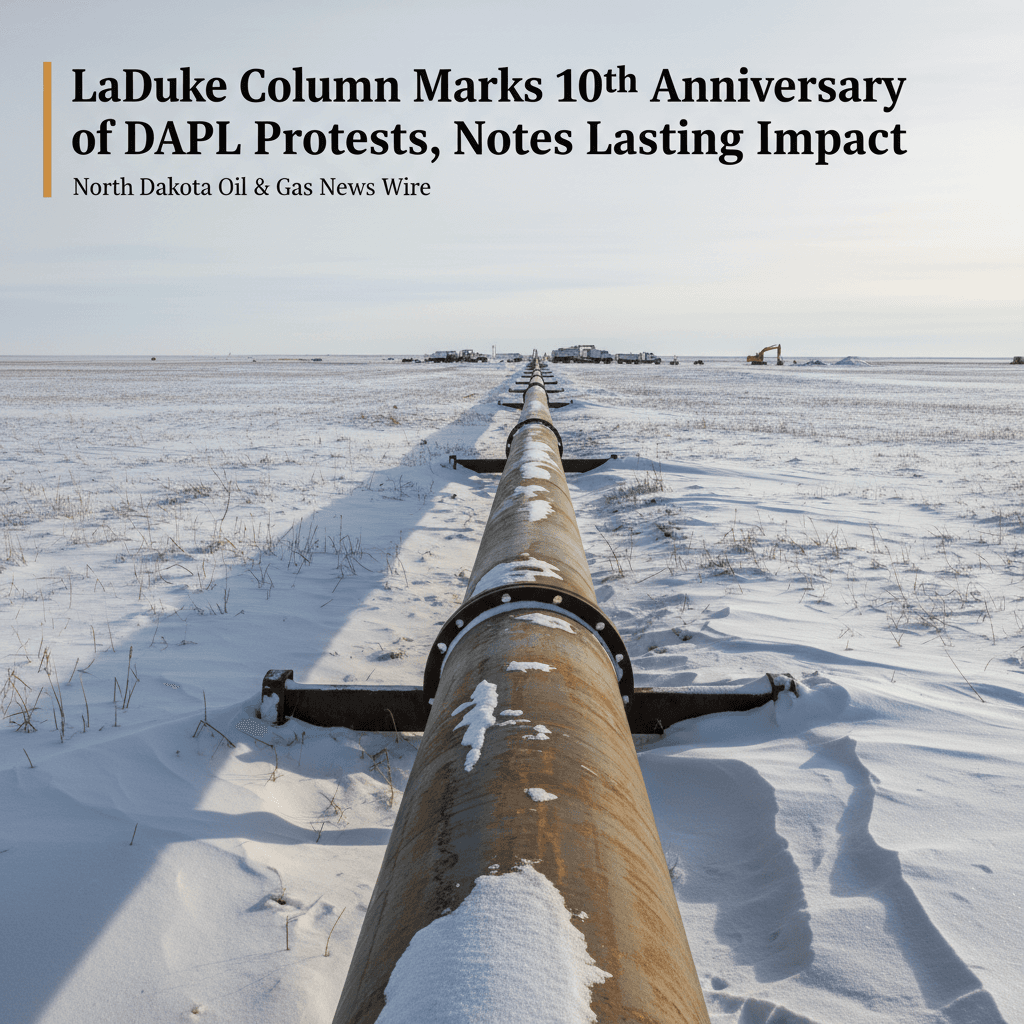
LaDuke Column Marks 10th Anniversary of DAPL Protests, Notes Lasting Impact
Opinion piece reflects on Standing Rock resistance, citing $38M in "repression," continued legal pursuits, and a legacy of Indigenous-led renewable energy and farming projects.
A column marking the 10-year anniversary of the Dakota Access Pipeline (DAPL) protests asserts that North Dakota's "judicial institutions have relentlessly pursued Water Protectors" with historical vigor, according to an opinion piece by LaDuke published on September 23, 2026. The column, sourced from Bing News, states the protests revealed "the brutality of Tiger Swan, the $38 million in repression and violence against unarmed people," and an understanding of "fossil fuel addiction — and how far North Dakota was willing to go for oil."
The piece frames the Standing Rock resistance as a transformative event that nurtured thousands of Water Protectors and communities with teachings of "hope and healing." It contrasts this with the state's ongoing legal actions, suggesting North Dakota is "a meth lab" in the laboratory of democracy, according to LaDuke.
The legacy of the protests is described as fostering Indigenous-led initiatives within the state. The column cites David Archambault II, the former Standing Rock Tribal chairman who was "in the crossfire most of 2016 and 2017," and notes he has worked since 2021 at Wozu, an Indigenous-led nonprofit in Cannon Ball, North Dakota. Down the road, the SAGE renewable energy initiative, coordinated by a descendant of Sitting Bull, Ron McNeil, aims to "harness the power of the land and our people to create economic opportunities and energy independence," according to its website quoted in the source.
Furthermore, the article states that many returned home to farm as "a way to heal from war," leading to flourishing projects like the Red Lake Agriculture Program, Makoche, and Dream of Wild Health. The goal, as presented in the column, is to "rebuild the self-sufficiency of our ancestors."
The opinion piece also credits the Standing Rock experience with shaping political figures, citing Alexandria Ocasio-Cortez's visit and subsequent social media posts in support of Water Protectors. It notes she announced her campaign for Congress two months after the camps were bulldozed and unseated a 10-term incumbent despite being outspent 10-to-1.
For Bakken operators and the North Dakota energy sector, the column serves as a reminder of the profound and lasting social, political, and environmental opposition that major pipeline infrastructure can generate. The referenced legal pursuits and the cited shift toward local renewable energy and agricultural projects indicate ongoing community responses that originated from the DAPL conflict a decade ago.
Source
Bing News (LaDuke: 10 years after, the lessons of the DAPL protests, published 2026-09-23)