Legal Win for DAPL, Iran War Stalls, Export Ban Bill Threatens Bakken
North Dakota Supreme Court blocks Greenpeace's Dutch suit as Mid-East conflict fuels price volatility and legislative risks for crude exports.
The North Dakota Supreme Court ruled Thursday that Greenpeace International cannot relitigate a defamation case in the Netherlands that a state court jury decided last year in favor of Dakota Access Pipeline owner Energy Transfer. According to Courthousenews.com, the 4-1 decision grants Energy Transfer an antisuit injunction, preventing Greenpeace from seeking a Dutch declaration that the North Dakota verdict was "manifestly unfounded and abusive."
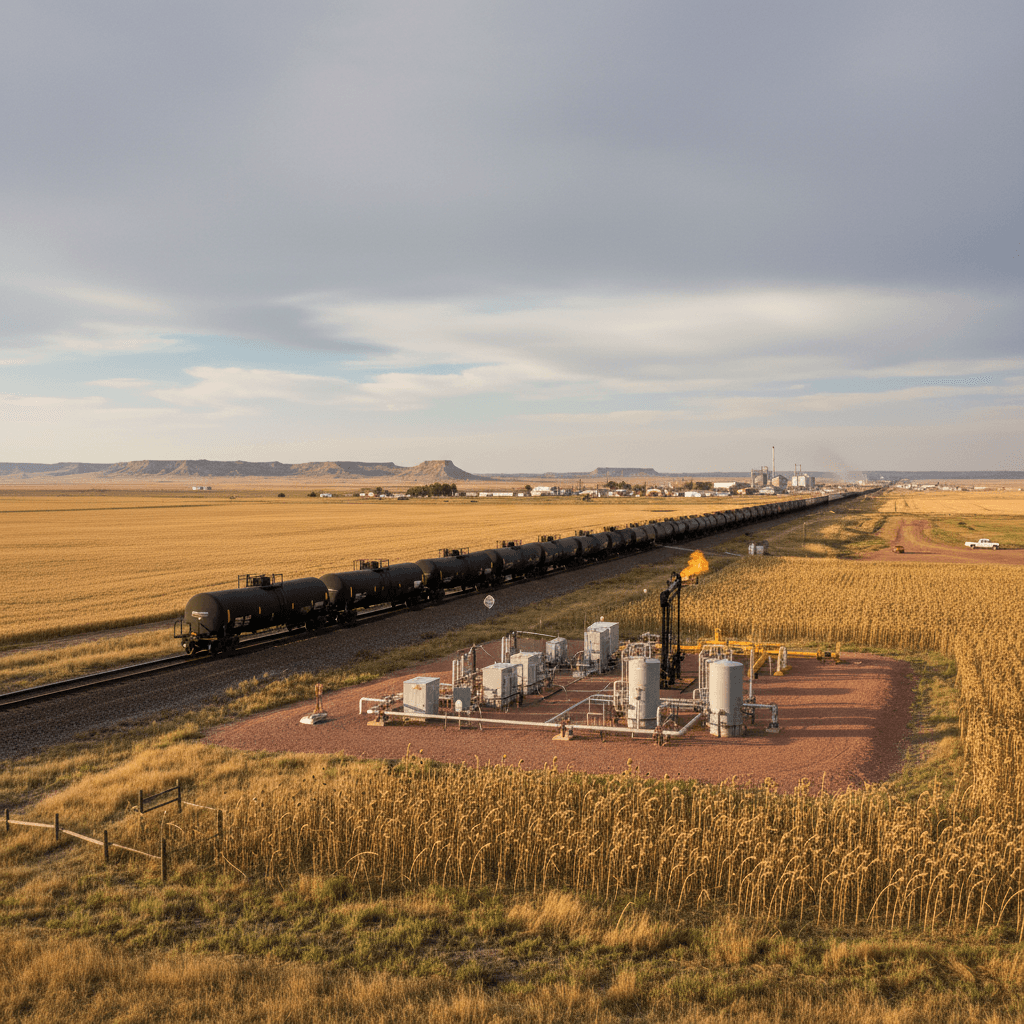
The ruling pertains to the jury finding that Netherlands-based Greenpeace was liable for defamation and other claims related to protests against the Dakota Access Pipeline in 2016 and 2017. The 1,200-mile pipeline, which began operating in 2017, carries up to 750,000 barrels of oil daily from North Dakota's shale fields to Illinois. The court stated a foreign proceeding designed to undermine a domestic verdict "undermines confidence in the domestic judicial process."
Meanwhile, escalating conflict in the Middle East continues to threaten global oil flows and sustain high fuel prices. Rigzone reported the U.S. has given Iran a deadline of Friday, May 8, to respond to a new peace proposal from President Donald Trump. The proposal seeks to reopen the Strait of Hormuz and end a U.S. blockade on Iranian ports.
Overnight clashes, however, are fracturing a monthlong ceasefire. U.S. forces conducted airstrikes on Friday on two empty Iranian oil tankers attempting to break the blockade, according to U.S. Central Command. Iran reported a cargo vessel was hit, injuring 10 sailors. The war has sent energy prices soaring, with President Trump facing pressure from Americans frustrated by high fuel costs.
In response to the price surge, a legislative threat to Bakken crude exports emerged. Congressman Brad Sherman (D-CA) introduced a bill Thursday seeking a moratorium on U.S. exports of crude, gasoline, and diesel for the duration of the war with Iran. According to Rigzone, the "Stop Oil Exports to Lower Gas Prices Act" aims to keep domestic supply in the U.S. to reduce pump prices.
Sherman's office stated that currently, "American oil is going to Europe and Asia to replace Middle East oil, reducing the domestic supply and raising the prices Americans pay." The bill would ban exports until the President certifies military operations against Iran have ceased and the Strait of Hormuz is fully open. It includes limited exceptions for certain crude that cannot be efficiently refined domestically.
The U.S. Energy Information Administration reported weekly regular gasoline prices averaged $4.452 a gallon, up $1.305 from last year, with diesel at $5.64 per gallon. The EIA forecast in April that diesel prices would average $4.80 per gallon in 2026.
Source
Information synthesized from Courthousenews.com (published May 7, 2026) and Rigzone (published May 8, 2026).

