WTI Crude--
Brent Crude--
Natural Gas--
ND Rig Count--
WTI Crude--
Brent Crude--
Natural Gas--
ND Rig Count--
The Morning Take - Energy Market Briefing
Global Markets

Energy Market Briefing

Bakken Wire Staff·☀️Morning Wire·
Listen
0:00 / 4:12

Daily Energy Market Briefing Thursday, October 22, 2026

1. Headlines

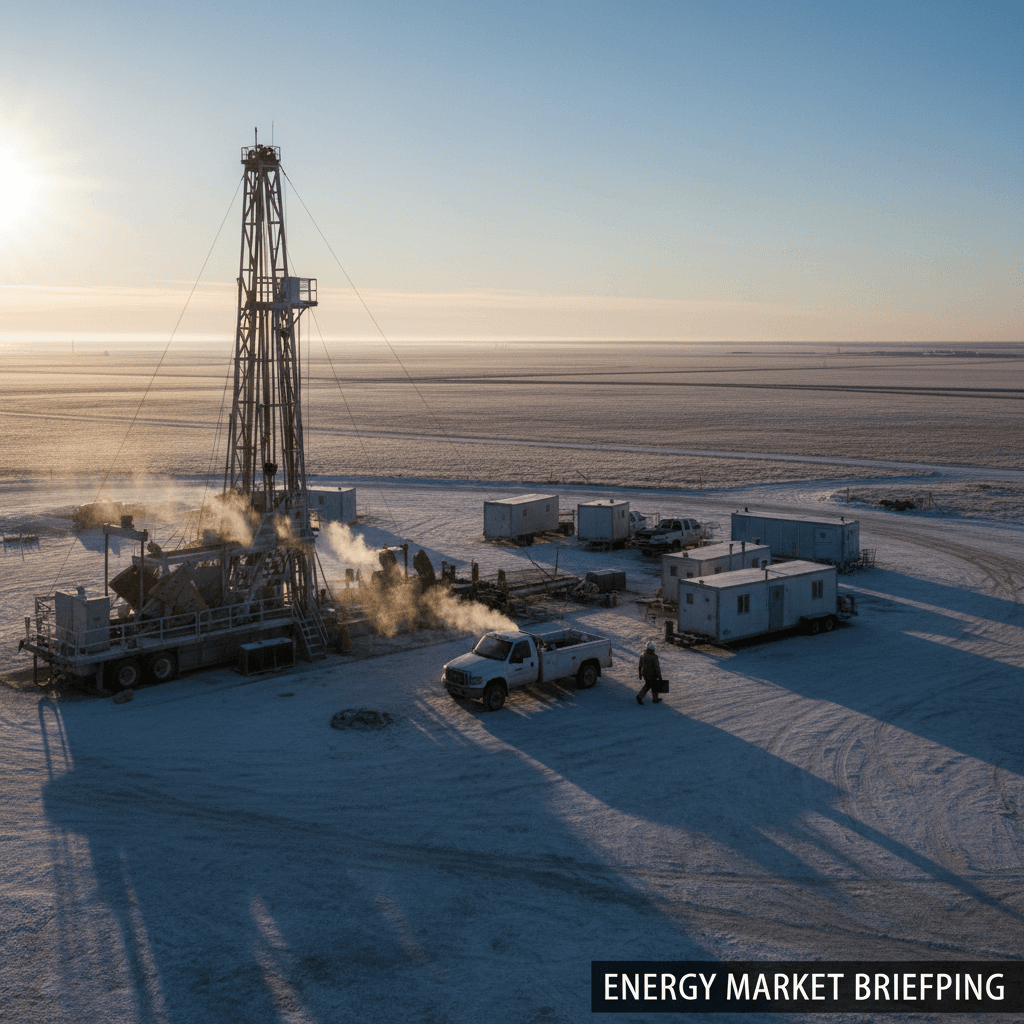
Oil prices surged in early trading today, driven by renewed fears of supply disruption in the Middle East. WTI crude is up 2.44% to $99.52, while Brent crude jumped 2.89% to $111.97. The immediate catalyst is a claim from Iran’s Islamic Revolutionary Guard Corps (IRGC) Navy, reported by OilPrice.com, that seven vessels, including oil tankers, were hit by Iranian forces or struck mines in the Persian Gulf over the past day. This comes on the heels of a Houthi attack on Saudi Arabia's Shaybah oilfield on Wednesday, which resulted in two fatalities but did not disrupt operations, according to OilPrice.com.

Create a free account to continue reading

Sign up for free to get full access to Bakken Wire's daily energy market analysis, audio briefings, and more.

Create Free Account

Already have an account? Sign in

Share this article

Related Articles

Global Markets

India's Shift to Middle East Oil Could Pressure Bakken Pricing

India's crude oil imports from the Middle East jumped 32% in September to 2.8 million barrels per day (bpd), the highest level since February, according to vessel-tracking data reported by OilPrice.com. This rebound to pre-war import levels alters global trade flows and introduces new competition for other global suppliers, including those in the United States. The shift saw Middle Eastern oil account for 54% of all Indian imports last month, according to the source. This surge came as Gulf producers increased crude volumes moving through the Strait of Hormuz. Concurrently, India's imports of Russian crude fell 14% from August to 1.8 million bpd, as China increased its competition for Russian supply and the price of Russia's Urals grade crude rose to nearly equal that of Middle Eastern grades. For Bakken operators, this realignment is significant. Increased availability and competitive pricing of Middle Eastern crude on the global market can pressure...

☀️Morning Wire·Oct 22
The Afternoon Take - Energy Market Briefing
Global Markets

Energy Market Briefing

Energy Market Briefing Wednesday, October 21, 2026 1. Headlines Oil prices showed a mixed performance today. According to price data, Brent crude rose by $0.64 to settle at $109.43 per barrel. In contrast, WTI crude fell by $0.32 to $97.50. This divergence widened the Brent-WTI spread to nearly $12. The Bakken differential to WTI was reported at -$3.42. Natural gas prices fell sharply, down $0.19 to $2.77. A Rigzone wire report attributes oil price gains to a "deadly Saudi oil field attack and Gulf embassy concerns." Market attention is also on fuel supplies. The Trump administration is tapping an emergency national diesel reserve, according to a Rigzone report. Separately, Macquarie strategists warned that the upcoming U.S. midterm elections "could swing on diesel," as reported by Rigzone. On the geopolitical front, S&P Global Institute warns that the ongoing "Hormuz energy shock" is rapidly becoming a global food security crisis, according to...

🌅Afternoon Wire·Oct 21
Global Markets

Hormuz, Arctic Shipping Disruptions Reshape Global Energy, Food Markets

The ongoing conflict and shipping disruptions in the Middle East are triggering a "multidirectional squeeze on world agriculture" that threatens global food security, according to a new report from S&P Global Institute cited by OilPrice.com. The crisis, stemming from the U.S. and Israel's war with Iran, has closed the Strait of Hormuz to key fertilizer feedstock exports, causing prices to double and risking hunger for millions. For North Dakota's Bakken region, a major agricultural and energy producer, this intertwines the fates of its oilfields and its farms. The Strait of Hormuz, a critical chokepoint, was closed to nearly all shipping on February 28, 2026. Before that, half of the world's fertilizer feedstock exports passed through it, according to the S&P Global report. The disruption of chemicals like urea, ammonia, and natural gas—critical for nitrogen-based fertilizers—directly threatens the production of staple crops like corn and wheat. The International Monetary Fund projects...

🌅Afternoon Wire·Oct 21