ND Rig Count Holds at 25 as Oil Prices Support Production Outlook
Bakken well productivity gains are expected to offset low drilling activity and maintain output near current levels, analysts say.
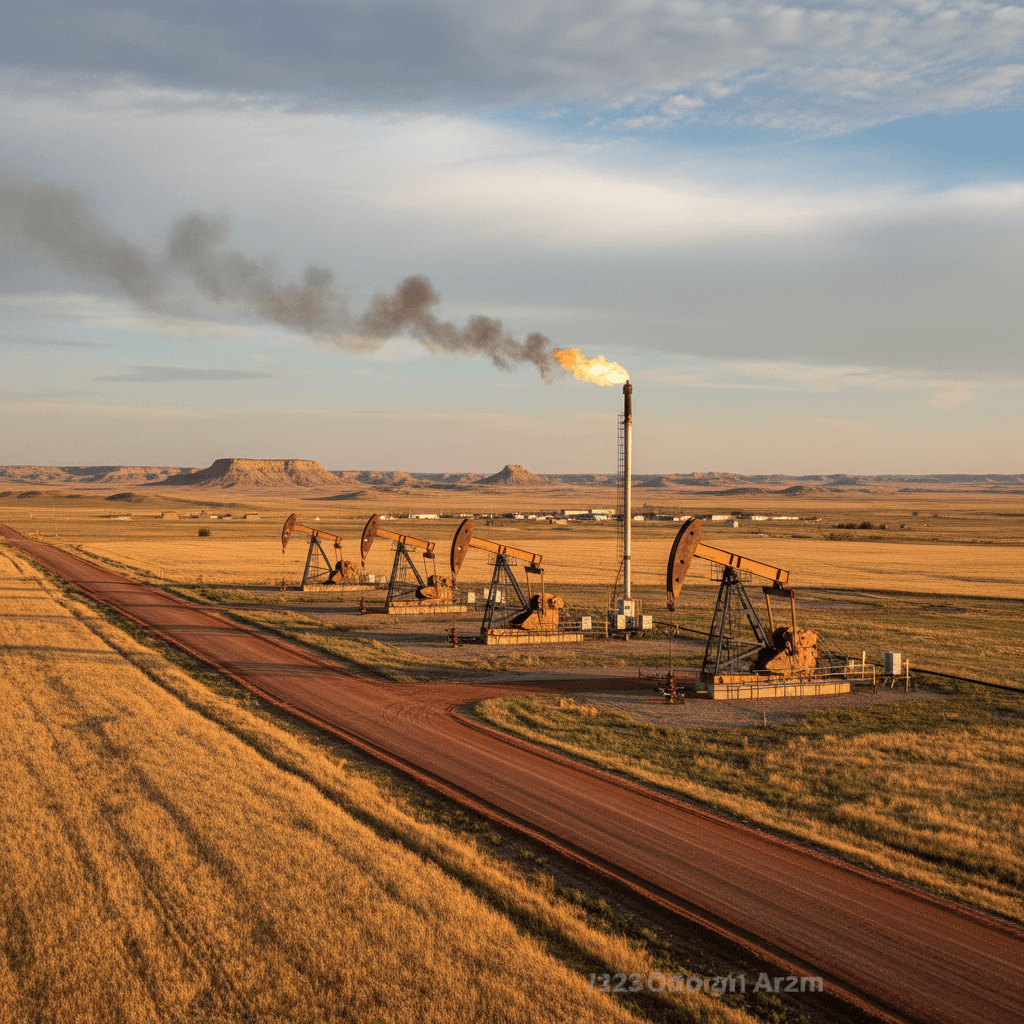
North Dakota's active rig count held steady at 25 on Friday, maintaining a level that suggests oil production in the Bakken will remain stable in the near term, according to industry analysts. The count, a key indicator of future drilling activity, has fluctuated narrowly around the mid-20s for several months.
Supporting the current pace of operations, oil prices provided a firm backdrop. West Texas Intermediate (WTI) crude traded at $96.84 per barrel, up 0.51% on the day, while the international Brent benchmark rose 1.1% to $103.71. The Bakken crude differential was $-3.42 per barrel versus WTI. Natural gas was priced at $3.03 per MMBtu.
Historically, rig counts are a leading indicator, with changes in the count typically impacting production volumes several months later. The current count of 25 is significantly lower than the boom-era highs of over 200 rigs but has proven sufficient in recent years to sustain production around 1.2 to 1.3 million barrels per day. This is due to dramatic improvements in well productivity and drilling efficiency.
"While the rig count remains low by historical standards, the focus for Bakken operators continues to be capital discipline and maximizing returns from high-graded drilling locations," one analyst noted. The sustained oil price environment above $90 per barrel for WTI provides the economic incentive to continue development drilling, albeit at a measured pace.
The stability in the rig count, combined with strong commodity prices, points to a continuation of the current production plateau. Operators are likely concentrating on core acreage where wells yield the highest returns, which supports overall output even with fewer rigs running. The outlook suggests North Dakota will remain a critical contributor to U.S. oil supply, with production levels largely dependent on price signals and operational efficiency gains.
Any significant move in the rig count would signal a shift in operator sentiment. A sustained increase would be needed to return the Bakken to production growth, while a drop could foreshadow a decline. For now, the data indicates a holding pattern focused on steady, profitable operations.
Source
Bakken Wire Live Data as of May 22, 2026