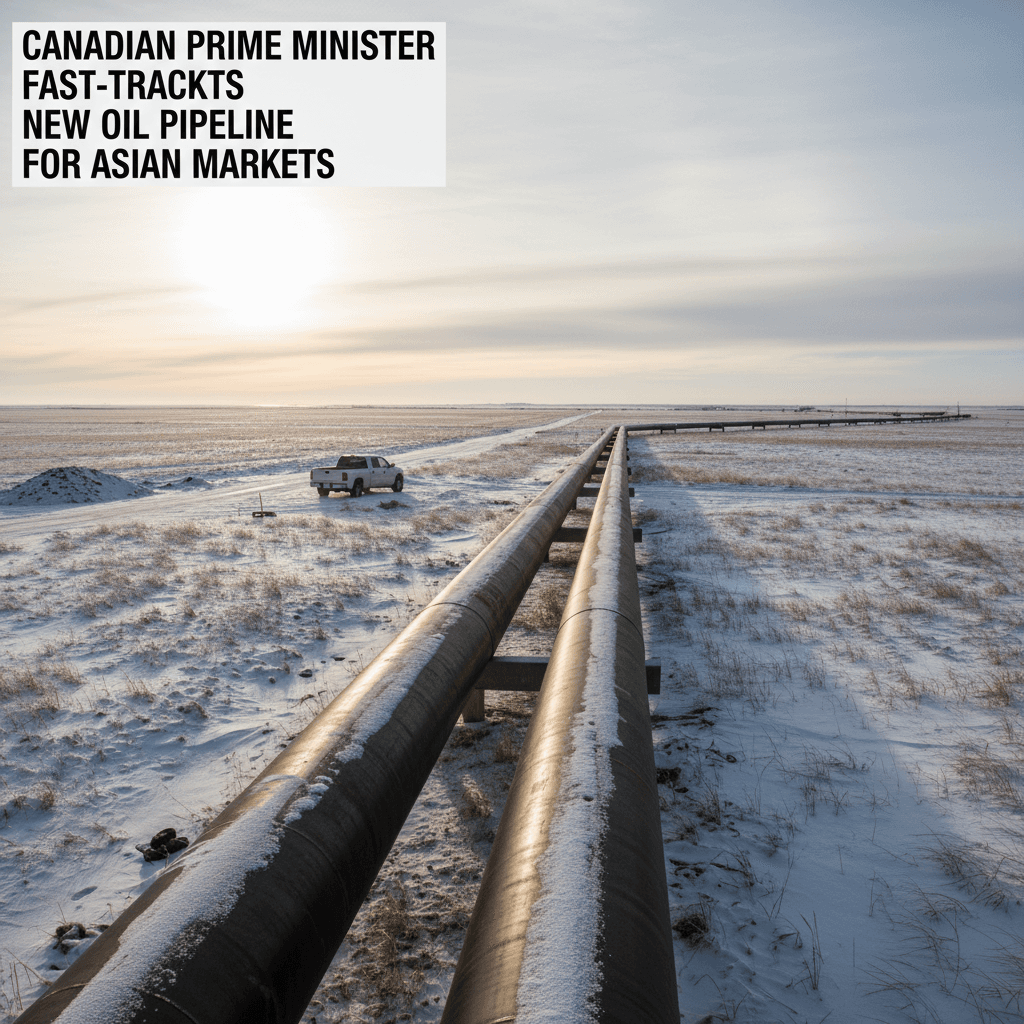
New Canadian West Coast Pipeline Designation Challenged by First Nations
The 'Pacific Link' project, aimed at Asian markets, faces legal review as Bakken watches for potential competition and market impacts.
The federal designation of a major new Canadian oil pipeline as a project of national interest is facing a legal challenge from an Indigenous group, creating uncertainty for a project that could alter long-term crude flow patterns affecting the Bakken. According to a report from OilPrice.com, Cold Lake First Nations (CLFNS) has filed an application for judicial review in Federal Court challenging the Canadian government's decision.
The challenged project, named Pacific Link, is a proposed 1 million-barrels-per-day pipeline to the British Columbia coast. It is being advanced in partnership by the governments of Canada and Alberta, which will share equal ownership. The federal government made the national interest designation last week, a move intended to fast-track development. The ambition behind the pipeline is to export additional Canadian crude oil to destinations in Asia and reduce high dependence on exports to the United States.
For Bakken producers, who also rely heavily on the U.S. Gulf Coast as a primary market, the successful development of a new Canadian export conduit to Asia could introduce new competition for market share with international buyers. However, it could also potentially alleviate some congestion on existing north-south pipeline routes shared by Canadian and Bakken volumes.
The First Nations group stated it is challenging the designation to protect its Treaty rights, lands, and the Nation’s interests for future generations. "CLFNS has repeatedly asked Canada to consult with the Nation on both Pacific Link and Pathways and has proposed options for meaningful and timely engagement. Despite those efforts, Canada moved ahead with the national interest designation without meaningful consultation with the Nation," the group said in a statement obtained by OilPrice.com.
The project plan includes offering Indigenous communities a minimum of 10% ownership interest, financed through government loan guarantee programs. Private sector expertise is being provided by Pembina Pipeline Corporation, with development led by the Trans Mountain Corporation. The proposed southern route is intended to protect British Columbia’s North Coast and avoid highly sensitive ecosystems like the Great Bear Sea.
In its statement, CLFNS indicated a preference for negotiation, saying, "CLFNS remains committed to working collaboratively toward a constructive path, but responsibility to take the first step outside the courtroom now rests with Canada." The legal challenge introduces a potential delay or hurdle for the project's accelerated timeline.
The outcome of this judicial review will be closely monitored by midstream and market analysts in North Dakota, as the Pacific Link project represents a significant strategic shift in North American crude oil logistics. Any major new capacity for Canadian crude to reach tidewater could influence benchmark pricing, refinery feedstock choices, and long-term planning for Bakken takeaway capacity.
Source
OilPrice.com