WTI Crude--
Brent Crude--
Natural Gas--
ND Rig Count--
WTI Crude--
Brent Crude--
Natural Gas--
ND Rig Count--
Regulatory

North Dakota Oil Tax Revenue Exceeds Forecast Amid Iran War

High prices from prolonged conflict spur state revenue gains, benefiting Bakken operators and royalty owners.

Bakken Wire Staff·☀️Morning Wire·

North Dakota's oil tax revenues continue to exceed state forecasts, driven by high oil prices resulting from the ongoing U.S. war with Iran, according to a report from Bing News. The report, published October 20, indicates that oil production in the state remains on an upward trend, directly boosting state coffers.

For operators in the Bakken formation, North Dakota's primary oil-producing region, sustained high commodity prices improve cash flow and margins. This financial environment supports continued drilling and completion activity, as well as the economic viability of existing wells. The revenue surge also signals robust production levels across the basin.

The elevated tax collections have significant implications for state budgets and local communities. North Dakota's oil extraction and production taxes are key funders for state infrastructure projects, education, and legacy funds. Revenue above forecasts can provide budgetary flexibility and fund additional investments in the region's oil-producing counties.

Royalty owners in the Williston Basin also stand to benefit directly from the high-price environment, as their payments are tied to the wellhead price of oil. The prolonged geopolitical conflict, cited as the cause for price support, introduces both opportunity and uncertainty for the local industry. While current conditions are favorable, the market remains sensitive to shifts in the conflict's dynamics.

The report underscores the Bakken's ongoing importance to both the state's economy and the broader U.S. energy landscape, even as it navigates external market forces.

Source

Bing News
regulationstate revenueoil pricesproductionbakkeniran conflict

Share this article

Related Articles

Regulatory

Venezuelan Oil Gear Sent to U.S. for Repairs After Decade

Venezuela is sending state-owned oil equipment to the United States for repairs for the first time in more than a decade, according to Rigzone. The report was published Thursday, Nov. 12, 2026. The development carries regulatory significance because it involves cross-border movement of state-owned oil equipment, a type of transaction that can be shaped by policy decisions, licensing and sanctions-related restrictions. Rigzone did not provide additional details on the equipment, the regulatory approvals involved or the companies performing the repairs. For Bakken operators, the significance is indirect but real. North Dakota producers depend on a deep U.S. oilfield services base for drilling, completions, workovers and maintenance. When foreign state-owned oil equipment uses U.S. repair shops and service yards, it can reflect the availability of American industrial capacity. It can also affect demand for specialized parts, machining, inspection and repair crews that compete with domestic workloads. The move may also signal...

🌅Afternoon Wire·Nov 12
Trump Administration Unveils Federal Land Sale Plan - Bakken Wire
Regulatory

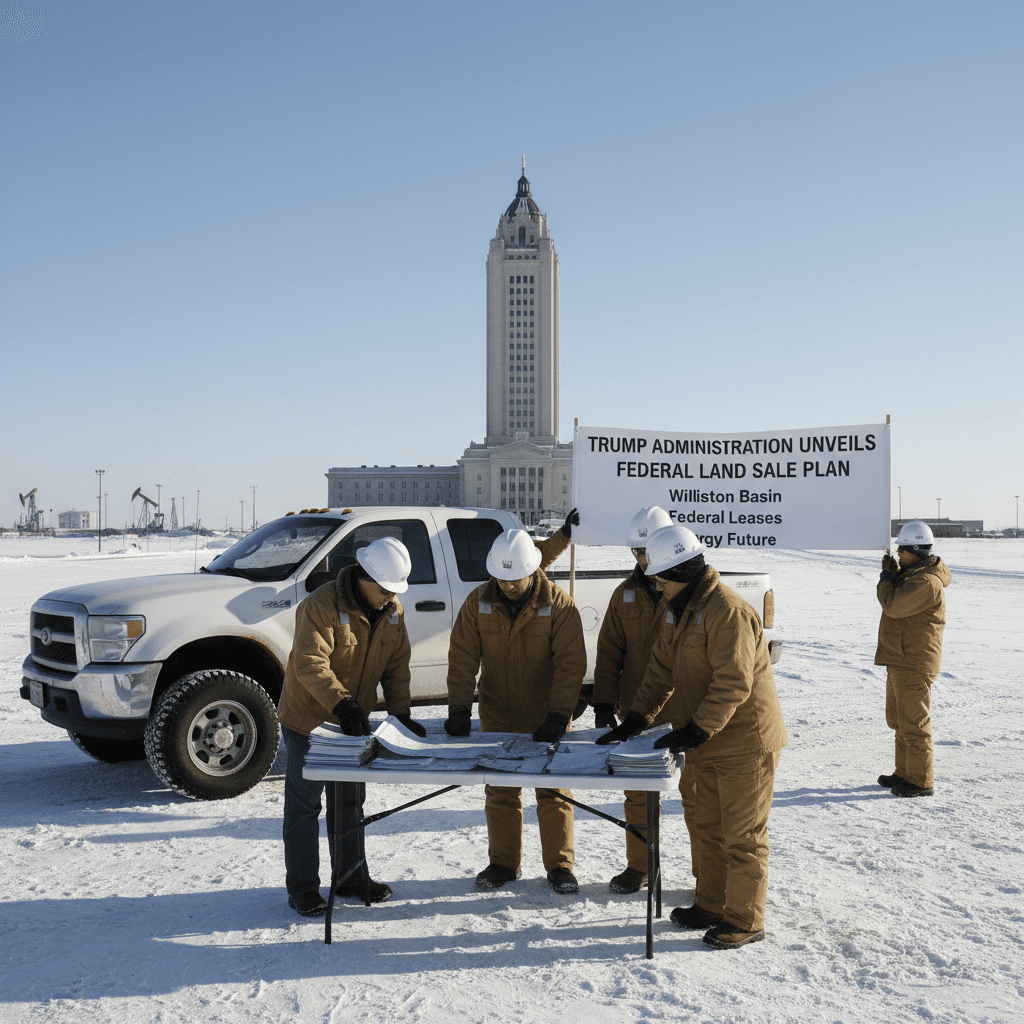
Trump Administration Unveils Federal Land Sale Plan

The Trump administration has unveiled plans to sell public land as part of a new strategy laying out Interior Department goals, according to Rigzone. The report, published Thursday, Nov. 12, 2026, describes the move as a policy shift affecting federal land management, but the source summary provided no acreage, sale locations, timelines or dollar figures. For Bakken operators, royalty owners and North Dakota energy stakeholders, the significance lies less in the headline than in what may follow: how the federal government treats lands, minerals, leases, rights of way and permitting in areas where oil and gas activity intersects public land. The Williston Basin includes a mix of private, tribal, state and federal interests, so changes to federal land disposition can affect access, development planning and long-term asset value. If public lands are sold, operators may need to watch whether existing leases continue, whether new leases are available, and whether surface...

🔆Midday Wire·Nov 12
Regulatory

Norway Regulator Widens AI Audit in Oil Industry

The Norwegian Ocean Industry Authority is expanding its audit of how oil and gas companies vet artificial intelligence systems and manage associated risks, according to a report from Rigzone. The regulator is reviewing the deployment of AI in industry workflows. While this audit is specific to Norway's offshore sector, it highlights a growing global regulatory focus on the integration of advanced technologies in oil and gas operations. As Bakken operators increasingly deploy AI and machine learning for tasks like predictive maintenance, production optimization, and seismic interpretation, similar scrutiny could emerge in North Dakota. The Norwegian review centers on how companies assess and mitigate the risks of using AI. This suggests that regulators are moving beyond simply encouraging innovation to ensuring it is implemented safely and reliably. For Bakken operators, proactive internal reviews of AI governance and risk management frameworks could be a prudent step. The use of AI can significantly...

☀️Morning Wire·Nov 12