North Dakota Rig Count Hits 23 Amid Sharp Oil Price Decline
Bakken operators hold steady on drilling as production outlook faces pressure from falling crude prices.
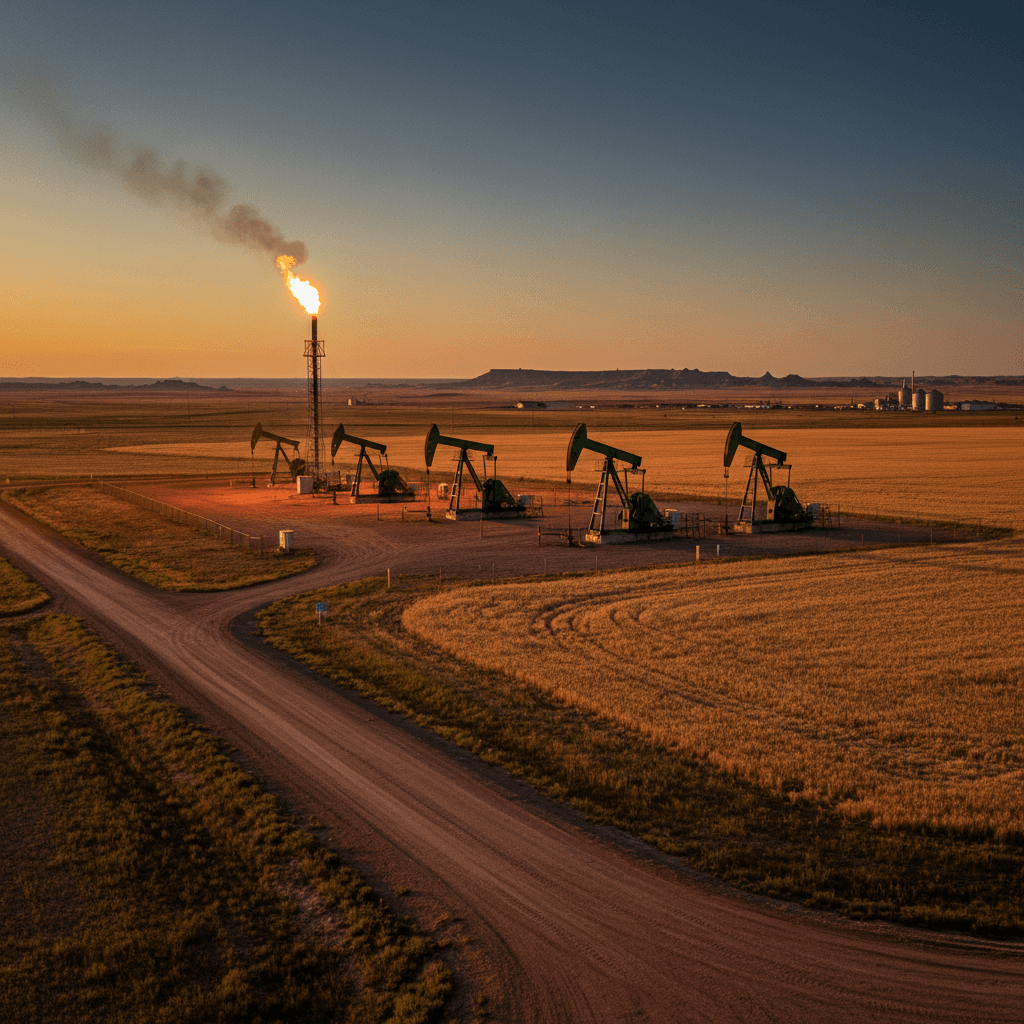
North Dakota's active drilling rig count stood at 23 on Tuesday, a figure that suggests a cautious but sustained level of operator activity in the Bakken formation despite a sharp drop in oil prices.
The current rig count, a direct indicator of new well development, provides a snapshot of near-term investment. According to Bakken Wire data, WTI crude fell to $102.41 per barrel, down $4.01 or 3.77% on the day. Brent crude was at $110.27, down $4.17. The Bakken differential to WTI was -$3.42, meaning Bakken crude is priced at approximately $98.99.
Historically, the rig count in North Dakota has been a leading indicator for future production levels. A sustained rig count translates to new wells being drilled, completed, and brought online, which adds to overall output after a lag of several months. Conversely, a significant drop in rigs typically foreshadows a plateau or decline in production months later.
The current count of 23 rigs, while significantly lower than the boom-era peaks, represents a baseline of activity that has supported North Dakota's production in recent years. Operators often adjust drilling programs based on price signals and capital budgets. The day's sharp price decline, if sustained, could pressure margins, particularly for wells with higher drilling and completion costs.
Natural gas prices, at $2.78 per MMBtu, remain a secondary concern for Bakken producers, whose economics are primarily driven by crude.
The outlook for Bakken production in the coming quarters will depend on whether operators maintain their current drilling pace. The rig count's stability at 23 suggests no immediate, large-scale pullback in development activity. However, the volatile price environment introduces uncertainty for planning. High efficiency and continued focus on core, high-productivity areas of the Bakken have allowed operators to maintain activity at lower rig counts than in past cycles.
Ultimately, North Dakota's oil production trajectory is tied to the number of new wells added each month. Today's rig count indicates that addition continues, but the economic foundation for that activity showed notable weakness with the sudden drop in crude markets.
Source
Bakken Wire Live Data