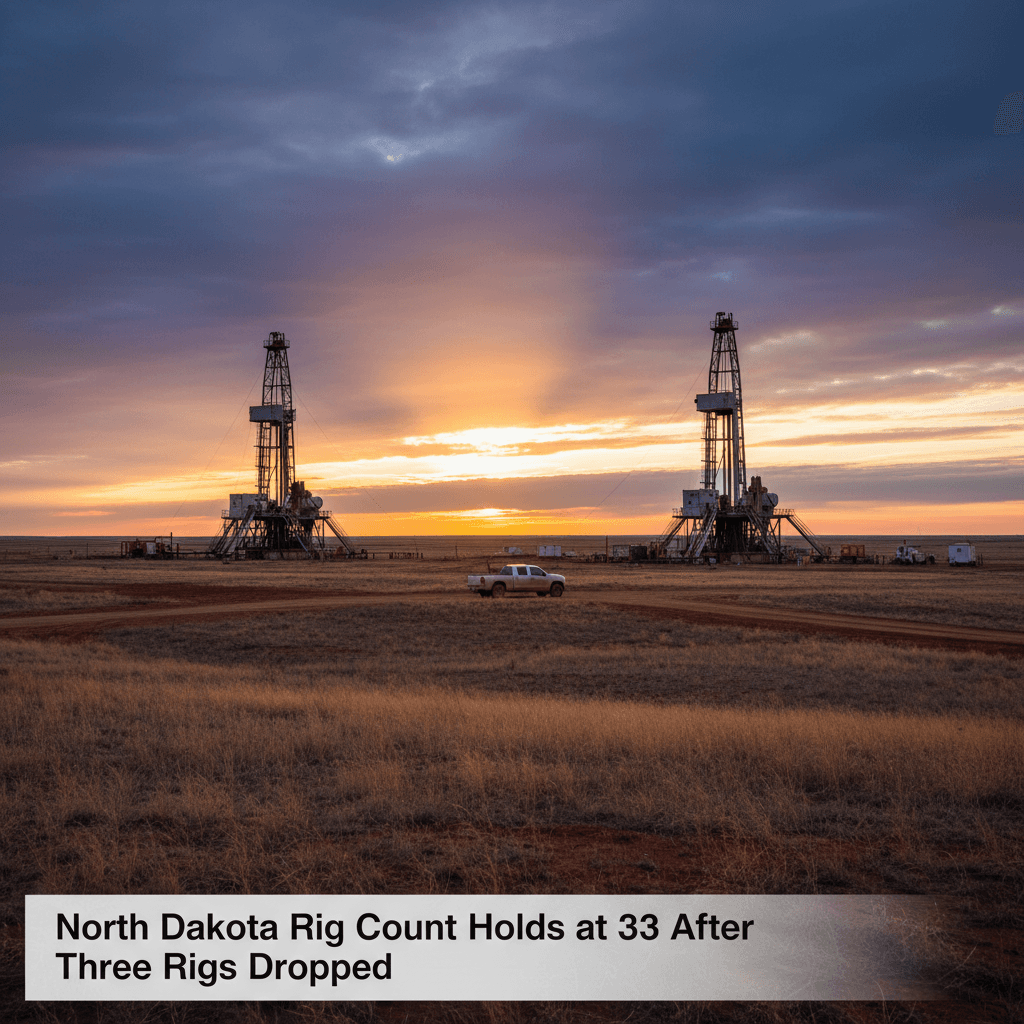
North Dakota Rig Count Holds at 26 for Seventh Straight Day
The state's active drilling fleet remains stable week-over-week but is down two rigs from late May levels.
The number of active drilling rigs in North Dakota remained unchanged at 26 on Saturday, June 27, according to live data from Bakken Wire. This marks the seventh consecutive day the count has held at this level, with no new rigs added, removed, or relocated since the previous day.
The current rig activity shows short-term stability but a slight contraction over the past month. The count is unchanged from one week ago, on June 20, when it also stood at 26 rigs. However, it is down by two rigs from the 28 active rigs reported on May 28.
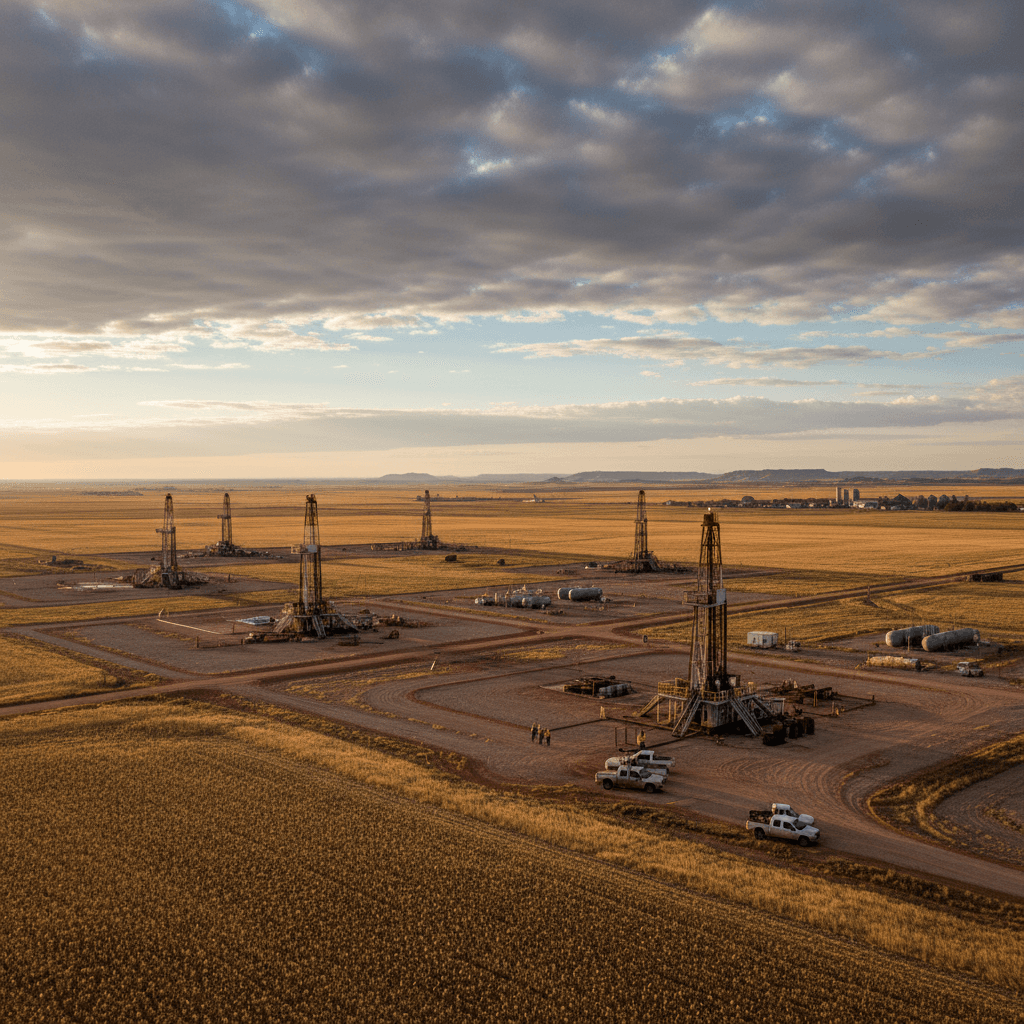
A rig count in the mid-20s has been typical for the Bakken formation in recent years, reflecting a disciplined, efficiency-focused approach by operators after the boom-and-bust cycles of the previous decade. The current level is sufficient to maintain production but indicates limited growth in near-term drilling activity. The stability over the past week suggests operators are maintaining their current development plans without significant adjustments.
The rig count is a leading indicator of future oil production in the Williston Basin. With no change in the active fleet, production levels are likely to remain relatively flat in the coming months, barring significant gains in well productivity or completions of drilled but uncompleted wells (DUCs). The focus for many Bakken operators continues to be on capital discipline, optimizing returns from existing assets, and extending the economic life of core acreage.
For service companies and communities in western North Dakota, a steady rig count provides a baseline of economic activity. While not indicating expansion, it avoids the volatility that can accompany rapid declines in drilling. Royalty owners in the region can expect consistent, though not growing, development activity at current commodity prices.
The next significant move in the rig count will likely depend on sustained shifts in crude oil prices or significant changes in the capital expenditure plans of major Bakken operators. For now, the drilling landscape remains in a holding pattern.
Source
Bakken Wire live rig data and historical context