North Dakota Rig Count Holds at 27 as Oil Prices Rally
Sustained high prices may test operators' commitment to capital discipline against a backdrop of historically low activity.
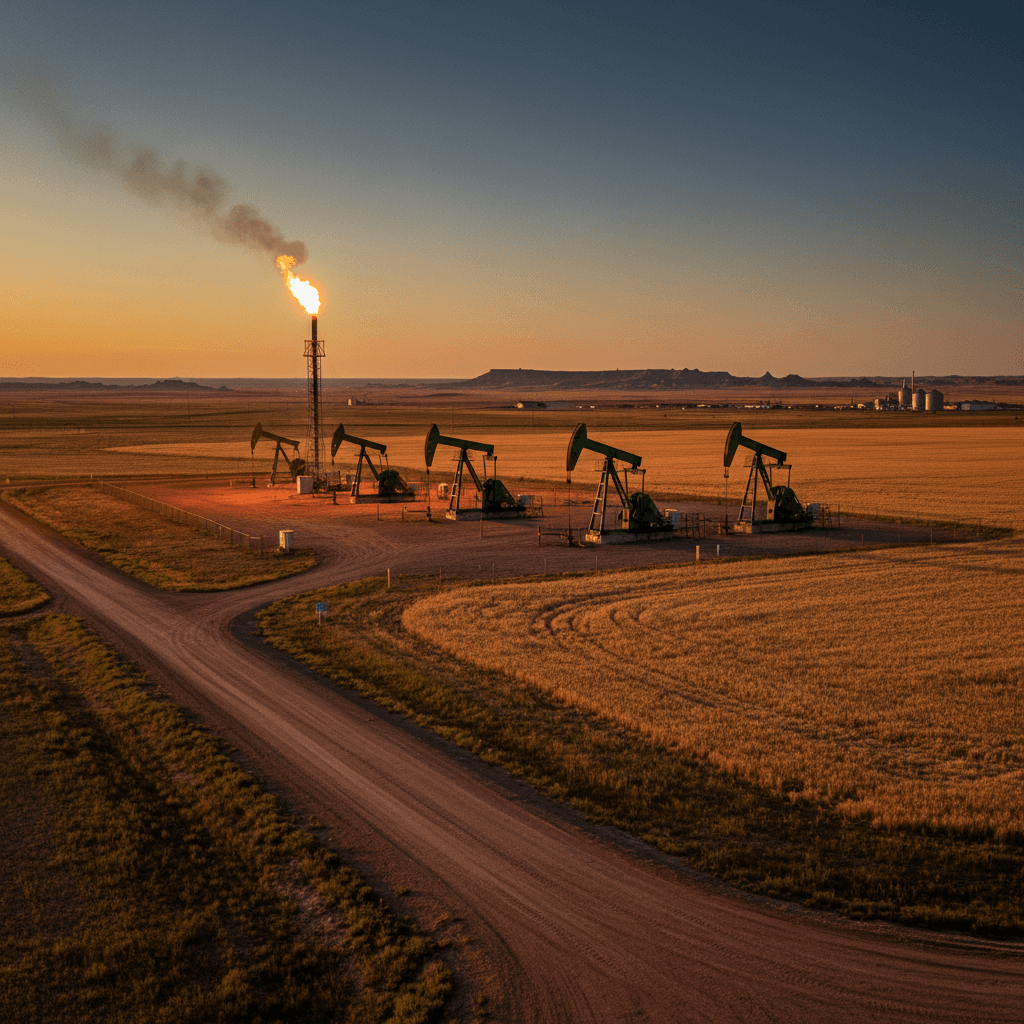
North Dakota's active drilling rig count remained at 27 on Saturday, a level signaling continued restraint from Bakken operators despite a rally in oil prices that saw WTI crude close above $84 per barrel. The stability in the rig count, a key indicator of future production, comes as the Bakken oil price differential narrowed to -$3.42 versus the U.S. benchmark.
West Texas Intermediate (WTI) crude settled at $84.67, a gain of $1.08 or 1.29%, according to live market data. The international Brent benchmark rose to $90.12. The concurrent rise in prices and a tighter local differential improve netbacks for Bakken producers, yet drilling activity has not responded with an increase. The natural gas price was recorded at $2.75 per MMBtu.
Historically, the rig count is a leading indicator for oil production, with a lag of several months between a change in drilling activity and its impact on output. The current count of 27 rigs is a fraction of the peak seen in the early 2010s Bakken boom, reflecting a lasting industry shift towards capital discipline and efficiency. Operators have focused on drilling longer lateral wells and completing drilled but uncompleted wells (DUCs) to maintain output with fewer rigs.
The sustained high commodity price environment presents a test for this disciplined strategy. With WTI holding above $80, economic incentives to accelerate drilling programs are strong. However, continued focus on shareholder returns and controlled growth may keep a lid on any significant near-term rig additions. Production levels in the coming months will largely depend on the current inventory of wells being completed and brought online.
For North Dakota, a prolonged period of stable, low rig counts suggests state oil production may plateau or see only modest growth, even with higher prices. The emphasis on efficiency means each new well contributes more, but the overall volume of new drillings remains constrained. Royalty owners benefit from stronger prices but may not see a rapid expansion in the number of wells on their lands.
The outlook for Bakken production remains one of managed stability. Operators are poised to generate strong cash flows at current prices but appear hesitant to launch a new drilling boom. Market watchers will monitor upcoming monthly production reports from the North Dakota Department of Mineral Resources for signs of whether efficiency gains can continue to offset the low rig count.
Source
Live Bakken Data for August 1, 2026