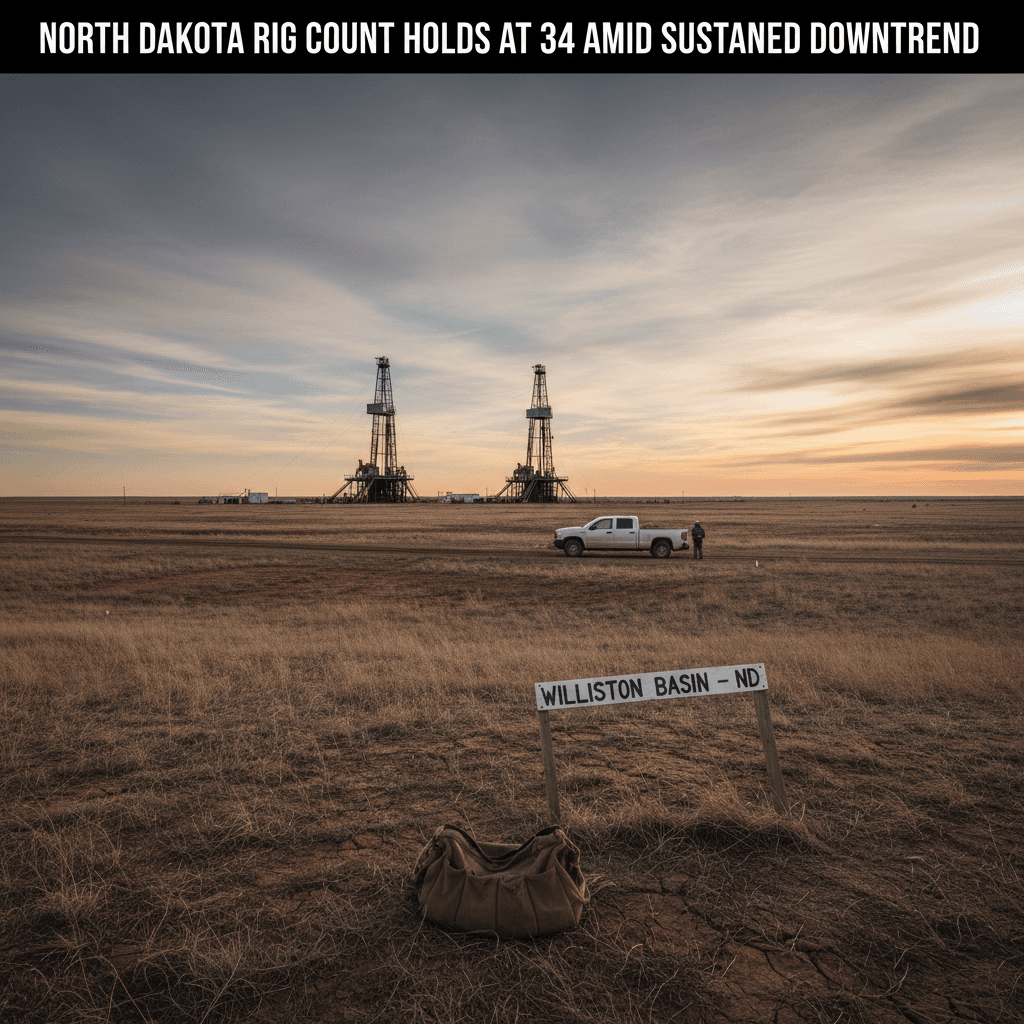
North Dakota Rig Count Holds at 34 Amid Sustained Downtrend
The state's active drilling fleet is down three rigs from last week and one from last month, continuing a period of modest contraction.
The number of active drilling rigs in North Dakota remained unchanged Sunday, holding at 34, according to the latest data from Bakken Wire's live rig tracker. No rigs were added, removed, or moved location since yesterday.
The steady daily figure, however, masks a broader trend of gradual decline. Compared to one week ago on November 8, the state has lost three active rigs, dropping from 37. The current count is also down one rig from the 35 rigs active one month ago on October 16.
This sustained, albeit modest, contraction reflects ongoing capital discipline by operators and a response to current commodity price environments. A rig count in the mid-30s is consistent with a period of maintenance-level activity focused on core development areas within the Bakken and Three Forks formations.
The current level is significantly below the boom-era peaks of over 200 rigs but is within the range that has supported production stability in recent years. State production data, which lags rig activity by several months, will eventually reflect this slower pace of new well development.
For service companies and communities in the Williston Basin, a static or declining rig count translates to reduced demand for drilling crews, equipment, and associated support services. The trend underscores the industry's continued focus on efficiency, with operators prioritizing high-quality drilling locations and optimizing completion designs to maximize returns from each well.
While day-to-day movements are often minimal, the weekly and monthly comparisons provide a clearer signal of industry sentiment and investment levels. The loss of three rigs in a week suggests some operators may be adjusting their year-end drilling schedules or reallocating capital.
The North Dakota rig count is a key leading indicator for future oil production in the state, which remains the nation's second-largest producer. A prolonged period at or below the current level would be expected to eventually slow the growth of, or stabilize, overall output from the Bakken formation.
Market observers will be watching for any shifts in the count in the coming weeks as companies finalize 2027 capital budgets and operational plans.
Source
Bakken Wire Live Rig Data and Historical Context