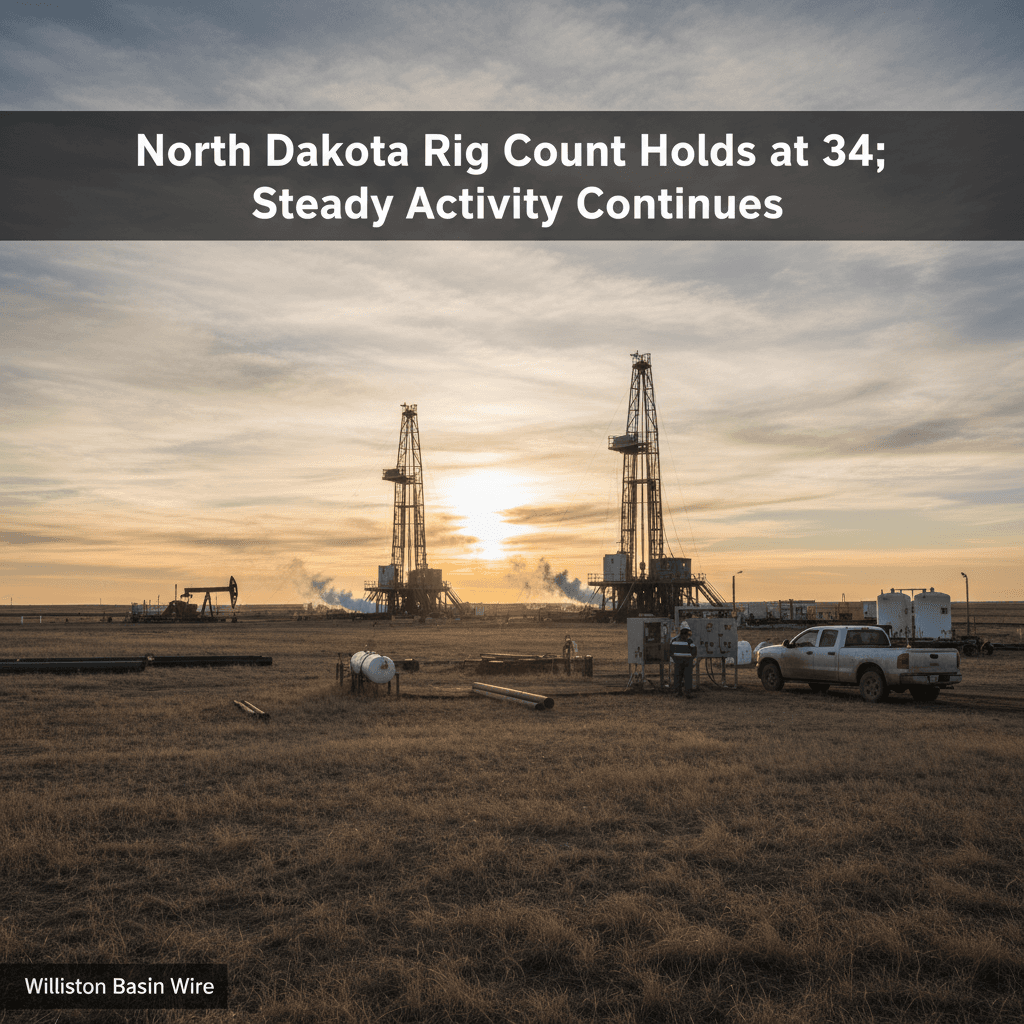
North Dakota Rig Count Holds at 34; Steady Activity Continues
The statewide drilling rig count remained unchanged Saturday, maintaining a level slightly below recent monthly averages.
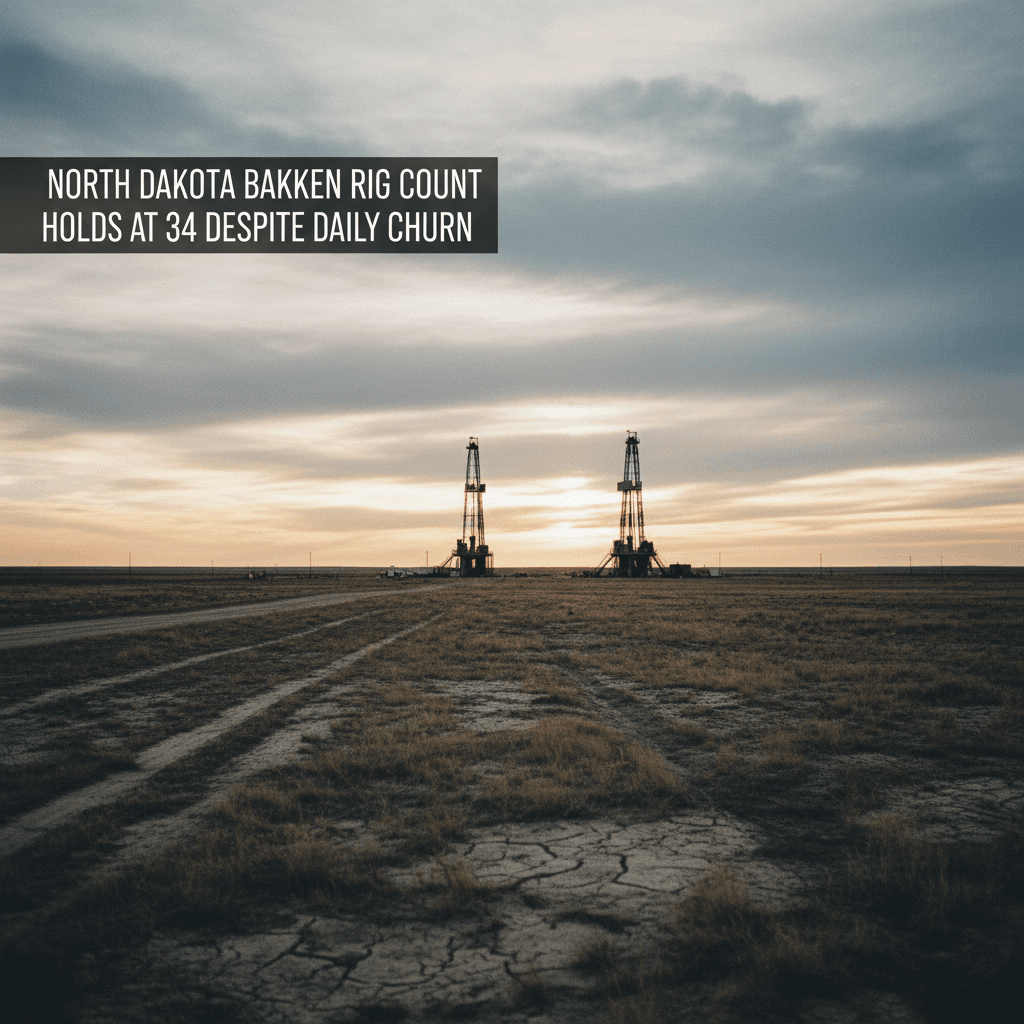
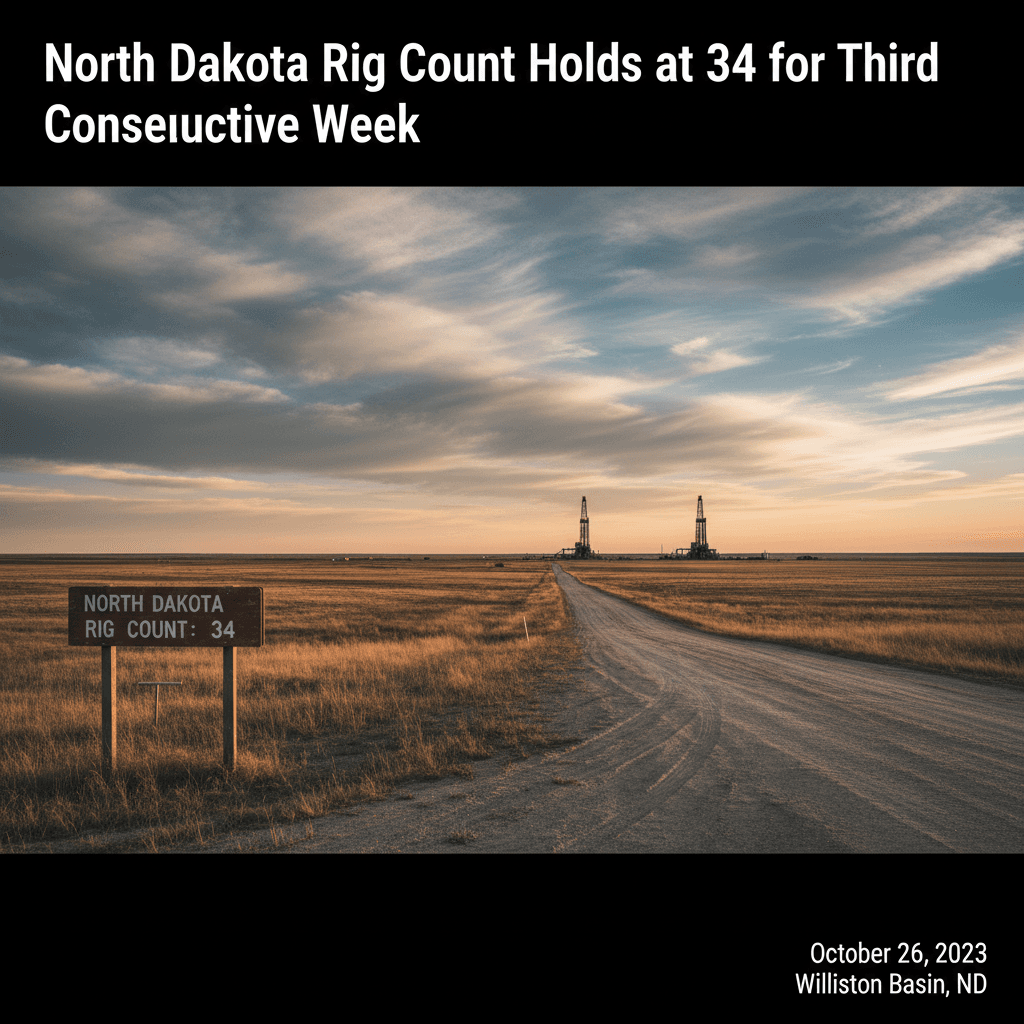
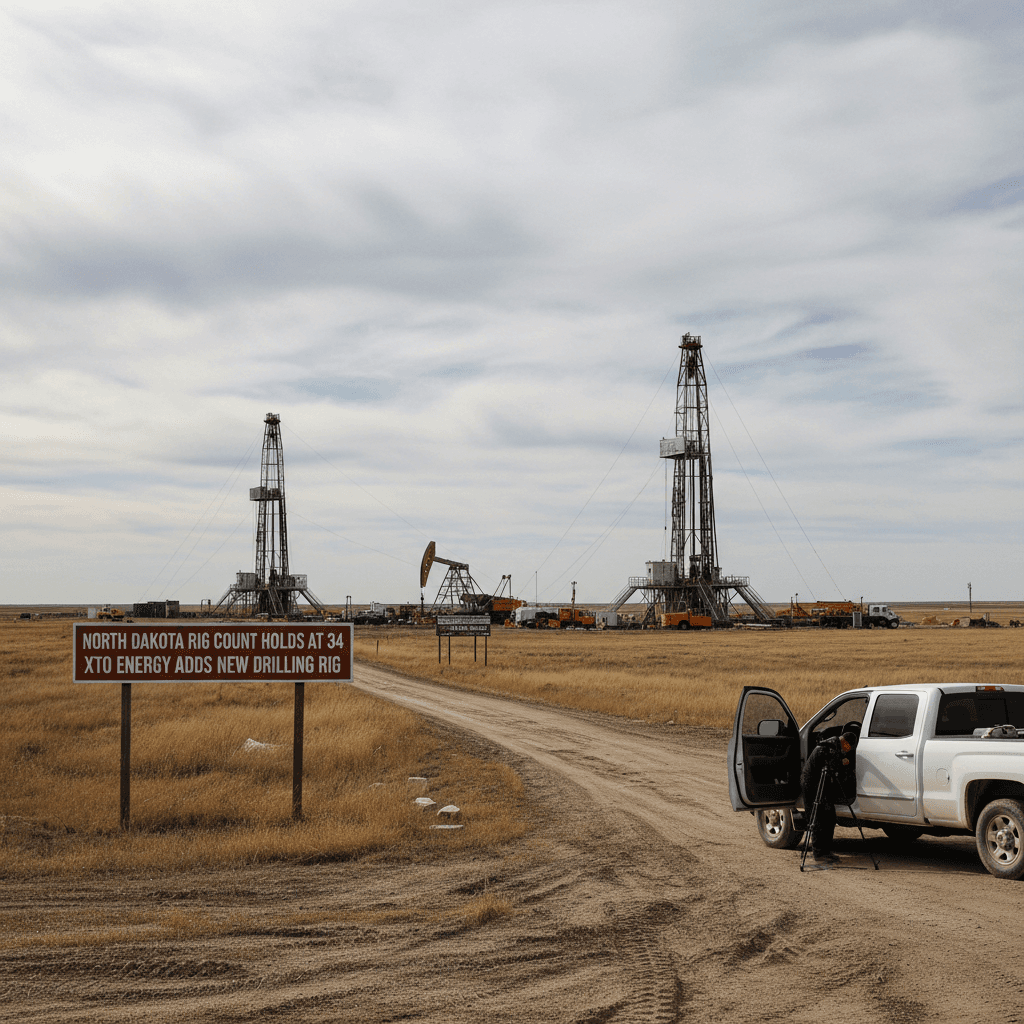
North Dakota's active drilling rig count held steady at 34 on Saturday, October 10, with no rigs added, removed, or moved in the previous 24 hours, according to live rig data.
The current count represents a decrease of one rig compared to one week ago on October 3, when 35 rigs were active. It is also down by one rig from the level recorded a month ago on September 10, which also stood at 35.
The stability in the rig count suggests a period of consistent, measured activity by Bakken operators. The slight dip from recent levels, while minor, indicates a cautious operational tempo as companies manage capital programs and evaluate well economics.
The Bakken formation is North Dakota's primary oil-producing region, and rig activity is a closely watched leading indicator of future production. A rig count in the mid-30s reflects a mature phase of development for the play, where operators focus capital on core acreage with the highest estimated returns.
Historically, rig counts have fluctuated with commodity prices, service costs, and takeaway capacity. The current steady state suggests a balance between these factors, allowing for sustained development without significant expansion.
Industry analysts typically view a stable rig count as a sign of disciplined capital allocation, especially when oil prices are volatile. It allows operators to maintain production levels while controlling expenditures.
The Williston Basin's infrastructure and well design efficiency have improved substantially over the past decade, meaning fewer rigs are now required to sustain or even grow production compared to earlier boom periods. Each modern rig can drill longer lateral wells faster, enhancing capital efficiency.
The focus for many operators has shifted to optimizing production from existing wells and developing high-graded inventory, rather than aggressively expanding the drilling fleet. The current rig count supports this strategy.
Further movements in the count will depend on operator budgets for the fourth quarter of 2026 and longer-term plans for the coming year. Any sustained shift would signal a change in industry sentiment and investment appetite.
For royalty owners and service companies, a steady rig count provides predictability for local economies in the oil-producing regions of western North Dakota.
Source
Bakken Wire Live Rig Data, Historical Context Data