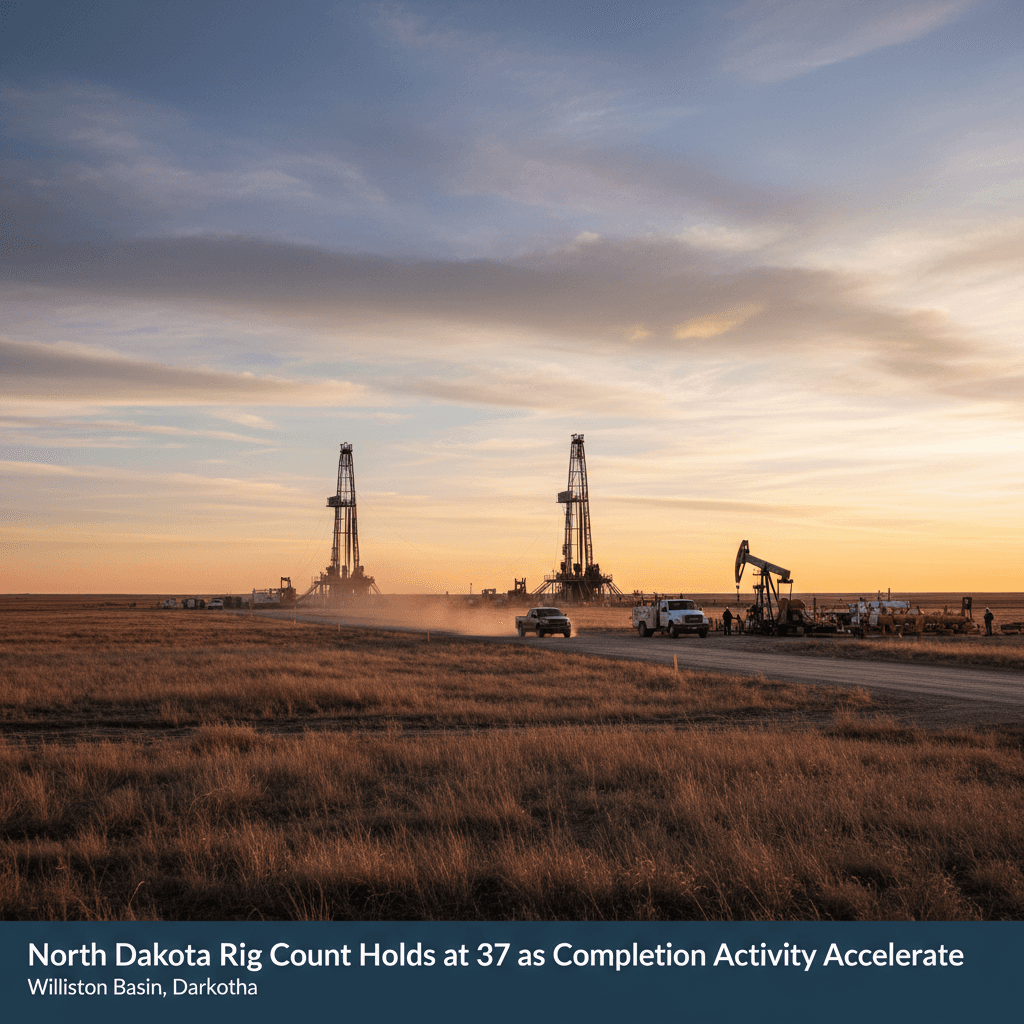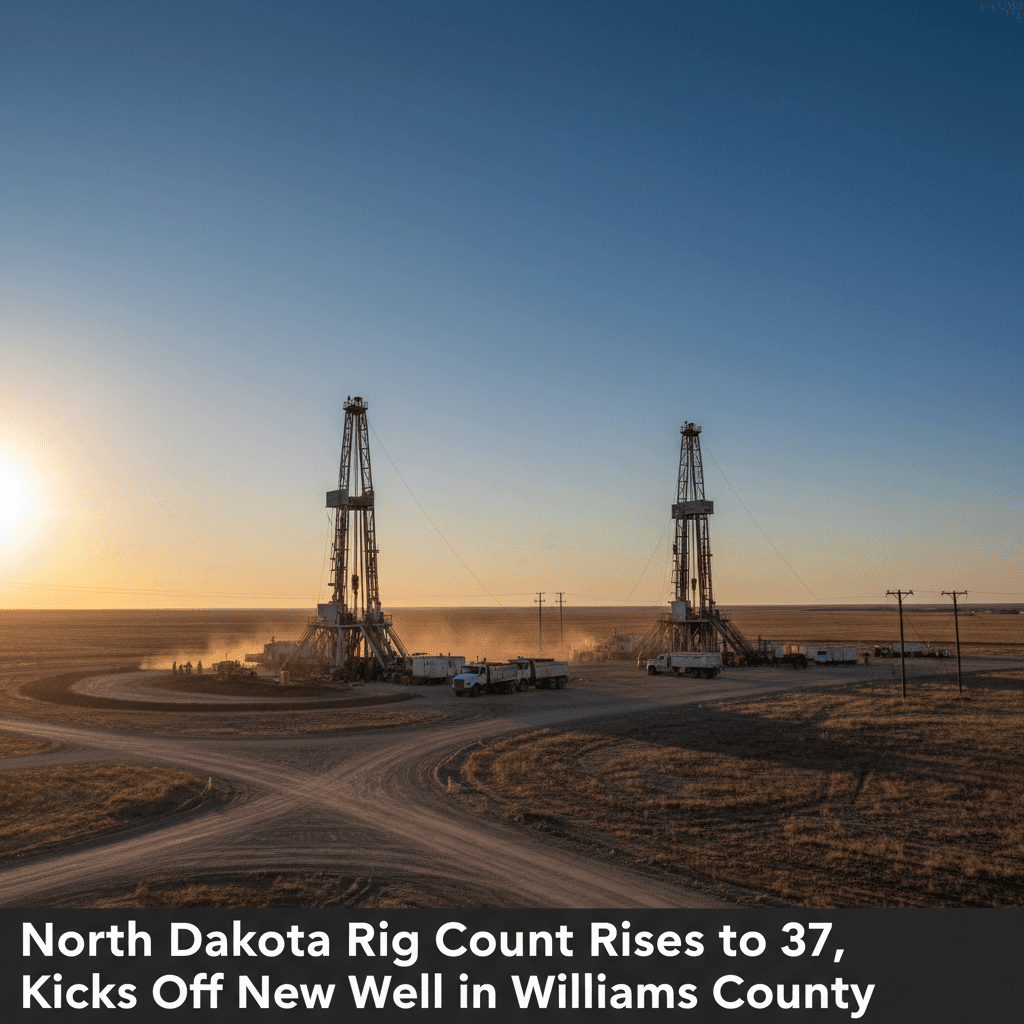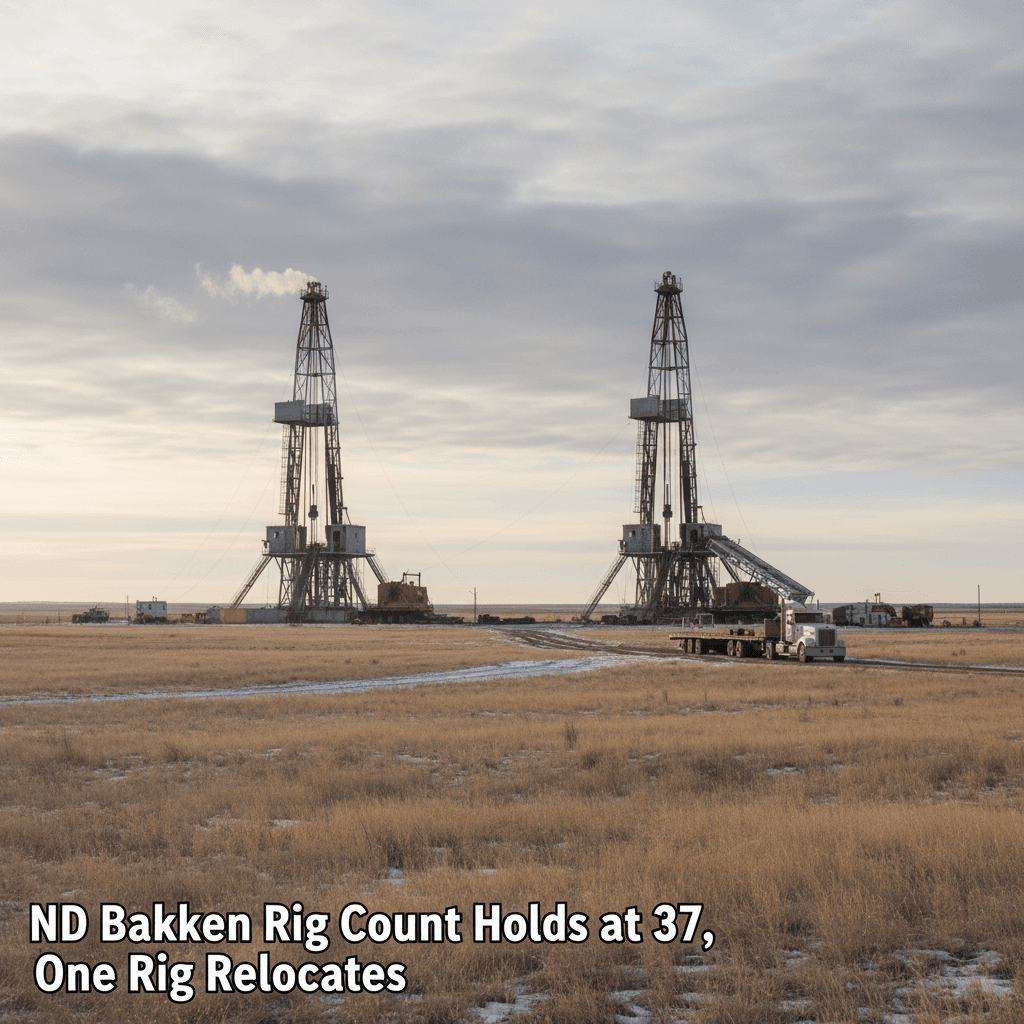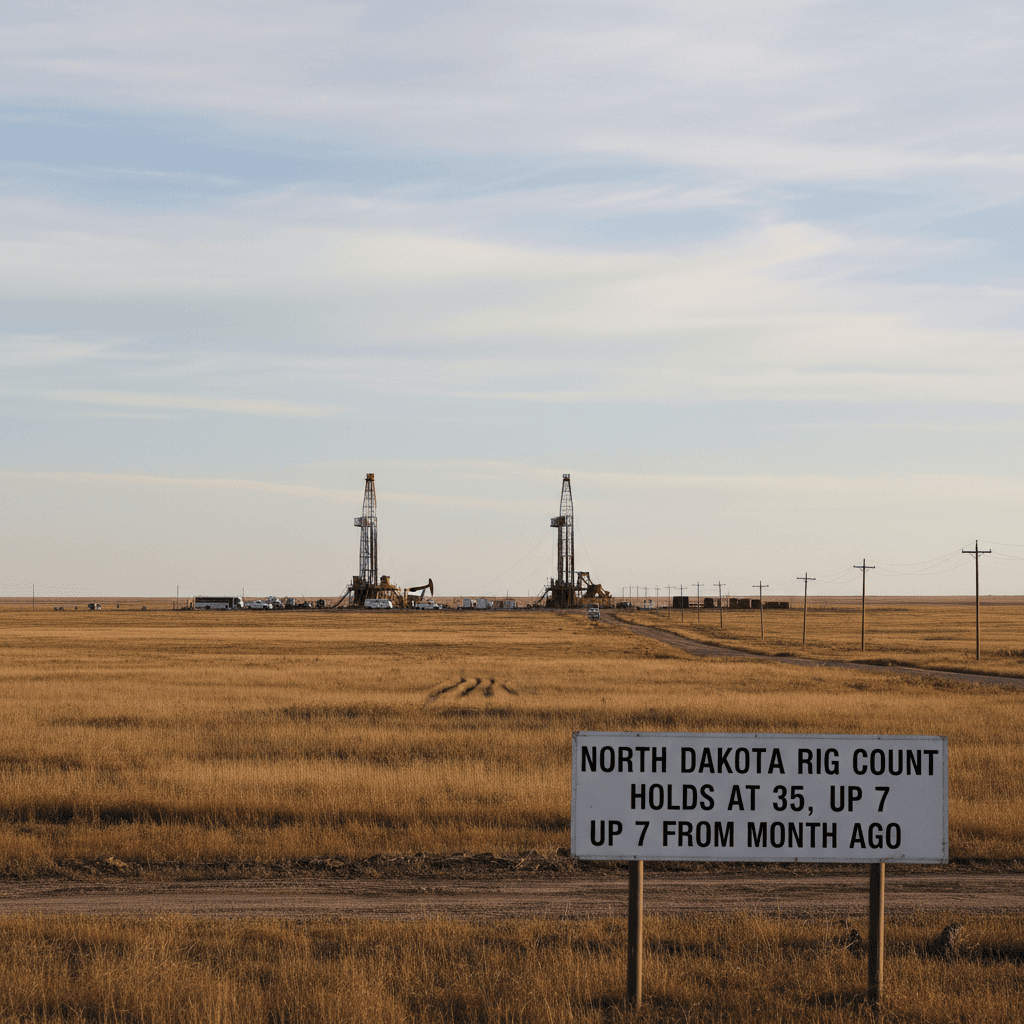
North Dakota Rig Count Holds at 35, Up 7 from Month Ago
State drilling activity remains stable despite slight weekly decline in broader North American market.
The number of active drilling rigs in North Dakota held steady at 35 on Sunday, September 6, according to live data from Bakken Wire. There was no change from the previous day, with no new rigs added, removed, or relocated.
The current count represents a slight pullback from one week ago, when 36 rigs were active on August 30. However, drilling activity in the Bakken formation has shown significant growth over the past month, with the rig count up by 7 units from the 28 rigs reported on August 7.
The stability in North Dakota contrasts with a broader decline in North American drilling activity reported last week. According to Baker Hughes data reported by OGJ, the total North American rig count fell to 792 for the week ended September 4. This decline was driven entirely by a reduction in Canadian activity, which dropped by 7 rigs to 204.
The U.S. rig count was unchanged from the previous week at 588, which is 51 rigs higher than the same period last year. The national count was supported by a single rig addition on land, bringing that total to 577. Offshore drilling declined by one rig to 8. By commodity, the U.S. saw a decrease of two gas-directed rigs to 130, while oil-directed rigs held at 449, up two from the year-ago period.
State-level movements highlighted in the report showed mixed activity. Texas and Colorado each added one rig, bringing their counts to 283 and 13, respectively. Meanwhile, Louisiana and Pennsylvania each dropped a single rig, to 35 and 15.
For North Dakota operators, the current rig level, while down slightly from the prior week, sustains a notably higher pace of development than seen in early August. The month-over-month increase of seven rigs suggests a renewed focus on oil-directed drilling in the Williston Basin, aligning with the steady national count for oil rigs. The stability in daily counts indicates operators are maintaining their current development programs without significant adjustments.
The Bakken formation remains the primary engine of oil production in North Dakota. Rig activity is a leading indicator of future production, and the current elevated level compared to a month ago points to potential output stabilization or growth in the coming quarters, barring any major shifts in commodity prices or operator strategy.
Source
Bakken Wire Live Rig Data, OGJ (Baker Hughes weekly rig count report for week ending Sept. 4, 2026)